




MILWAUKEE, WI—At Kinship Community Food Center, farm-to-table is more than a buzzword—it happens weekly. Vegetables grown at the organization’s urban farm in Glendale can be served the same day they are harvested.
The 27,000-square-foot farm includes 11 hoop houses growing a rotating selection of vegetables, from onions to bok choy. Kinship distributes produce for free at its Community Food Center, located at St. Casimir Church, on Tuesdays and Saturdays.
“I always like arguing we have the freshest produce in Milwaukee,” said Travis Sternhagen, a volunteer and training manager with Kinship.
Growing their own vegetables is part of Kinship’s mission to give Milwaukeeans access to healthy, nutritious food.
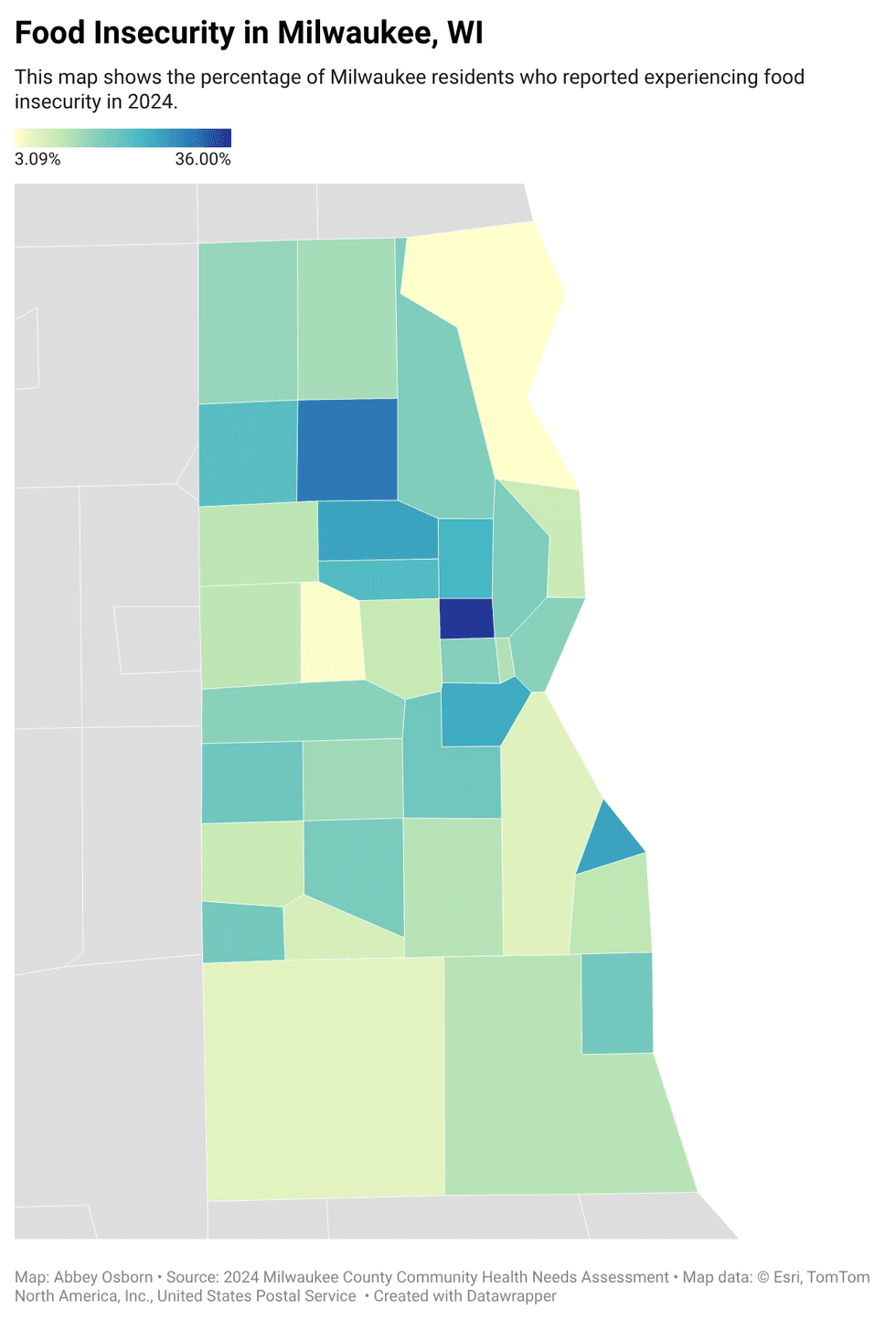
Nearly 150,000 Milwaukee County residents face food insecurity, and the city has seen a continued pattern of major grocery stores leaving, with nine grocery stores closing since 2021. In 2025 and 2026, three grocery stores closed on the northwest side, where residents also report higher rates of food insecurity.
Beyond improving access to healthy food, urban agriculture also brings community benefits. At Kinship, relationships are tended to, like seedlings in the ground.
Andrea Odrzywolski has been volunteering with Kinship since first coming with a neighbor who needed support three years ago. She said the environment is slower-paced compared to other food pantries.
“You don't feel like it's just, ‘Here's a box’,” Odrzywolski said. Those using the pantry’s resources shop shelves of produce, just like they would in a grocery store.
One of those shoppers was Trent Tidmore, who first came to Kinship seven months ago. He has struggled with food insecurity and said other pantries had offered him moldy produce in the past. Tidmore now volunteers in the hospitality department, serving free meals at the center.
“I’ve seen a lot of people that have gone through what I’ve gone through,” Tidmore said. “I just try to put a smile on their face.”
He uses Kinship's resources to manage his health and get his daily serving of vegetables. What he is most grateful for, though, is the chance to connect with others.
“I'm just glad to be part of this new family,” Tidmore said.
Kinship’s urban agriculture approach helps make sure shoppers like Tidmore have reliable access to produce.
Cole Compton, who manages the farm’s operations, said the program first took shape eight years ago, in partnership with the Maglio Company. Since he started working there, he has seen the farm’s output double. In 2025, it produced 20,565 pounds of produce.
“This year we're on track to do about 23,000 pounds,” Compton said. That translates into roughly 100,000 USDA serving sizes of produce.
Growing season is nearly year-round, with planting happening in early April; and the last harvest in February. When a specific crop has a surplus, Kinship partners with other organizations to eliminate waste. Compton estimates that 5% of the produce distributed returns to the farm as compost.
However, there are limitations to urban agriculture’s ability to be climate-friendly. A University of Michigan study found that the carbon footprint of fruits and vegetables grown on urban farms and gardens is, on average, six times greater than that of conventionally grown produce.
However, the study’s authors also noted in a piece for The Conversation that infrastructure—such as raised beds and pathways—made up the largest share of urban agriculture’s carbon footprint, and added that "careful site design and improved land use policy" could help urban farms offer greater benefits.
The farm uses 100% organic growing practices, including their seeds and topsoil. Compton said the extra effort of being fully organic is worth it.
“I think that is what makes our mission not only more successful in terms of seeing better results, but also having people enjoy the food that they're consuming from the food center,” Compton said.
Kinship doesn’t stop at providing ingredients. Instead, Compton said they want to reduce as many barriers as possible to accessing a nutritious meal.
“One of the problems that we see a lot of with people who don't normally have access to produce is there's a lack of knowledge on how to cook the produce,” Compton said.
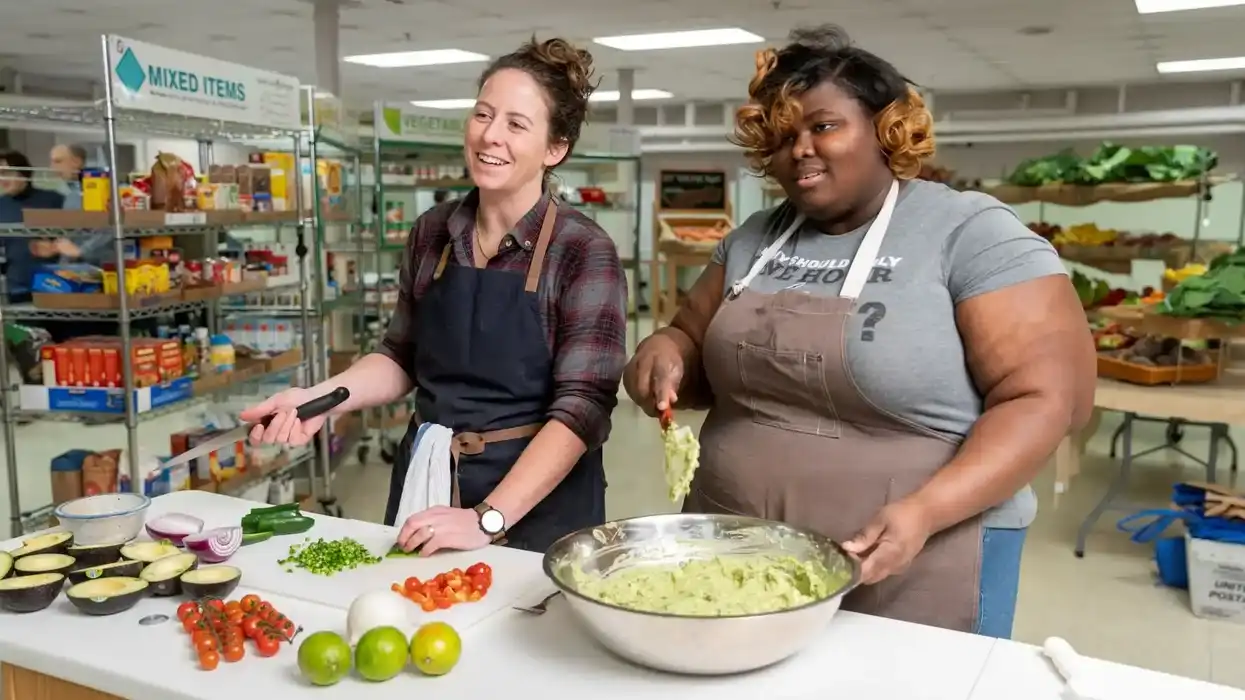
Kinship provides recipe cards along with the vegetables. They also host “Feast Meals,” where community members harvest, clean, and cook the produce at the farm before everyone sits down for a family meal together inside one of the hoop houses.
Kinship Community Food Center is open Tuesdays from 4PM-6PM and Saturdays from 8:30AM-10:30AM. Next year, a new community center will replace the current site, giving Kinship even more space to grow.
Abbey Osborn is a student at CUNY Newmark Graduate School of Journalism and a fall Fulcrum Fellow.