
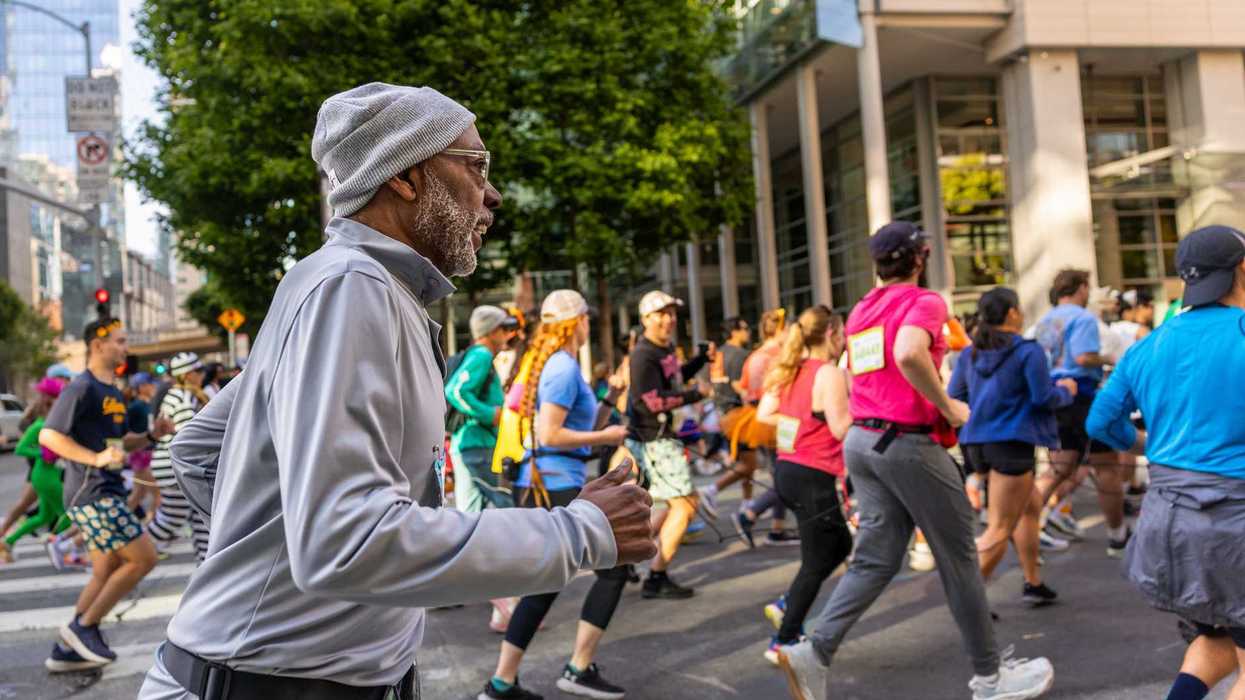
Before a race, thousands gather in a hush of private rituals: checking watches, settling breaths, remembering months of training. Then the music rises, the crowd answers, and the city begins to move. A marathon may look like an individual test, but from the curb it looks like people gathered in shared belonging.
I felt that firsthand as an avid runner. Recently, I ran the Detroit Free Press International Half-Marathon, where the course crosses the Ambassador Bridge into Canada and returns through the Detroit-Windsor Tunnel. For 13.1 miles, a border became part of the route. The lines on a map are real, shaped by people, histories, and decisions. Yet runners crossed together, carrying different stories along the same course as neighbors on both sides cheered us.
New York offered another kind of civic geography. In 2026, the TCS New York City Marathon marked fifty years of its five-borough course. The race began in Central Park in 1970 and expanded across Staten Island, Brooklyn, Queens, the Bronx, and Manhattan in 1976. This year, 61,000-plus runners finished—a record. Along the route, people stood for hours, offering water and encouragement to strangers through difficult miles.
That is fandom at its best: attention that becomes participation. Marathon crowds do more than watch. A sign, a cup of water, a stranger calling your name at mile twenty-two—none of these gestures runs the race for you. They appear in small ways and make your effort visible.
Eric Liu’s Live Like a Citizen: 8 Ways to Change Your Mindset and Our Country gives this instinct a civic vocabulary. Liu names eight practices: see, listen, feel, join, fight, change, imagine, and commit. A marathon cannot fully explain democracy, nor is cheering runners the same as governing together. Still, race day offers a glimpse of what democratic life asks of us: notice one another, recognize our shared public world, and take responsibility for it.
Democracy calls us to participate beyond election day—in neighborhood meetings, schools, congregations, unions, community groups, and at the ballot box. It asks us to see who makes decisions, whose voices carry weight, and how to hold power accountable. It also asks us to work with people whose beliefs or backgrounds differ from ours. Sometimes that means speaking up for a neighbor or changing rules that leave people out. Citizenship is the work of helping a diverse community govern itself.
A race also makes difference visible. Runners move at different paces and arrive with different bodies, resources, reasons for running, and levels of support. Sharing a course does not make their experiences the same. Nor does sharing a country guarantee equal influence or an equal chance to be heard. Healthy citizenship means noticing those gaps and changing rules that burden some people more than others.
Fall racing makes those connections visible across borders, too. Detroit builds an international crossing into its course. New York brings together runners and supporters whose languages, histories, and homelands span the globe. The 2026 winners came from Sweden and Kenya, and the field included runners from 153 countries. Global belonging is not just a count of flags; it is the recognition that lives intersect across borders and that decisions made in one place can affect people elsewhere.
That does not mean every conflict can be settled with a cheer. Democracy includes argument, especially over fairness, truth, rights, and who belongs. Liu’s call to fight like a citizen reminds us to challenge injustice while continuing to live and work alongside those with whom we disagree. A joyful crowd does not make a city equal. Building fair rules, trustworthy institutions, safe public spaces, and communities where everyone can participate takes longer than a race weekend.
I crossed the Detroit finish line carrying my training, fatigue, and reasons for running. I also relied on fellow runners, volunteers, spectators, organizers, and two cities that made the race possible. Perseverance begins with one person, but it depends on others. Democracy does, too. Voting matters, but so does the work between elections: listening in hard conversations and building the relationships and institutions that let people act together.
This fall’s races suggest that sport can deepen our understanding of citizenship. Fandom can teach us to pay attention. Cross-border races remind us that our lives meet beyond national lines. Perseverance teaches us to continue without pretending we are invulnerable. Together, these lessons point toward democratic life in which people are not merely counted as members, but welcomed as contributors with a voice and a stake in the common good.
Rev. Dr. F. Willis Johnson is a spiritual entrepreneur, author, and scholar-practitioner whose leadership and strategies around social and racial justice issues are nationally recognized and applied.


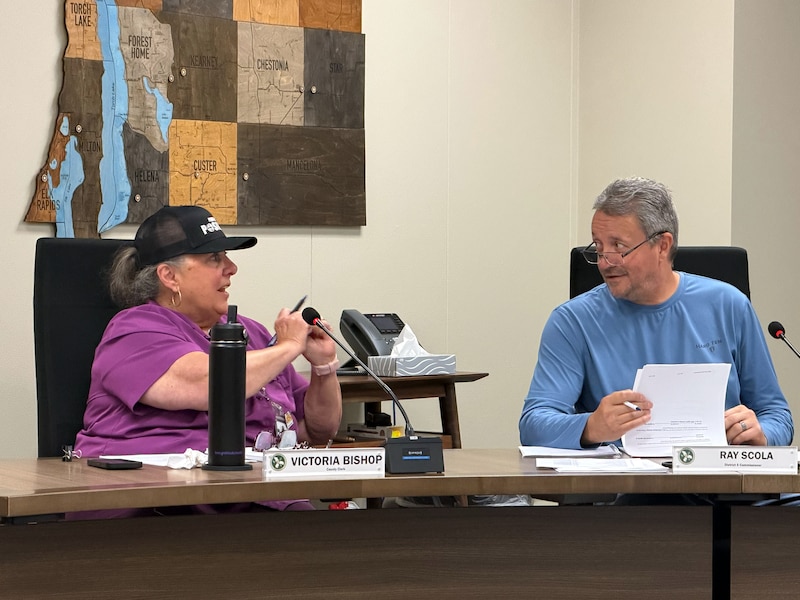 Antrim County Clerk Victoria Bishop, left, speaks with District 5 commissioner Ray Scola during a meeting in July 2026 in Bellaire. (Hayley Harding / Votebeat)
 The county clerk's office in the Antrim County government building in Bellaire, Michigan. (Kristen Norman for Votebeat)
 The exterior of the Antrim County government building in Bellaire. (Kristen Norman for Votebeat)
 Torch Lake, one of Antrim County's many scenic destinations. (Kristen Norman for Votebeat)
 Mullaly’s 128 Gallery owner Barb Mullaly poses for a portrait outside of the gallery on Friday, Oct. 9, 2026, in Elk Rapids. Mullaly is one of more than 1,600 voters whose status was questioned. (Kristen Norman for Votebeat)
 The Milton Township post office in Antrim County, Michigan. (Kristen Norman for Votebeat)
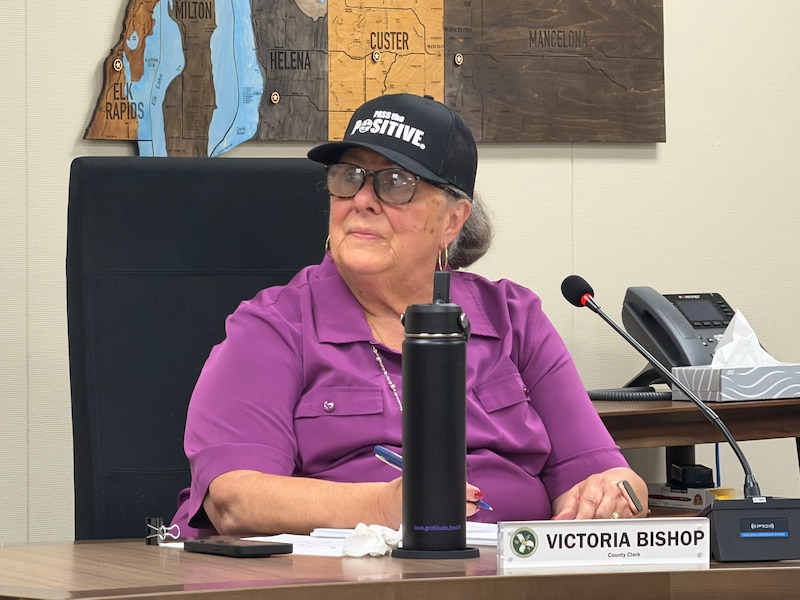 Antrim County Clerk Victoria Bishop during a county commission meeting on July 16 in Bellaire, Michigan. (Hayley Harding / Votebeat)
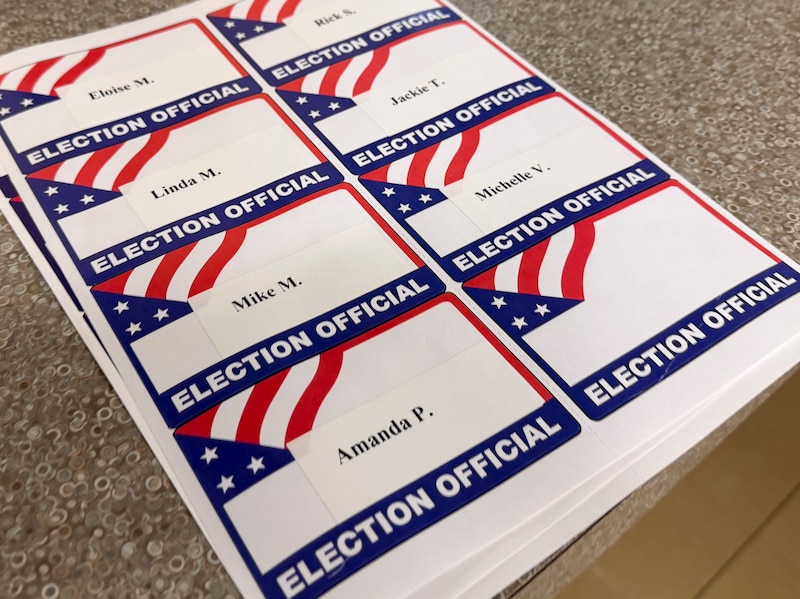 Name tags for poll workers in training during logic and accuracy tests in Kearney Township. (Hayley Harding / Votebeat)
 Ashley Areeda poses for a portrait at her home on Friday, Oct. 9, 2026, in Bellaire. Areeda is an organizer for the recall effort against Antrim County Clerk Victoria Bishop. (Kristen Norman for Votebeat)