



Less than three months before Americans vote in the 2026 midterms, a federal judge on August 11 blocked the U.S. Postal Service from implementing part of President Donald Trump’s executive order tightening mail-in voting rules. The ruling came amid an intensifying fight over how November’s elections will be administered. That fight underscores a deeper problem: the real question in American politics is no longer simply who wins the next election, but whether large numbers of people will still accept the result when their side loses.
Elections in the United States were supposed to settle arguments. One side wins, the other accepts defeat, and the country moves on. That quiet agreement is under growing pressure as the midterms approach. Control of Congress still matters, but beneath that contest lies a more consequential question: if the outcome goes against one of the two major political camps, will that camp still trust the process that declared it the loser?
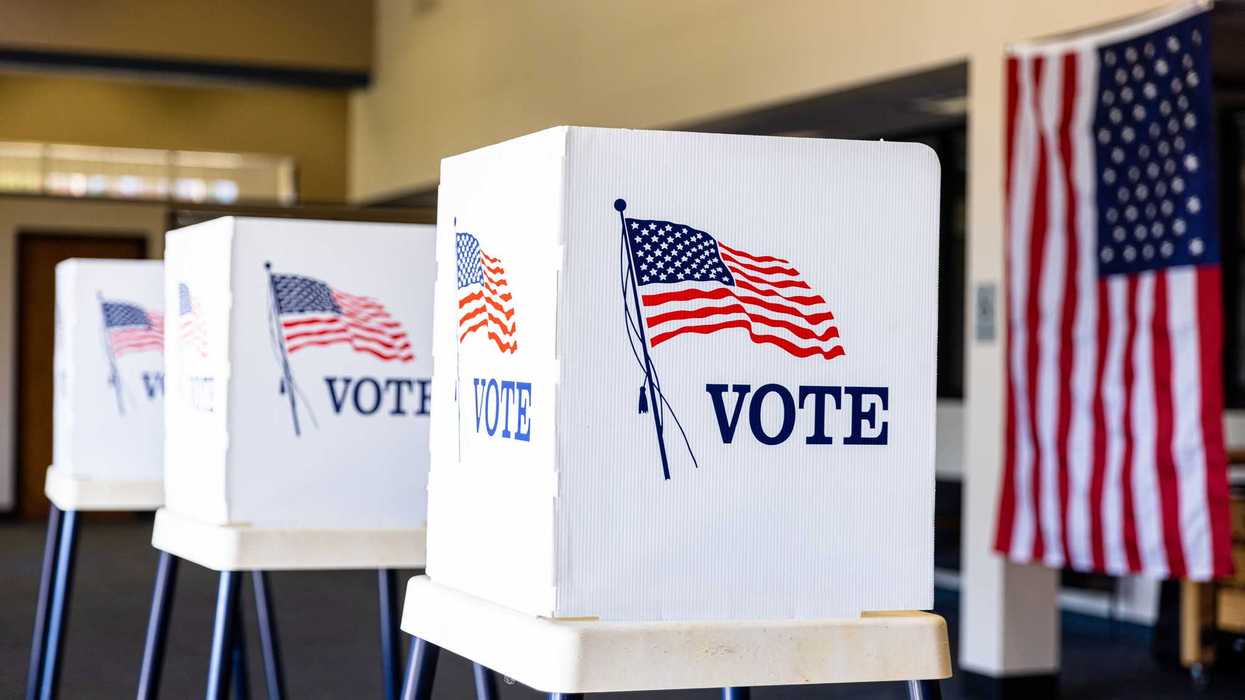
Only 55 percent of Americans say they are confident the November elections will be conducted fairly and accurately, down from 61 percent before the 2024 elections, 64 percent in 2022 and 59 percent in 2020. The decline matters because elections can resolve political conflict only when citizens regard the outcome as legitimate even when they dislike it. Once confidence weakens, the ballot box stops being where disputes end and starts becoming another object of dispute.
What makes the situation more troubling is that distrust is no longer concentrated on one side. Fifty-five percent of Republicans and Republican-leaning independents express confidence in the process, compared with 58 percent of Democrats and Democratic-leaning independents. A three-point gap does not mean polarization has disappeared. It may instead reflect a broader problem: both camps, for different reasons, are losing confidence in the same institution.
In a stable democracy, parties can fight over taxes, immigration, the economy or foreign policy. What they cannot afford to lose is agreement on the basic rule that the ballot box decides. Once the referee itself becomes a source of suspicion, the question shifts from “Who should win?” to “Who gets to say who won?”
That divide is visible in how Americans judge election administration. Ninety percent say it is important that eligible voters are not prevented from voting, while 85 percent say it is important that ineligible people are not permitted to vote. There is broad agreement on the principles. But perceptions of actual performance diverge sharply. Seventy-seven percent of Republicans say U.S. elections do well at ensuring eligible voters are not prevented from voting, compared with 61 percent of Democrats. Meanwhile, 79 percent of Democrats say elections do well at preventing ineligible voters from voting, while only 37 percent of Republicans agree.
These figures show two large parts of the country forming different pictures of the same system. One side is more concerned about ineligible voting; the other is more concerned about eligible citizens being blocked. Both can describe themselves as defending “election integrity” while treating the other side as the threat. That makes a close race especially vulnerable to a fight over legitimacy.
The danger is circular. Doubt before an election can make rejection of the result afterward easier; rejection afterward can deepen doubt before the next election. Campaigns can move from polling places to courts, television, social media and even the streets. The result that is supposed to settle the argument becomes the argument itself.
The 2020 election showed that this possibility is not theoretical. The dispute over its outcome became one of the sharpest political crises in recent American history. The point is not that the same sequence must repeat in 2026, but that the political habit of treating an election outcome as open to rejection has not disappeared. It now sits behind another high-stakes contest that will also serve, in important ways, as a referendum on the Trump administration.
If Republicans suffer significant losses in November, Democrats will portray the result as public rejection of the administration. If the margins are razor-thin, Republicans may face pressure from their own base to explain the defeat. The closer the result, the more space there is for allegations of irregularities, disorder or systemic weakness. A decisive defeat can be painful but clear; a narrow defeat regarded as illegitimate can be far more corrosive.
For that reason, the most consequential phase of the 2026 midterms may begin after the polls close. In an ordinary election, the competition largely ends when the votes are counted. In a deeply contested one, the count can begin a new fight over what the result means. That is the point at which political competition risks becoming a crisis of legitimacy.
There is still an important source of resilience. Americans continue to place great value on the principle of fair elections: 90 percent say eligible voters should not be blocked, and 85 percent say ineligible voters should not be allowed to vote. The country has not abandoned the ballot box. What has weakened is confidence that the process is neutral and reliable. That leaves room for repair, but every disputed election can make that space smaller.
The consequences extend beyond domestic politics. American power rests not only on its economy, technology, and military capacity, but also on the credibility of its political institutions and its ability to manage internal conflict peacefully. If allies see Washington struggling over the legitimacy of its own elections, their expectations about the stability of U.S. policy can change. Rivals, in turn, will watch the same divisions for strategic advantage.
In the end, the 2026 midterms may matter less for the exact number of seats each party wins than for whether the losing side accepts the outcome. Democracy survives not only because majorities win, but because minorities agree to lose. If the loser accepts the result, even a bitter and close contest can produce a peaceful new balance of power. If the loser treats the process itself as illegitimate, even a clear victory may fail to end the crisis of confidence.
That is why the decisive question in November is not simply who wins. It is whether Americans can still share one basic assumption: that the ballot box, despite its imperfections and political disputes, remains the most legitimate way to settle political conflict. If they can, the midterms can become an opportunity to rebuild trust. If they cannot, elections may cease to resolve political disputes and instead become one of the country’s most serious disputes. Under those conditions, the real crisis begins not on Election Day, but the day after, when America must decide whether it can still accept an outcome it does not like but that was produced under rules it was supposed to share.
Timothy Hopper is an international relations analyst and an independent journalist. His writings have been published by Antiwar.com, Common Dreams, and Foreign Policy in Focus (FPIF).








The President Invited Iran to Bomb My Home