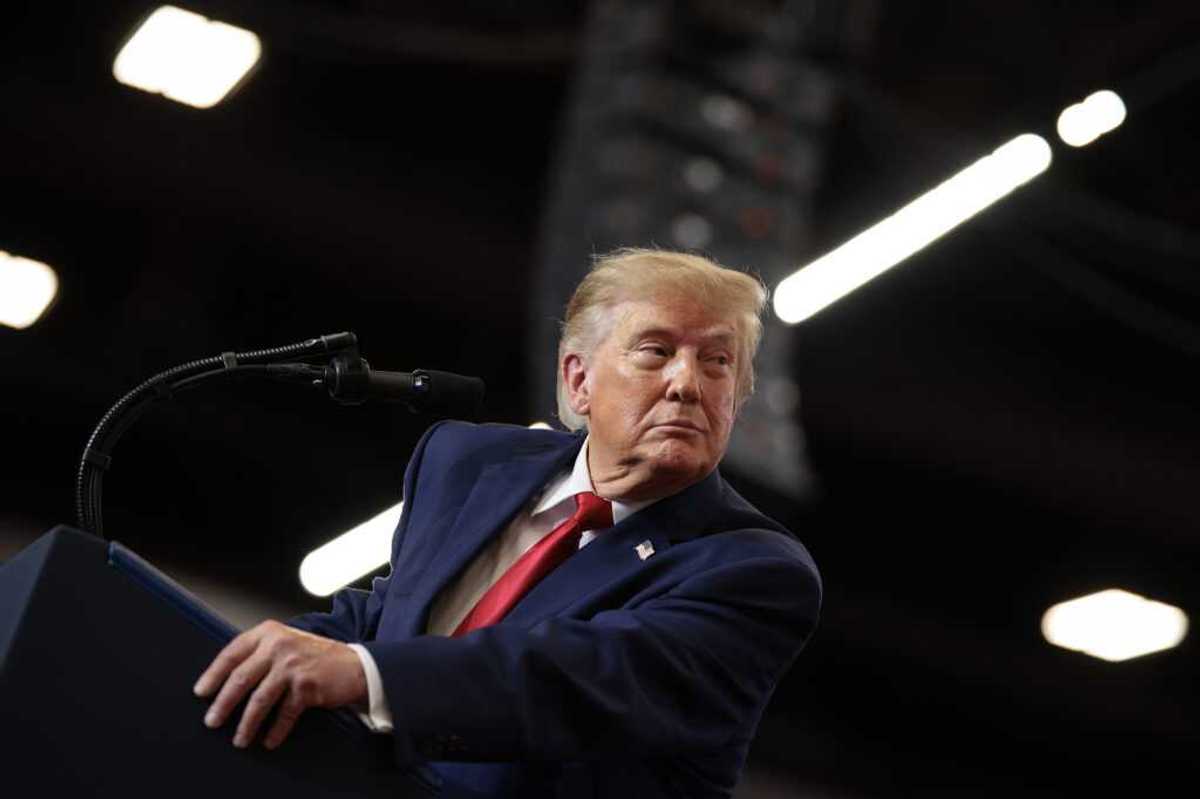


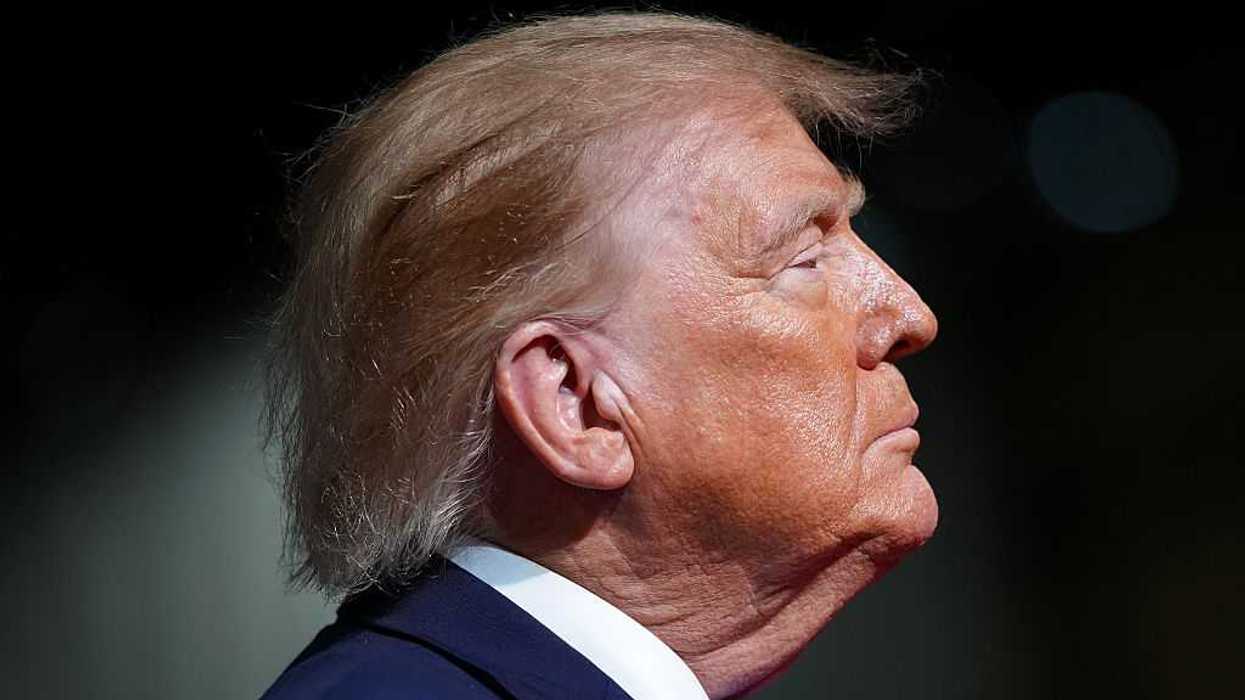

Donald Trump has always been a master of a singular, alternate-reality art form: claiming total credit for every victory and accepting zero responsibility for any defeat. Following the historic Democratic sweep of both the House and the Senate in the 2026 midterms, the president once again deployed his favorite shield. "I don’t like to consider it a defeat for me," Trump told reporters, effectively shrugging off a catastrophic night for his party with five telling words: "I wasn’t on the ballot".
It is a stunning display of political amnesia and a profound lack of self-awareness. For months, Trump crisscrossed the country, holding stadium-sized rallies where he explicitly implored his MAGA base to "pretend" his name was on the ticket. He tied his personal brand, his rhetoric, and his administration's legacy to every Republican candidate running. Yet, the moment the American electorate delivered a crushing rebuke to his agenda, the president suddenly became a passive bystander.
The reality that Trump refuses to face is that Tuesday’s "blue wave" was not a generic rejection of Republican candidates; it was a direct, national referendum on the last two years of his chaotic and damaging leadership.
Nowhere was this referendum clearer than in the historic mobilization of Latino voters, who decisively turned their backs on the administration's cruel realities. For two years, Trump sold a fabricated narrative that his aggressive immigration policies were strictly targeting "the worst of the worst." The reality on the ground exposed that lie. Under his direction, Immigration and Customs Enforcement (ICE) unleashed incessant, violent attacks on our communities. Instead of focusing on dangerous criminals, ICE agents tore apart families, raiding workplaces and neighborhoods to terrorize hardworking people whose only "crime" was answering the promise of America.
Look no further than Texas’s 15th Congressional District for proof of this backlash. Donald Trump carried this exact district by a massive 18 points in 2024, but the local Latino community, deeply rattled by ICE's heavy-handed enforcement and economic burdens, swung back dramatically. Democrat Bobby Pulido's victory is the definitive case study of the midterms: a complete undoing of Trump's previous Hispanic voter gains.
By blaming "candidate quality" and insisting that Republicans would have won "in a landslide" if his own name had been on the ballot, Trump insults the intelligence of the American electorate. The voters did not simply "not like" the candidates; they rejected the Trump-endorsed loyalty tests that elevated extreme politicians over capable public servants. When deep-red strongholds like Texas, South Carolina, and Kansas flip to Democrats, it is a structural collapse. As veteran Republican strategist Karl Rove bluntly warned prior to the vote, Trump's obsession with keeping himself at the center of the campaign trail was actively steering the party toward a midterm disaster.
But this defeat is also a severe warning to the Republican enablers who have spent the first half of Trump's second term carrying his water. For two years, GOP lawmakers have traded their principles for proximity to power, choosing to look the other way at a style of leadership laced with narcissistic arrogance. By prioritizing blind loyalty over their constituents' needs, these politicians allowed Trump's personal grievances to become a permanent barrier to governing for the people. Tuesday's results proved that the American public will no longer tolerate spineless representation. If remaining Republicans continue to enable a presidency that views public service merely as an exercise in self-preservation, they are actively signing their own political death warrants.
True leadership requires the courage to look in the mirror after a defeat and ask hard questions about what went wrong. Instead, Trump offers excuses, deflection, and the same tired grievances. By refusing to acknowledge that his dismal approval ratings and inhumane policies acted as an anchor for his party, he ensures that the GOP will learn absolutely none of the right lessons from this defeat.
Now, the burden of leadership shifts. The incoming Democratic majority in Congress has been handed a mandate driven by pocketbook pressures and a firm rejection of institutional cruelty. They must not squander it.
The new majority’s first order of business must be a sweeping legislative call to action that protects the vulnerable and reins in executive overreach. Congress must immediately pass comprehensive immigration oversight, starting with mandatory funding restrictions and accountability measures that require ICE agents to wear clearly identifiable uniforms and body cameras, prohibit masks, and strictly limit the use of force. Concurrently, they must pass economic relief packages targeting food and grocery inflation, directly addressing the millions of working-class families who reported having nothing left over financially each month under Trump’s failed economic vision.
The American people used their ballots to sound an alarm on the last two years of mismanagement, division, and institutional cruelty. Democrats did not just win because of a "good job" campaigning; they won because communities of color and everyday Americans are desperate for a course correction.
Donald Trump can keep pretending he wasn't on the ballot, but the history books will record Tuesday night for what it truly was: a devastating, undeniable verdict on his presidency.
Hugo Balta is the executive editor of The Fulcrum and the publisher of the Latino News Network, and twice president of the National Association of Hispanic Journalists.