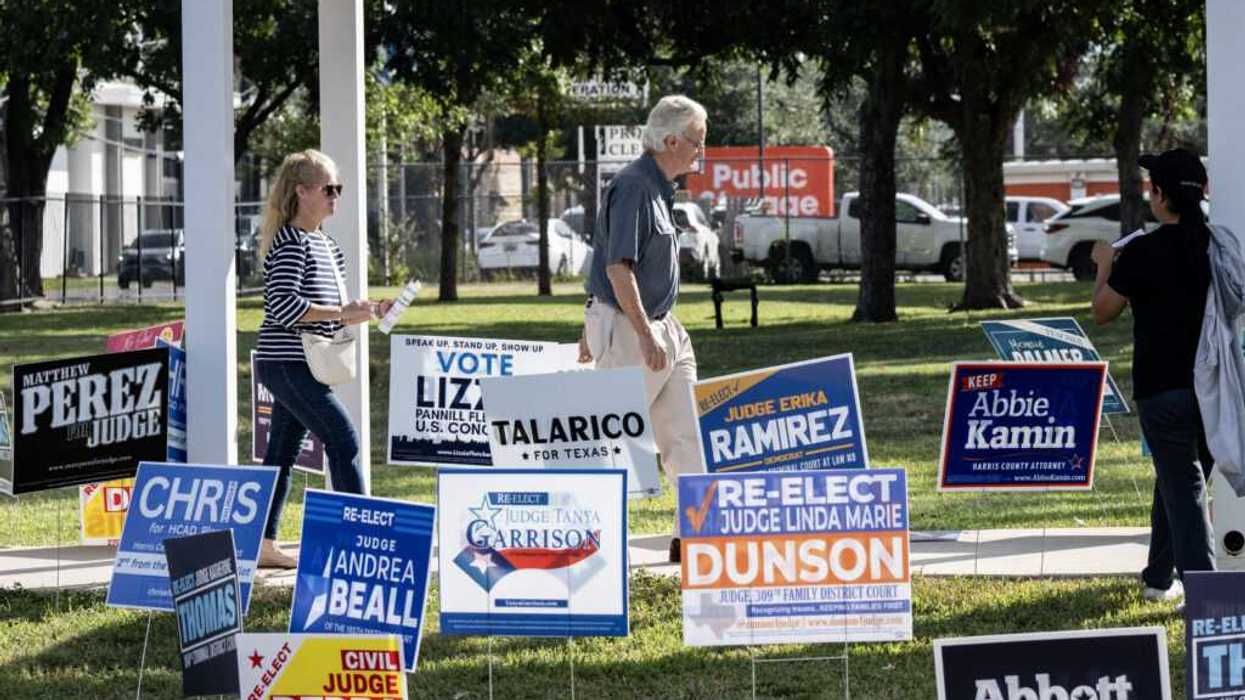


Less than half of Americans expect this November’s midterm election to be free and fair. According to a survey from the University of California San Diego, confidence is falling among Democrats, Republicans, and Independents alike. The data is disconcerting, but it also points to an important opportunity. When trust is fraying, we have a chance to intentionally strengthen the relationships that make civic life possible. Elections provide a concentrated moment to practice pluralism, the work of respecting, relating, and cooperating across difference for the common good. Faith communities are uniquely situated to help us do that.
Elections ask us if people who vote differently can live together as neighbors. Faith communities have a vital role to play in helping us answer that question with a resounding "yes!” Faith communities teach us about trust and relationships. They help us build belonging, and they remind us that disagreement doesn’t have to mean contempt. When we engage in elections in that spirit, we aren’t just choosing leaders or voting for ballot initiatives. We are engaging in the very relationships that make democracy possible.
That’s why Interfaith America is proud to join Braver Angels, faith250, Paths to Understanding, Living Room Conversations, Listen First Project, and the National Institute for Civil Discourse in promoting the Faith in America initiative. The initiative is built on a simple and powerful idea: supporting free, fair, and safe elections is not a partisan cause. It is a shared civic responsibility, and faith communities can reduce fear and division that threaten our belief in a shared civic life.
Faith leaders and community members who want to get involved can visit the Faith in America website to find resources, sign up for events, and connect with other partners in their area. By signing up or reaching out, individuals and congregations can show their support and take practical steps to strengthen trust and participation in elections.
Faith in America is built on three pillars — national online prayer services, a social media campaign, and local community engagement efforts designed to strengthen trust and confidence in elections.
Interfaith America supports this work by sharing its Faith in Elections Playbook, which offers local faith and civic leaders practical, nonpartisan tools to lead their communities in engaging in elections with a spirit of pluralism. The playbook leans on the strengths and roles faith communities already play as trusted messengers, conveners, and relationship builders. Faith leaders can:
-Share reliable information about voting
-Host conversations across differences
-Encourage members to serve as poll workers or poll chaplains
-Organize meetings with election officials to express gratitude, support, and accountability
Our elections are run by our neighbors at the state and local level, not from Washington, D.C. We get lost in national narratives about division and miss opportunities to build relationships that can strengthen trust in elections in our own backyard.
Trust grows through relationships. When members of a congregation meet with a local election official, tour an election office, or join a community conversation, it builds connection and understanding. One example comes from Trinity Community Church in Ohio, where members organized a visit to their county election office last year. Initially, several participants expressed skepticism and uncertainty about how ballots are counted. After speaking with election staff, viewing the process firsthand, and asking questions in a respectful setting, the group left with renewed confidence in the local process and a commitment to share what they learned with their broader community. I’ve heard from participants who arrived for meetings with local election officials with deep concerns and then left confident, ready to share accurate information with friends, family, and fellow congregants. That change came from human connection.
Elections inevitably produce winners and losers. The deeper test is whether people who vote differently can keep living together as neighbors. I have faith they can. Every day, I see Americans choosing connection over contempt and relationship over suspicion. Those choices, made in communities across the country, are what make both pluralism and democracy possible.
Scott Rasmussen is the Director of Democracy Initiatives at Interfaith America.