


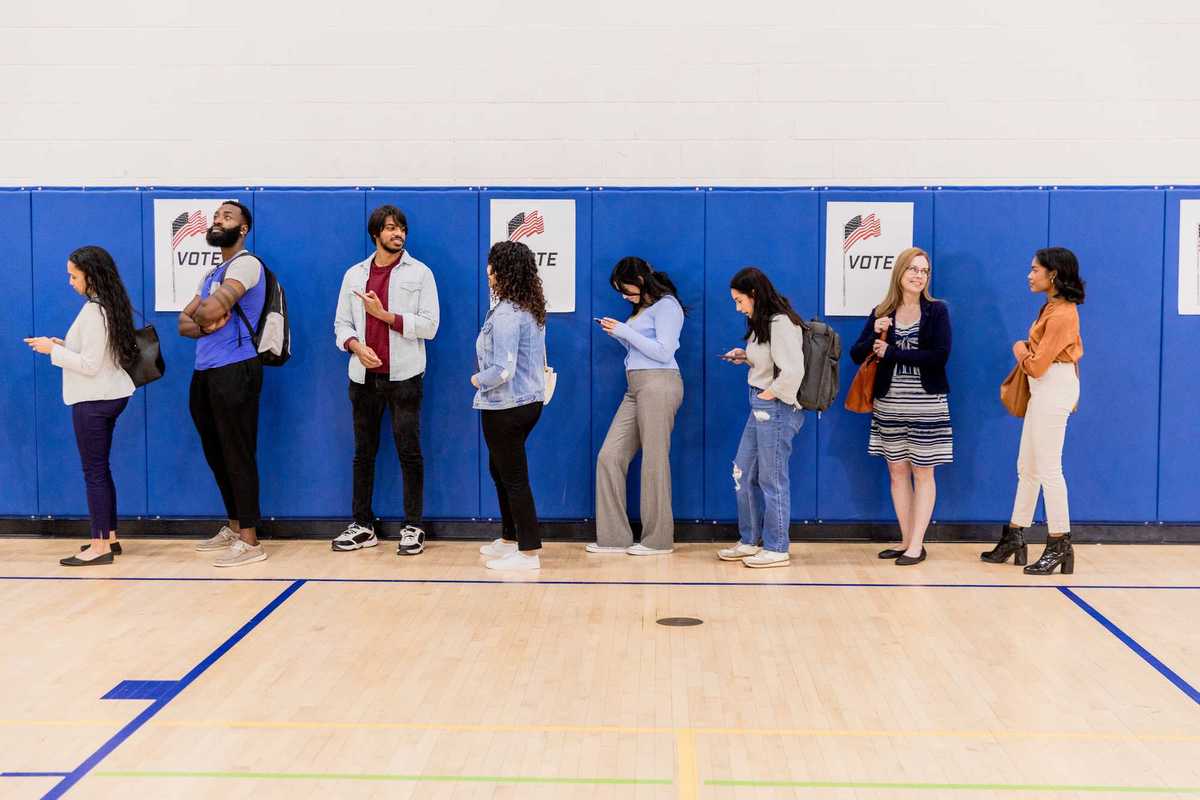

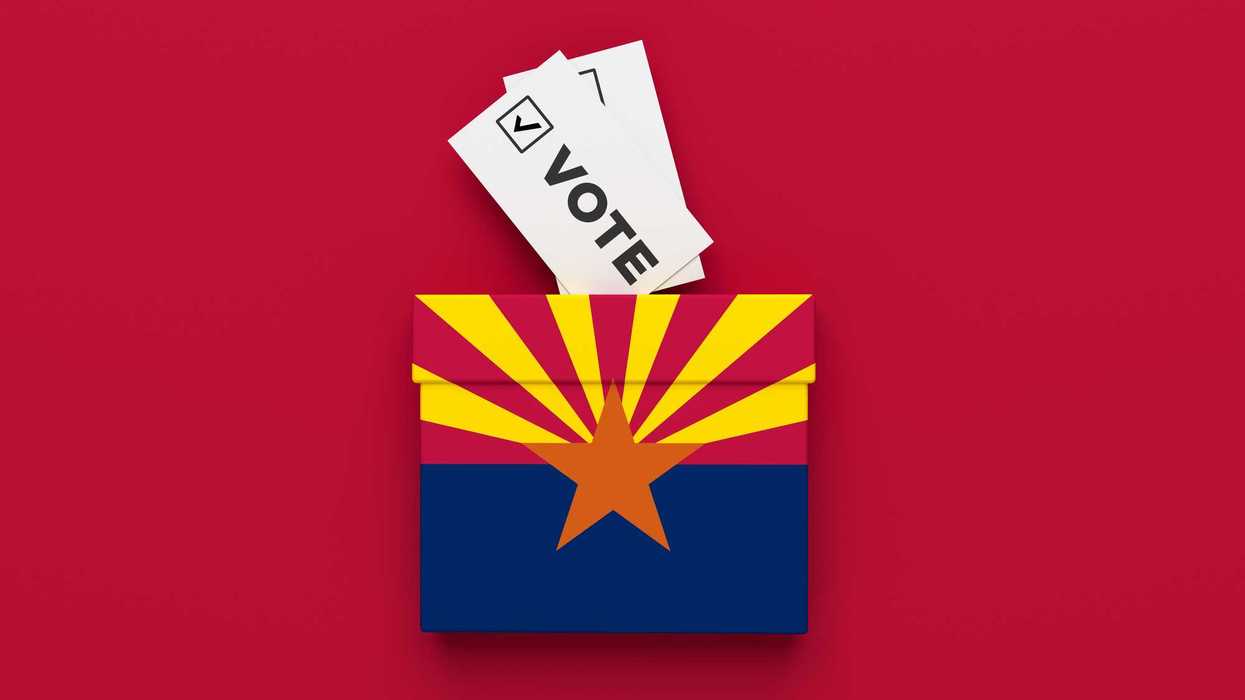
This Fourth of July, I found myself in a somewhat heated discussion with some of my relatives – relatives whom I absolutely love. We returned home from watching fireworks and started to make some fireworks of our own as the conversation turned to our elections, whether we can trust them, and the role of voter identification. If you’re part of a family, I am guessing you, like me, have probably been in a conversation or two about politics in the last few years.
I come to these conversations with a unique point of view. I am a member of Mormon Women for Ethical Government (MWEG), and I serve as the Arizona State Director. Nationwide, we have over 10,000 members across all 50 states. We are best described with these four words: peaceful, proactive, faithful, and nonpartisan. We’re about 40 percent Republican, 36 percent Democrat, and 24 percent Independent. With a foundation of faith, we are women who want to effectively engage in politics and advocate for peacemaking.
There is no shortage of election-related discussion topics in Arizona. Our state has been at the center of election concerns since 2020. Over the past five years, we have seen honorable election officials harassed and demeaned for fulfilling their civic duties. Despite no evidence that Arizona election results should be questioned, skepticism around election processes persists. And the average voter who wants to support free and fair elections often lacks knowledge about procedures in order to refute election inaccuracies. MWEG believes there is something we can do about this.
This year, we made simple but deliberate plans to address election doubt: We met the people who run them. While our members generally don’t distrust election outcomes, many of our members aren’t confident in their understanding of how elections are run. We felt that providing opportunities for our members to meet with election officials, visit tabulation centers, and invest in in-person experiences would move members from election supporters to election advocates and reduce the impostor syndrome some might feel when discussing this hot-button issue.
Because I didn’t have a deep relationship with our Secretary of State, Adrian Fontes, I made sure to approach him at an event earlier this year to request that he meet with our members. I shared why meeting with our small but mighty group would be worth his time. I let him know that MWEG members are active in their community, and they are often trusted messengers in their neighborhoods. I explained that building confidence in our elections has to start from the ground up. We got an appointment on the books.
It was empowering for us to have face-to-face time with our Secretary of State. We learned the specific duties of various election officials in the state. We discussed Article I, Section 4, of the U.S. Constitution, which grants states the role of determining the “times, places, and manner” of elections. We were able to ask about our concerns surrounding the upcoming elections, including what happens if election results aren’t certified by counties and the possibility of ICE at the polls. We were also able to express gratitude to him, his staff, and the other election officials around the state for the difficult task of running elections.
Also this summer, along with other local leaders, I was invited to tour the Maricopa County Tabulation and Election Center (MCTEC). When the invitation came, I thought of our MWEG women and immediately turned around and asked: Can I bring some of my friends? An easy ask with a great result. It was an eye-opening experience for our members to see where the magic happens and better understand the checks and balances of processing ballots. It was informative to hear about elections directly from the Maricopa Elections Director. Touring the facility helped our members recognize the complexities of the process and the expertise of those who manage it.
For groups and organizations concerned about advancing democracy, meeting with election officials doesn’t have to be a heavy lift. When reaching out to election officials, always lead with your “why.” Figure out other groups interested in election confidence and make plans together. You don’t have to always go it alone. Don’t restrict opportunities just for the leaders in your organization. Giving your everyday members these one-on-one chances to connect with election administrators gives them upfront and personal knowledge of these people and processes, and helps them understand how important they are in their communities. Their firsthand experiences will translate into firsthand knowledge. Our members who attended went from interested spectators to active advocates.
Here is what some women said after these visits:
- “I now know the sources in the state I can turn to to receive accurate information about elections and election results.”
- “I learned exactly how secure and particular the election process is. There’s little room for error, and the checks and balances are intricate and established.”
- “Slow counting and processes do not equate to fraud. The rules and regulations drive the timeline, not fraudulent activity” (something that especially matters in Arizona).
Before meeting with Secretary Fontes, our members’ confidence in Arizona’s election administration averaged 3.6 on a scale of 0 to 5. After meeting him, that score went up to 4.6. The women who toured MCTEC shifted how they rated their understanding of ballot processing from 3.0 before the visit to 4.5 afterward. With increased confidence concerning how elections are run, they are now better messengers in their circles of influence. When election integrity is brought up at the next family gathering, they will be prepared to share what they’ve learned and lead others to accurate sources of information.
If you’re considering setting up meetings with your election administrators and elected officials, know that it will be worth your time. These personalized experiences will yield fruit that we can’t always anticipate. As our Secretary of State listened to our questions and better understood why we wanted to meet with him, he said something interesting: “It’s going to be people like you that are going to be the most effective antidote to polarization.” I think he caught our vision: we should never underestimate the power of consistent, pervasive, small-scale efforts to move the needle. I truly believe that a lot of this work happens one by one, and then ten by ten.
Next up for MWEG? We’re looking forward to our upcoming meeting with the Pima County Recorder. Just another chance for our women to learn, to grow, and then to turn around and lead.
The Trustworthy Elections Initiative is a collaborative effort to strengthen trust in elections through education, dialogue, and community connection -- supported by Living Room Conversations, Civity, Interfaith America, the National Institute for Civil Discourse (NICD), AllSides, National Coalition for Dialogue & Deliberation (NCDD), and a growing network of civic leaders.
Jane Andersen is one of Interfaith America's 15 Vote is Sacred Fellows, who use the Faith in Elections Playbook as a resource to help their communities see elections as an opportunity to practice pluralism and constructive engagement with elections. This is Jane's story.








 Scenes from Favela Rocinha, Brazil - (R-L) Rows of brick homes, Hugo Balta on a motorcycle taxi, and steep, winding roadsHugo Balta
 Following our HWF Civic Futures kickoff last week with Eric Liu, our design partners at Public/Official have created a unique visual to capture the “civic scaffolding” spirit of this conversation.
 Lisa, Coaches Rev and Matt Elkin, and former Stanford Men’s Basketball star Maxime Raynaud at Stanford’s “All Vote No Play” Democracy Day, 2025