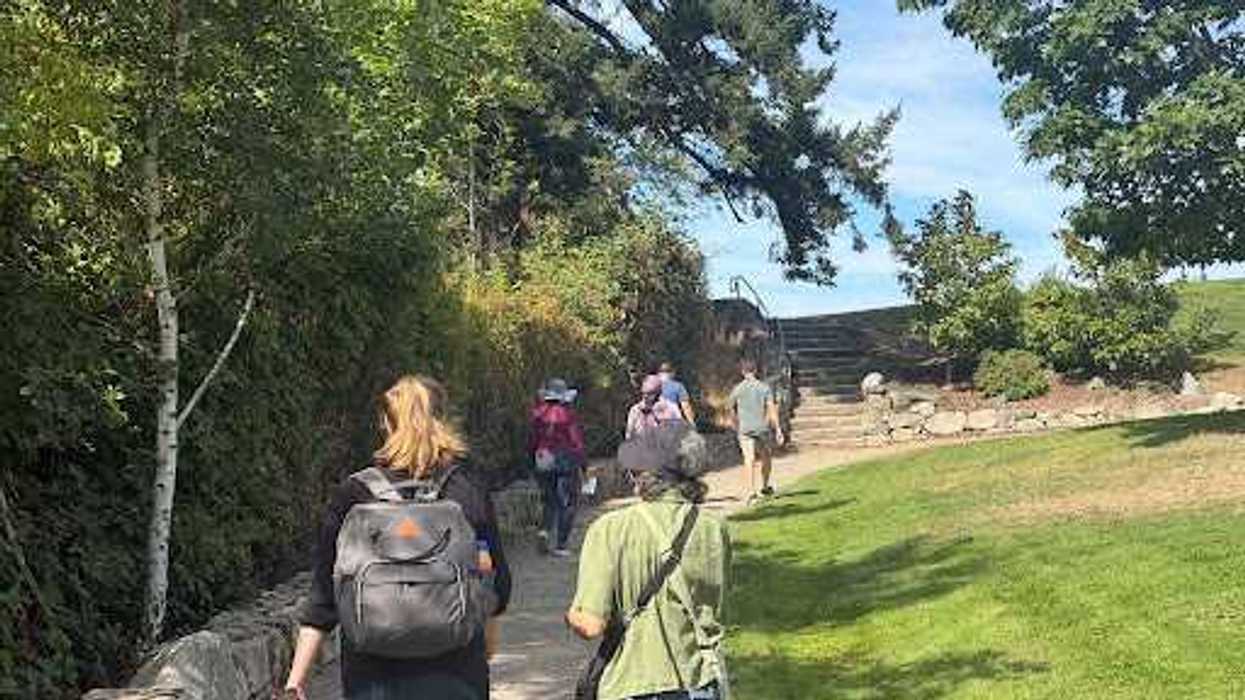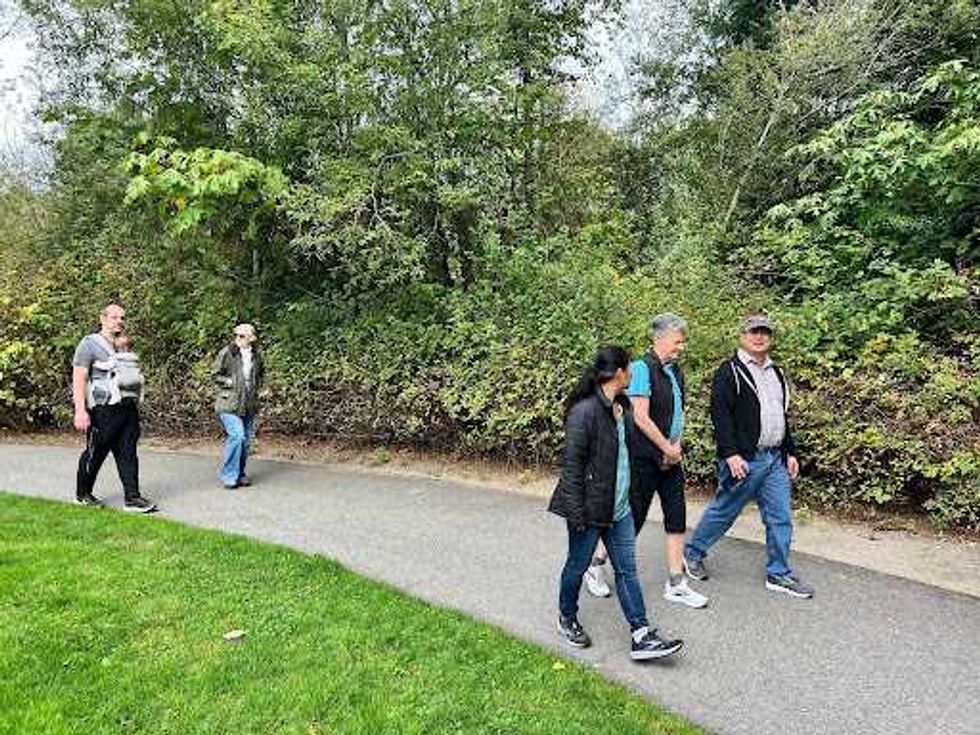




MILWAUKEE, WI— Leaves crunched underfoot as participants in Run Black and Green’s Strides for Survival event walked through McGovern Park on Saturday, October 31, passing a lake, an apple orchard and a 300-year-old oak tree—sights many were seeing for the first time.
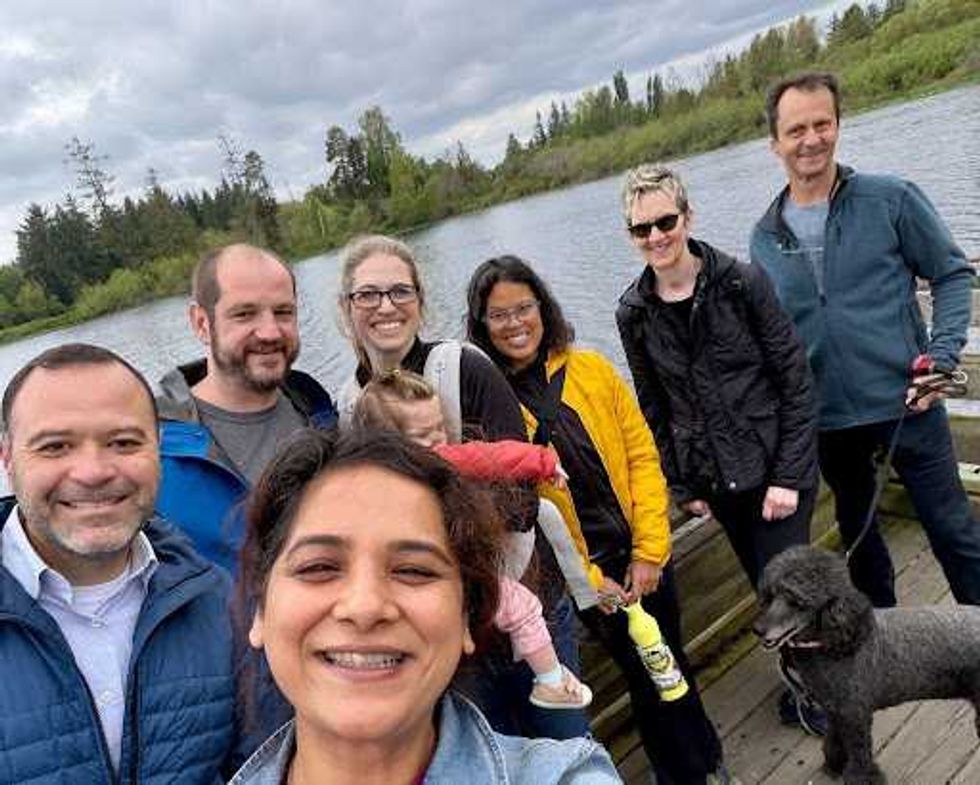
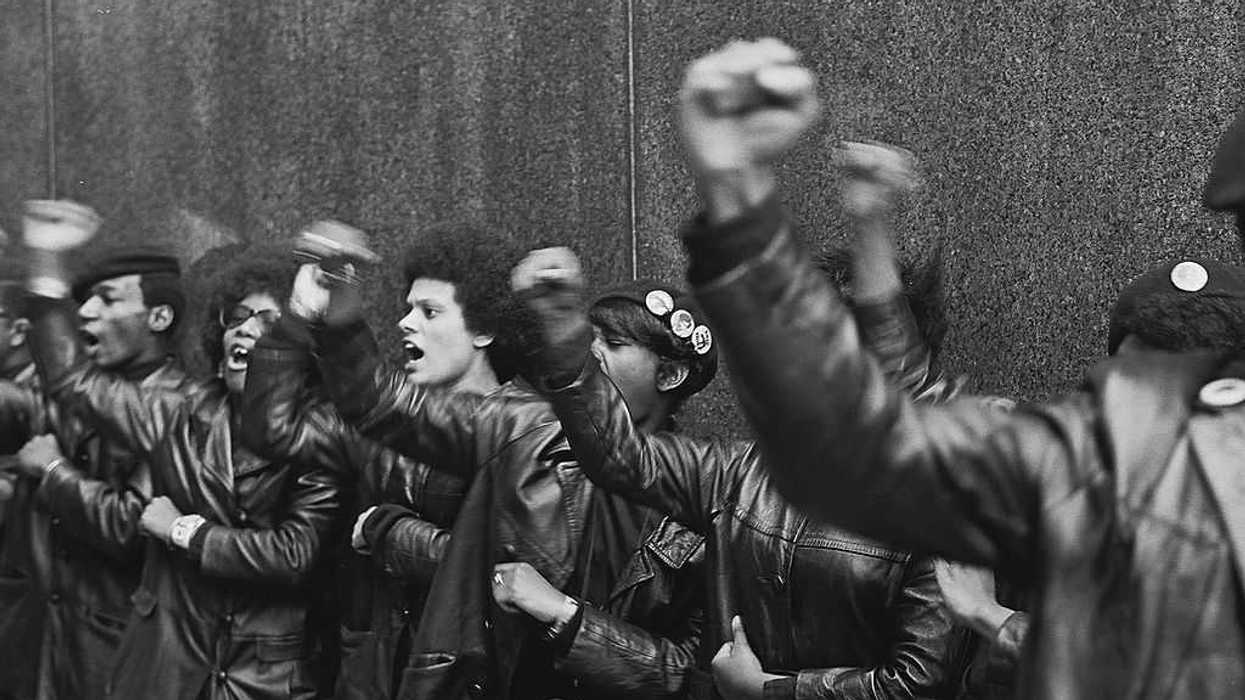
The event, which celebrated the legacy of the Black Panther Movement, brought attendees together to move their bodies and learn from one another.
For Nateya Taylor, who founded Run Black and Green, her passion for movement grew from her own experiences.
“For me, growing up in Milwaukee, I was always afraid to move in my own neighborhood or to go on a walk in my own neighborhood,” Taylor said.
The idea for Run Black and Green, now in its second year, came from Taylor’s experiences working in public health and her studies of criminal justice. In her studies, she was struck by the disparities Black people experience.
Health outcomes for Black people in Milwaukee are worse in many cases than those for other racial and ethnic groups. A 2024 report from Health Compass Milwaukee showed that life expectancy for Black residents in Milwaukee County was 68.9 years, compared to 78.1 years for Hispanic residents and 79.7 years for White residents.
Run Black and Green focuses on improving those outcomes for Black people in Milwaukee through physical activities that connect people.
“You’re feeling more confident in being able to walk in your neighborhood now that you’re doing it as a community and with other people,” Taylor said.
Saturday’s nature walk was just one way the organization helps foster relationships. Attendees shared breakfast and talked about issues affecting them. The event also included self-defense workshops and a drum circle, in partnership with Drums Up, Guns Down.
“Having a resilient community means that Black people are coming together to address health disparities as a community, in a communal way, where we’re looking out for each other,” Taylor said.
Part of that communal approach means collaborating with other local organizations on issues that disproportionately affect Milwaukee’s Black residents.
In July, the organization joined a community-led day of action focused on food access after the closure of Metcalfe Park’s only grocery store. And in August, Run Black and Green commemorated the one-year anniversary of the flooding in Milwaukee with a walk and discussion on how to build flood resilience.
Taylor said these events give community members a chance to problem-solve together. She takes inspiration from the Black Panthers and their grassroots approach.
“I think that the community should be on the front line of addressing these issues. I think that community input should be prioritized… The community knows best what they need,” Taylor said.
Jada and Floyd Harmon, of Harmon Community Farm, were demonstrating a solar panel at their table. The couple uses solar energy to power tools and a water pump on their off-grid farm. According to Jada Harmon, Run Black and Green is facilitating a space for collective action.
“By everybody coming together, sharing information, knowledge-sharing, supporting one another, understanding that our issues intersect, are very similar—that is how we actually build power,” she said.
Jada Weber, who was attending a Run Black and Green event for the first time, said she was grateful to have a space with a multidimensional approach.
“I love the fact that it's safe, and it's so informative with different topics… It’s so multi, it’s not one way, and that's exactly what the community needs,” Weber said.
Taylor believes that creating a space for people to gather can foster more civic participation among attendees.
“These discussions get people’s brains turning, because a lot of times we talk about not just what we can do as a community, but what can change on a policy level as well,” Taylor said.
Weber said it takes moments like Saturday to help open the door for more participation. Attending the event reminded her of a close-knit gathering.
“It feels like a family reunion, but if it was for the community. A resourceful family reunion,” Weber said.
Abbey Osborn is a student at CUNY Newmark Graduate School of Journalism and a fall Fulcrum Fellow.