


What’s the first thing that comes to mind when you hear the word, “care”?
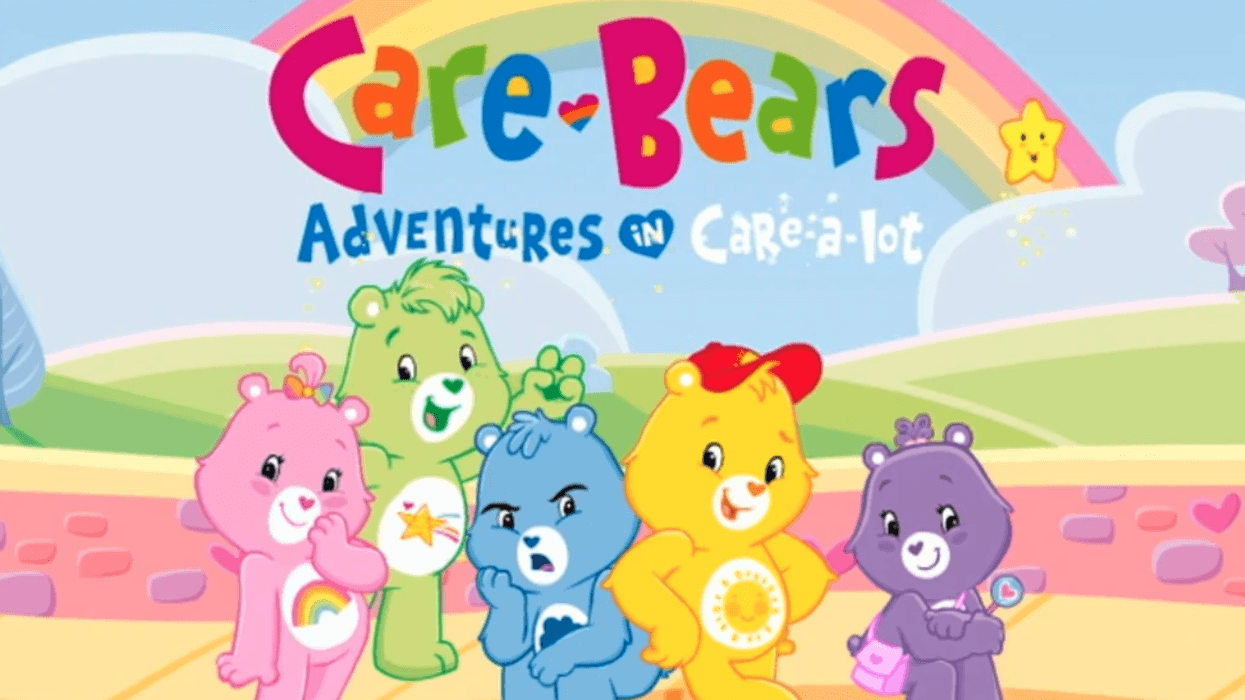
For me, it was the Care Bears. Adorably colorful creatures that help soothe emotions when times are tough. In America’s cultural imagination, care is the equivalent of cuddling up with a fuzzy blanket or hugging a stuffed animal... or maybe I am just a hopeless Cancer sign who likes cozy things.
It turns out this image is light years away from the reality of care.
I’ve learned that care is hard, dirty work. Work that, despite being fundamental to democracy, is often offloaded to historically marginalized communities, women, and people of color.
I interviewed Joan Tronto, author of Caring Democracy, to gain a deeper understanding of what a caring society can look like. In her book, she defines care as “everything we do to maintain, continue, and repair our ‘world’ so that we can live in it as well as possible.
But you can't create a culture of care without a foundation of trust.
Growing up in New York City after the Twin Towers fell, I watched the Freedom Tower slowly rise downtown. Before it reached toward the sky, construction workers spent several years building its foundation. Architects know that if you want something to stand tall, the foundation must be strong.
That is why, as members of the Democracy Architects council, we are on a mission to restore community, trust, and freedom in our democracy by 2030.
In the book The Seven Rules of Trust, Wikipedia co-founder Jimmy Wales argues, “the erosion of trust is a national emergency.”
A Gallup poll shows only 32% of Americans trust the news media and only 16% trust the American government to do what’s right. Additionally, only 31% trust businesses to use AI responsibly. Yet trust is pivotal to progress.
So how do we rebuild trust?
The process has to happen locally. With the people who are closest to us. When people work toward a common interest they share and can act on, they build community and restore trust.
In Ancient Futures, author Helena Norberg-Hodge describes how, in traditional Ladakhi communities in the Himalayas, people once shared a strong sense of local responsibility. If a pipe broke in the community, people fixed it. Care for place was woven into daily life.
But as Western-style development and more individualistic values entered the community, that shared responsibility began to erode. Broken pipes could sit in the street for months because people now waited for an outside system, like “the government,” to handle it. The issue was a shift in civic imagination: from “this is ours to care for” to “this is someone else’s job.”
That connects directly to our cities now.
As a member of the Youth250 bureau, I presented at a landmark event at the Declaration of Independence Center where Shania Bennett, who is currently running for Mayor of Philadelphia, made a similar point about local civic agency.
If you see trash on your block, she argued, that is also an invitation to notice your own relationship to the place you live. Who cares for this street? Who is responsible for this park? Who gets to feel ownership over the neighborhood's beauty and dignity?
We need to value the work of care as essential democratic labor: the people who clean streets, pick up trash, repair pipes, maintain parks, and keep communities alive. They hold it all together. Because care is a skill. A practice. One that we too often disrespect.
One practical solution to this is to embed care into learning.
Children can be called upon to care for their classrooms, schools, and communities. In Children Framing Childhoods: Working-Class Kids' Visions of Care, Wendy Luttrell argues that students should see care as participation rather than punishment. Cleaning shared spaces, helping a classmate, tending a garden, or maintaining school materials, these all reinforce small civic practices. This does not replace the need for care workers. However, it helps shape the habits that inform how we treat our neighborhoods, cities, and public spaces.
Turns out the kindergarten classic says it best: “Clean up, clean up, everybody everywhere. Everybody do your share.” Honestly, that is democracy in a nutshell. Because democracy works best when everyone works together.
It is hard to leave your trust in someone else’s hands, especially a stranger. However, rejecting the classic parental advice of “don’t talk to strangers”—especially strangers who are different from us—may be one of the things that can help our democracy most.
In her book Talking to Strangers, Danielle Allen argues that putting strangers together for a common goal can lead to a more caring democracy.
A testament to this is Deliberative Polling, developed by Stanford professor James S. Fishkin. This method tests how people’s opinions can shift when they engage in conversation with people who think differently. Research showed that 70% of participants changed their minds on at least some individual key issues after deliberating together on issues that affect them.
I can attest to this personally. Growing up in New York City, not talking to strangers was a survival skill. But as I got older, talking to strangers has expanded my horizons in ways I never could have imagined.
It was a stranger’s encouragement that helped lead my art to a historic lunar museum, where it became the world’s first sci-fi short film on the Moon. Talking to strangers also led me to my first job out of college, writing for Elle and Harper’s Bazaar. Sometimes a stranger holds the key to a door that has been waiting for you to enter.
Culture gives us every reason for strangers not to have our best interests at heart. Yet we trust in those who make decisions with our wellbeing in mind.
The problem is not that we do not care, but rather that our care is directed at the wrong things. Journalism, politics, media, and technology often direct their care toward revenue, attention, and growth. Large corporations are perceived as profit-driven rather than focused on the well-being of society, causing public trust to plummet.
The digital landscape we live in often surrounds us with false care.
The Center for Humane Technology argues that algorithms do not care about our holistic well-being. They care about what keeps us scrolling. Young people are growing up in a time when a chatbot may be more available to talk about their emotions than the friends in their community.
Social media can make us feel connected to a community while leaving us alone in our rooms. The epidemic of loneliness we find ourselves in is fueled by not being called upon to care.
The work now is to redirect care toward one another, our communities, and the shared world we are responsible for maintaining. To rebuild a culture of care, Joan Tronto argues, we must put care at the center of everything we do.
One way to practice care is service. I see service as an embodiment of agency. Doing something in your community, whether cleaning, organizing, volunteering, or showing up. Putting care into action is also how we find our people and our purpose.
Miraculous things can happen when we see people not as a means to an end, but as an end in themselves.
In The Serviceberry, Robin Wall Kimmerer offers another way to think about the economics of care. She writes about reciprocity as an economic model for community life: not extraction, not endless transaction, but relationship. A healthy community is one where care circulates.
That matters because care is the paid and unpaid labor that keeps people alive: childcare, eldercare, cleaning, cooking, repairing, and maintaining the world around us.
This is where I want to emphasize the art of mutual care.
To me, mutual care means identifying what we already commonly care about across our differences, then using those shared concerns as a starting point to work toward collective goals.
When we focus on mutual care, issues can become less polarized. According to a Yale Program on Climate Change Communication study, while Democrats and Republicans had completely different reasons for caring about the environment, both sides shared a foundational priority: a safe and healthy environment for the next generation.
Rather than replacing our sense of community, technology can help us organize the foundation for real care to take place. Because real care requires gathering: organizing, cleaning, volunteering, and showing up together. And real care can be really hard work.
It turns out, care is not a perfectly wrapped care package with ribbons and sprinkle cookies.
Care is a practice. A habit. Care is the essential work of maintaining, repairing, and continuing the world we share.
Care is also the foundation of trust and democracy. Democracy is about making decisions together, and trust is believing that other people can make decisions with our well-being in mind.
That requires care. When people care, they are more likely to make decisions with our best interests at heart. And when we feel cared for, we are more able to trust.
So if we want a culture of care, we have to teach people how to practice it: through media literacy, technology literacy, civic literacy, and real opportunities for local action.
Because the question is not only, “What do you care about?”
The question is: what do we mutually care about, and what are we willing to do about it together?
Anatola Araba is a futurist, filmmaker, and creative technologist whose work sits at the intersection of art, technology, and impact. She founded her studio, Reimagine Story Lab, and is a professor at New York University, where she teaches emerging media.