



As corporations, politicians, and tech bros usher in the era of artificial intelligence (AI), our community members continue to fight back against AI's incorporation into daily life. Particularly when it comes to opposing Automated License Plate Readers (ALPRs).
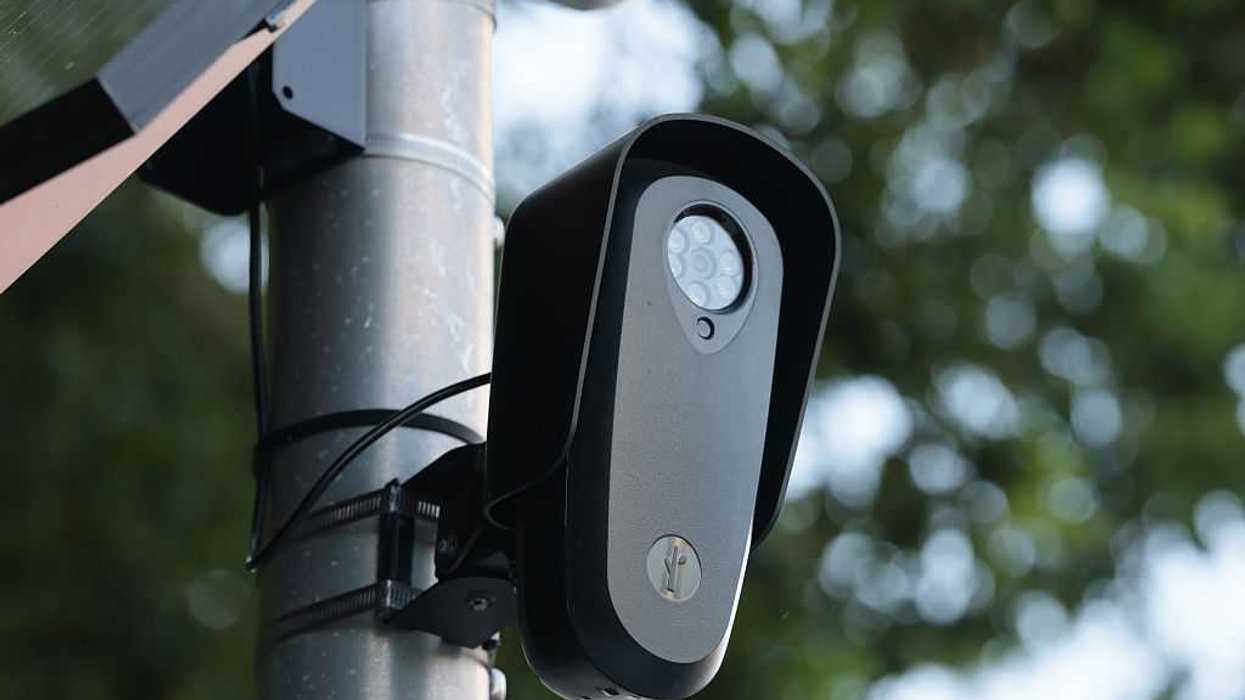
ALPRs are becoming so sophisticated, with more AI components, that they cannot only surveil us using our license plates and the make and model of our car, but also increasingly distinguish how we dress and look, using AI to profile us into a large-scale database for future reference.
In Texas, there is consistent and growing backlash against ALPRs. So much community disdain has spurred Governor Abbott to pause all funding he initiated by funneling $30 million into Flock cameras. Most recently, Governor Abbott has stopped issuing permits for Flock and other ALPR contractors to install cameras on Texas roads. A performative push to pacify his constituents before this November’s election.
Meanwhile, Florida banned ALPRs on all state-maintained roads and highways, a move that reaches across the political aisle. While some leaders consider how much surveillance their constituents will allow, more and more people are being stopped because of false positives caused by the erroneous nature of ALPR cameras.
One report from the Los Angeles Police Department (LAPD) showed that its internal Flock camera audits revealed a 32.3% false-positive rate. That means one in three drivers were falsely accused of driving a stolen vehicle. This, along with privacy and data concerns, led the LAPD to cancel its Flock contract. The false positives are becoming more common with ALPR devices. A college student who recently bought a new car has been stopped twice because the Flock system flagged the car’s temporary tags.
In other situations, it has led to false accusations and jail time. Lindsay Brooke Isaacs was charged with eight felonies for the alleged murder of three individuals during a car crash. Lindsay spent 13 days in jail before the officers realized they had arrested the wrong person. Another woman was falsely accused of stealing a package and spent weeks proving her innocence. The rate of false positives should leave you shivering in fear that one day you will be driving and falsely accused and arrested for a stolen vehicle, package, or worse, the death of another person.
A CNU study revealed that Flock cameras are often placed in low-income Black and Brown neighborhoods. The report noted that 8 out of 10 cameras were installed in Black neighborhoods. These areas had 4 times as many cameras as predominantly white, affluent neighborhoods. It is quite clear who the target of mass surveillance is.
Many proponents of ALPRs will parrot the common Flock marketing talking points about how effective mass surveillance is in reducing crime. However, in Atlanta (home to Flock’s corporate headquarters), they found that more mass surveillance devices do not mean less crime, nor do they lead to more crimes being solved.
Flock Safety isn’t the only ALPR manufacturer. Vigilant Solutions also openly shares over 1.5 billion data points with ICE and grants 9,200+ agents access to its database. Axon lurks in the shadows, covertly capitalizing on Flock’s flailing public image. Many municipalities have given in to malicious compliance, pretending to heed constituents' concerns.
Once municipalities end their contracts with Flock Safety, many immediately opt to contract with Axon, preferring their covert cameras that tend to “blend into surroundings." Police are even begging Axon to make some of its other cameras look different from Flock’s so citizens don’t destroy them.
One thing to note about Axon is that they are one of the biggest contractors with law enforcement. Many departments already use their tasers and body cameras. Once they add an ALPR contract to those lucrative deals, it will be difficult for the public to remove them.
According to ACPC, Flock cameras have increased eightfold. Yet, crime clearance rates across eight different categories, including homicide, car theft, and robbery, have all remained static. Most proponents of ALPRs can only share anecdotal stories of success because when we examine the statistics and raw data, it’s clear we are being sold a mass surveillance system disguised as an ineffective public safety tool.
ALPR devices do not solve crime. They will not reduce crime. They are more likely to be used against you, linking you to an alleged crime you never committed. This can lead to hardships, the loss of the presumption of innocence, and jail time. Corporate talking points have been market-tested to prey on our fears and make us believe that an expensive mass surveillance system is the only way we can be safe.
There is no shelter, no alternative, for mass surveillance. We must stop it before the digital panopticon is solidified and normalized. Citizens are asking, fighting, and defending our rights to be protected and honored, yet our elected officials and law enforcement officers would rather ignore and undermine them all. All to normalize a dystopian future of AI cameras on every block, because a flock is only safe when the shepherd has eyes on your every move.
Christopher Rivera is the senior advocacy manager for the criminal legal program at the Texas Civil Rights Project.