Election Day on November 3, here are the seven independent campaigns we’ve followed closely, four for the Senate and three for the House, ranked by how competitive they are.
Fundraising figures are full-cycle totals from FEC reports, through the date noted for each race. Prediction-market odds come from Kalshi and were pulled on 10/23. Polls are pulled from the aggregated New York Times pages, with several low-quality polls highlighted by campaigns left out.
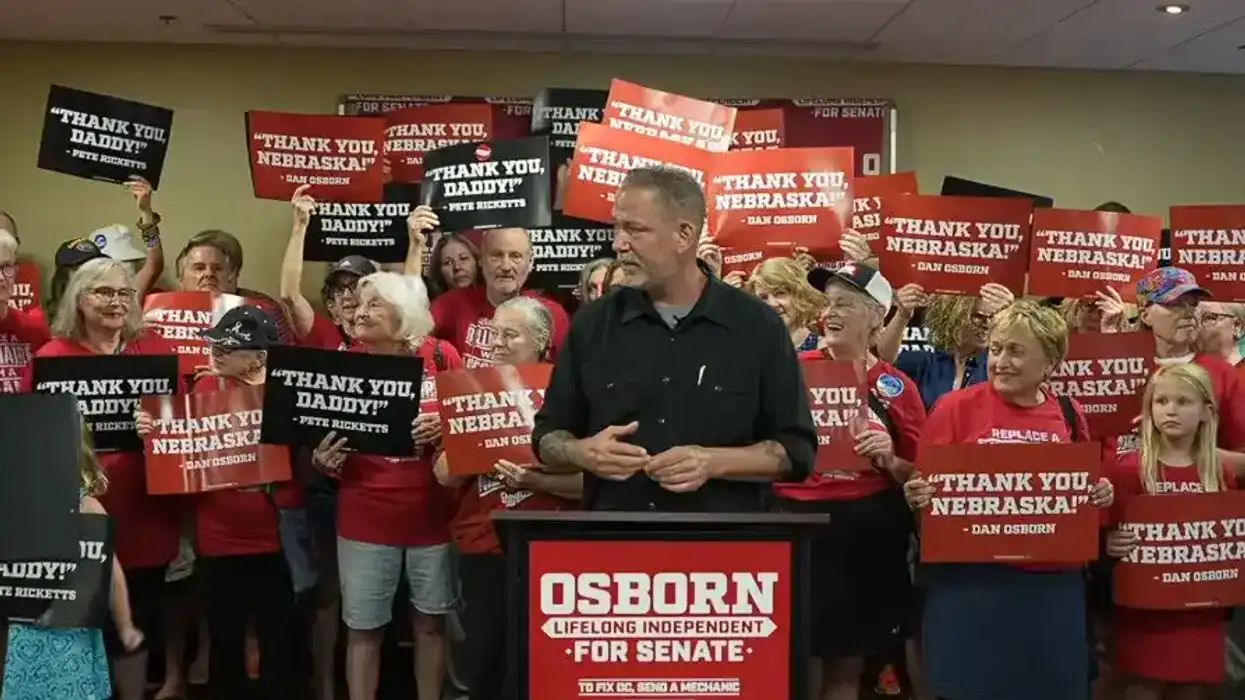
1. Dan Osborn (I) vs. Sen. Pete Ricketts (R) — Nebraska Senate
The race in one line: The polls show a toss-up, the markets show a clear Ricketts lead, and Osborn now has more cash.
Fundraising (both through 10/14)
Candidate | Raised | Cash on hand (Sept. 30) |
Dan Osborn (I) | $9.8 million | $2.2 million |
Pete Ricketts (R) | $14.5 million | $1.2 million |
Polling
Pollster | Dates | Sample | Ricketts | Osborn |
NPA Polling (R) | Oct. 2–5 | 800 LV, ±4 | 46% | 43% |
YouGov | Sept. 24–Oct. 3 | 1,808 LV, ±3.3 | 47% | 48% |
co/efficient (R) | Sept. 28–30 | 1,113 LV, ±2.9 | 44% | 40% |
Kalshi: Ricketts 76%, Osborn 24%.
The history. Osborn, a former Kellogg’s mechanic and union president, came within about seven points of Sen. Deb Fischer in 2024 in a state Trump carried by more than 20. This year, he faces Ricketts, the former governor who was appointed to the Senate in 2023. The Democratic nominee, Cindy Burbank, withdrew in July, and the Legal Marijuana NOW nominee also dropped out and endorsed Osborn. That left a head-to-head race, which is the matchup Osborn wanted.
The race has since become a fight over identity. Ricketts calls his opponent “Democrat Dan”. Earlier in October, Osborn told reporters he has no interest in caucusing with either party.
What to watch between now and Election Day
- Nonpartisan polls. Most polls have had a partisan or candidate sponsor. Look for neutral polls over the next two weeks.
- The final round of outside money. See what independent spending looks like.
2. Bill Hill (I) vs. Rep. Nick Begich (R) — Alaska At-Large House
The race in one line: Hill has nearly closed a double-digit gap, but Begich has 12 times his cash and ranked-choice math may decide the race.
Fundraising (Begich through 10/14; Hill through 9/30)
Candidate | Raised | Cash on hand (Sept. 30) |
Bill Hill (I) | ~$2.3 million | $190,431 |
Nick Begich (R) | ~$6.4 million | $1.8 million |
Hill has been spending heavily to increase his name recognition, which has paid dividends in the polls. Begich, however, ended September with $2.4 million, more than 12 times Hill’s $190,431 heading into the final sprint.
Polling
Pollster | Dates | Sample | Begich | Hill | Final RCV round |
Data for Progress (D) | Oct. 8–16 | 668 LV, ±4 | 50% | 43% | Begich 51–49 |
NYT/Siena | Sept. 24–Oct. 1 | 487 LV | 49% | 37% | Begich 53-47 |
AARP (Fabrizio Ward/Impact Research) | Sept. 8–11 | 800 LV | 51% | 35% | Begich 57–43 |
Kalshi: Begich 80%, Hill 20%.
The history. Hill is a Dena’ina Athabascan from the Bristol Bay village of Kokhanok. He spent decades as an educator, finishing as superintendent of the Bristol Bay School District, and he is a lifelong commercial fisherman. He entered the race in January without ever having registered with either party. Democrat Matt Schultz suspended his campaign and endorsed Hill before the August 18 Top Four primary, where Hill finished second to Begich.
Hill has since become one of the most-watched House challengers in the country, and one of the most argued over. He has the DCCC’s backing. At the October 14 Debate for the State, Begich repeatedly called him an independent in name only, and Hill declined to say which party, if any, he would caucus with.
What to watch between now and Election Day
- Hafner’s 5%. Data for Progress found that if exhausted ballots from voters for Eric Hafner, a Democrat campaigning from federal prison, went to Hill instead, the House race would be tied.
- Cash. With $190,000 on hand against Begich’s $1.8 million, Hill’s closing message depends largely on outside groups. The slow filing of his mid-October campaign finance report as of the time of this writing could suggest a slowdown.
- A long count. Alaska runs its ranked-choice tabulation after absentee ballots arrive, so this race likely won’t be called on election night.
3. Brian Bengs (I) vs. Sen. Mike Rounds (R) — South Dakota Senate
The race in one line: Bengs got the one-on-one race he wanted, but the October polls released by media outlets show Rounds ahead by 8 to 22 points.
Fundraising (Rounds through 10/14; Bengs through 9/30)
Candidate | Raised | Cash on hand |
Brian Bengs (I) | $1.7 million | $145,703 |
Mike Rounds (R) | $5.1 million | $1.3 million |
Polling
Pollster | Dates | Sample | Rounds | Bengs |
Emerson College/KELOLAND | Oct. 19–21 | 803 LV, ±3.5 | 54% | 46% |
Quantus Insights | Oct. 17–19 | 657 LV, ±4.1 | 59% | 37% |
Public Opinion Strategies (Rounds campaign) | Oct. 12–16 | 500 LV, ±4.4 | 54% | 37% |
Concord Public Opinion Partners (D) | Oct. 6–8 | 400 LV, ±4.9 | 42% | 43% |
Bengs still has low name recognition in many of these polls, but he’s running out of time to close the gap.
Kalshi: Rounds 95%, Bengs 5%.
The history. Bengs, a former military lawyer and university professor, ran for the Senate in 2022 as a Democrat and won 26.1% against John Thune. This time, he is running as an independent against Rounds, a former two-term governor who was first elected to the Senate in 2014 and is seeking a third term. Democratic nominee Julian Beaudion withdrew on August 4, citing a house fire and family hardship. The state party declined to replace him and has not endorsed Bengs.
Rounds and national Republicans call Bengs a fake independent, pointing to his 2022 campaign. Bengs has campaigned alongside Osborn and Bodnar and says he would help form an independent caucus that aligns with neither party.
What to watch between now and Election Day
- Undecided voters. With leaners pushed, Emerson still had Rounds ahead 54% to 46%. Bengs needs nearly all of the undecided vote and some soft Rounds supporters. Many haven’t heard of him, but the lane is narrow and election day is less than two weeks away.
4. Seth Bodnar (I) vs. Kurt Alme (R) vs. Alani Bankhead (D) — Montana Senate
The race in one line: Bodnar leads the field in fundraising and wins independents, but as long as Bankhead holds a fifth of the vote, Alme leads.
Fundraising (all through 10/14)
Candidate | Raised | Cash on hand |
Seth Bodnar (I) | $4.9 million | $581,920 |
Kurt Alme (R) | $3.0 million | $602,737 |
Alani Bankhead (D) | $190,539 | $22,819 |
Kyle Austin (L) | $261,825 | $2,684 |
Polling
Pollster | Dates | Sample | Alme | Bodnar | Bankhead |
Quantus Insights | Oct. 15–18 | 667 LV, ±4 | 46% | 29% | 21% |
Concord Public Opinion Partners (released by Bodnar campaign) | Oct. 6–8 | 405 LV | 35% | 37% | 13% |
Aspect Strategic | Sept. 7–15 | 715 LV | 44% | 32% | 14% |
MTFP–Rutgers Eagleton | Aug. 27–Sept. 7 | 845 RV, ±4.2 | 38% | 30% | 16% |
Among independents, the largest bloc in the MTFP–Eagleton poll, Bodnar led Alme 38% to 25%. The Concord memo, which Bodnar’s campaign promoted, found Bodnar leading Bankhead by 45 points among modeled Democrats.
Kalshi: Alme 91%, Bodnar 8%.
The history. The race opened on March 4. Sen. Steve Daines withdrew minutes before the filing deadline, and his chosen successor, former US Attorney Kurt Alme, filed in his place. Seth Bodnar, a former Green Beret who had resigned as University of Montana president in January, entered as an independent the same day. Bankhead, a retired Air Force lieutenant colonel, won the Democratic primary in June. She has refused calls to leave the race, and the August 10 withdrawal deadline passed with her still on the ballot.
The Democratic split has since reached the party’s leadership. Shannon O’Brien resigned as state Democratic chair to endorse Bodnar, while the party still formally backs its nominee. Read our full race roundup.
What to watch between now and Election Day
- Bankhead’s floor. Recent polls put her anywhere from 13% to 21%. Every point she loses to Bodnar narrows the gap with Alme.
- Whether an independent pollster backs up Concord. Concord is the only poll showing Bodnar ahead.
- Ballots already cast. Absentee ballots went out October 9, so much of the vote is being locked in now.
5. Todd Achilles (I) vs. Sen. Jim Risch (R) — Idaho Senate
The race in one line: A late surge in fundraising is fueling the independent in Idaho.
Fundraising (both through 9/30)
Candidate | Raised | Cash on hand |
Todd Achilles (I) | $1.7 million | $395,407 |
Jim Risch (R) | $4.9 million | $2.8 million |
Achilles raised more than $1 million in the third quarter, more than he had raised in the entire cycle before July. Risch still ended September with about seven times as much cash.
Polling
Pollster | Dates | Sample | Risch | Achilles |
VoteNExus (Achilles sponsored) | Oct. 21–22 | 700 LV | 49% | 43% |
Peak Insights (Risch campaign) | Sept. 28–30 | 500 LV | 49% | 24% |
Bullfinch Group (Achilles campaign) | Aug. 4–7 | 608 LV | 34% | 30% |
Kalshi: Risch 96%, Achilles 5%.
The history. Achilles, an Army veteran and former technology executive, served in the Idaho House as a Democrat before resigning his seat to run for the Senate as an independent. He faces Risch, a former governor who has held this Senate seat since 2009 and is seeking a fourth term. Democratic nominee David Roth withdrew in July, saying he would focus on helping Democrats elsewhere on the ballot. That left Achilles as Risch’s main opponent in a state Trump carried by about 36 points.
Republicans have run against his record. In a fundraising letter for Risch, Vice President JD Vance warned that Democrats were prepared to pour millions into Idaho to flip the seat, and Idaho GOP Chair Dorothy Moon has called Achilles one of the most left-wing Democrats in the statehouse. Achilles has the backing of several unions, including the Idaho AFL-CIO and the National Education Association, and has pledged not to caucus with either party.
What to watch between now and Election Day
- A neutral poll. The recent surveys come from the campaigns or from a firm with a short record. A media or university poll would show which of them is closer to right.
- Outside money. Vance’s letter suggests national Republicans expect Democratic-aligned groups to spend here. Independent expenditure filings will show whether either side follows through.
6. Rep. Kevin Kiley (I) vs. Richard Pan (D) — California’s 6th District
The race in one line: The House’s only sitting independent is defending a district redrawn to defeat him, and he still caucuses with Republicans.
Fundraising (through 10/14)
Candidate | Total raised | Cash on hand |
Kevin Kiley (I) | $3.7 million | $34,648 |
Richard Pan (D) | $2.5 million | $207,936 |
Polling
Pollster | Dates | Sample | Pan | Kiley | Undecided |
Bullfinch Group / Independent Leadership Council (pro-Kiley) | Sept. 1–6 | 927 LV | 37% | 37% | 26.7% |
Bullfinch Group / Independent Center Voice | July 13–16 | 741 LV | 39% | 35% | 27% |
Kalshi: Pan 92.3%, Kiley 7.5%.
The history. Proposition 50, California’s response to the redistricting wars, redrew the state’s congressional map and gave Kiley, a Republican incumbent at the time, a Democratic-leaning seat around Sacramento. He dropped his Republican registration in March, citing frustration with partisanship and the redistricting war, and is running with no party preference. In the June Top Two primary, he narrowly finished first, ahead of Pan, who is a pediatrician and former Democratic state senator.
Kiley’s independence is the central question of the race. Pan calls him a “MAGA champion,” and Kiley challenged Pan to five debates. Their first general-election debate in August centered on Kiley’s voting record.
What to watch between now and Election Day
- Kiley’s caucus answer. Kiley still caucuses with Republicans, making this race the inverse of many others this cycle where an independent faces accusations of being a secret Democrat.
- A nonpartisan poll. Both public surveys come from pro-independent groups. Forecast models rate the seat Safe Democratic.
- A slow count. California counts late mail ballots for days, so a close race won’t be settled on election night.
7. Mike Thurow (I) vs. Rep. Glenn Grothman (R) vs. Brad Smith (D) — Wisconsin’s 6th District
The race in one line: This is the series’ longest shot, a fire captain running a ground game against a six-term incumbent with no public polling since May.
Fundraising (Smit and Grothman through 10/14; Thurow through 9/20)
Candidate | Total raised | Cash on hand |
Glenn Grothman (R) | $1.2 million | $600,072 |
Brad Smith (D) | $322,260 | $91,303 |
Mike Thurow (I) | $194,576 | $17,936 |
Polling
Pollster | Dates | Sample | Grothman | Thurow |
Tavern Research (head-to-head) | May 18–28 | 437 LV, ±6 | 55% | 45% |
No public poll has tested the three-way race, and the most recent public poll is fro May.
Kalshi: Grothman 90%, Smith 10% (no other candidates included)
The history. Thurow is a union fire captain from Mequon. He launched his campaign early this year with backing from Dan Osborn’s Working Class Heroes Fund. He takes no corporate PAC money. His bet is that a district Grothman won with 61.2% in 2024 might respond to the same working-class independent pitch that has made Nebraska competitive.
The field didn’t clear the way Nebraska’s did. Democrat Bradley Smith narrowly won the August 11 primary over Amanda Bell, 50.3% to 49.7%, and he remains on the ballot with another independent, Elizabeth Fitzgibbon. Read our full profile.
What to watch between now and Election Day
- Thurow’s ground game. With $18,000 in the bank, his county-captain organization is the campaign. Union and firefighter turnout operations will show whether it reaches past Mequon.
- Smith’s share. In a three-way race, Thurow needs Democratic voters to treat him as the main challenger.
- Grothman’s late start. Grothman released his first ad of the cycle on Oct. 16, with AdImpact tracking about $21,000 in digital buys. Any big increase in his spending would suggest his campaign sees a threat.
Why These Seven Matter
Each campaign tests something different.
Nebraska, Idaho, and South Dakota test whether an independent can win when a party gets out of the way: in all three, the Democratic nominee withdrew, leaving the independent alone against a Republican incumbent.
Montana tests whether one can win when a party doesn’t.
Alaska tests whether ranked-choice voting gives independents room to build a majority, with a measure to repeal that system on the same ballot.
California tests whether “independent” means anything for a candidate who still caucuses with a party.
Wisconsin tests whether the Osborn model can work for a House seat in a purple state.
If even one of them wins, the next cycle’s candidates will have proof that the two-party wall can be broken. If none of them wins, the margins will still inform which kind of race gives an independent the best chance at winning a seat.
7 Independent Campaigns to Watch in the Final Days of the Midterms is republished as part of The Fulcrum’s partnership with IVN and the Latino News Network to expand voter‑first journalism and strengthen public‑centered coverage of democracy.