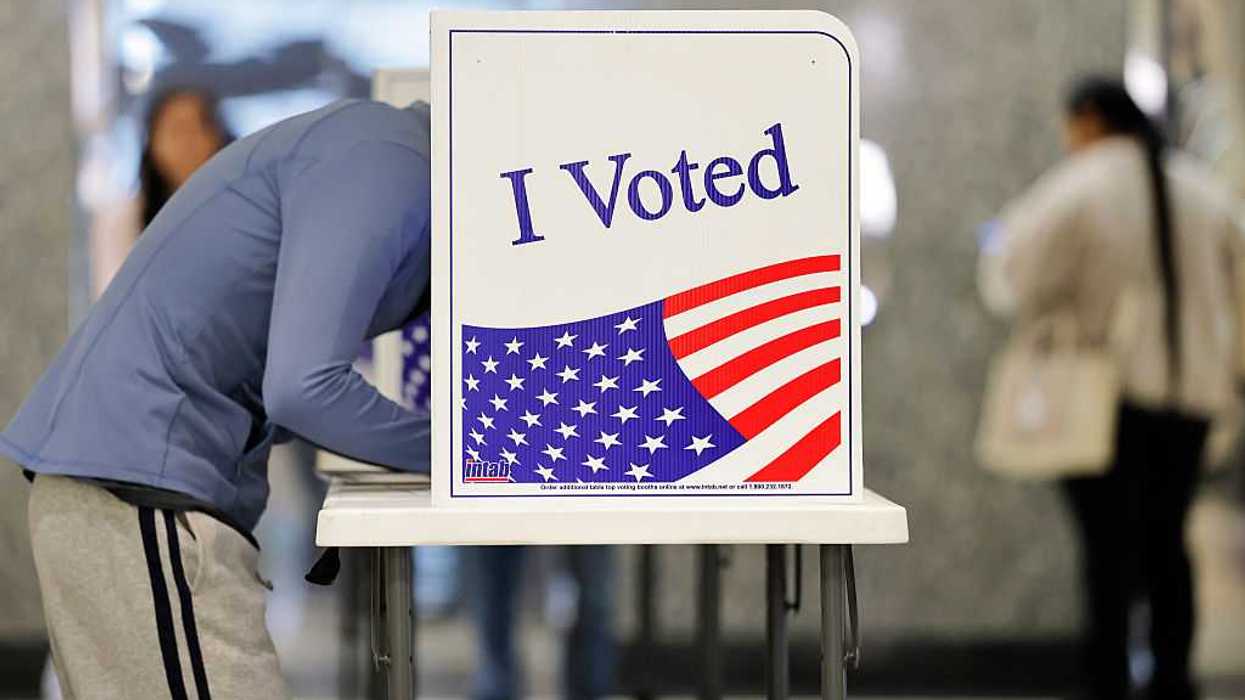



In 1994, as a recent college graduate, I joined what was then Project Vote Smart (PVS), an organization that provided factual nonpartisan information about political candidates. Voters would call the PVS hotline to learn about specific candidates, and volunteers, myself among them, would answer their questions. More than three decades later, this type of information is available at our fingertips — but having easier access does not necessarily make us better informed.
I believed deeply then — and still do — in James Madison’s warning, contained in an 1822 letter to William T. Barry: “A popular Government, without popular information, or the means of acquiring it, is but a Prologue to a Farce or a Tragedy; or, perhaps both.” If an educated electorate is essential to protecting democracy, helping people be informed voters felt like a valuable way to contribute.
Today, voters encounter an overwhelming amount of information about candidates, but it’s harder than ever to discern the truth. They find competing claims about candidates’ backgrounds, actions and positions in social media echo chambers that reinforce individual beliefs and generate hostility toward opposing views. A 2023 Pew Research Center survey found that 61% of U.S. adults considered political conversations with people they disagreed with “stressful and frustrating.”
The rapid spread of artificial intelligence (AI) tools has made the information landscape even more challenging to navigate. An AI chatbot can deliver an answer to a voter’s question without making clear whether the information comes from verified records, partisan commentary or unsupported claims.
So, how do we prepare students growing up in this environment to become informed voters who can think independently and participate thoughtfully in democracy? AI can make a candidate’s voting record easier to find, but it can’t help students decide what to think about their votes — nor should it. That judgment is the skill schools need to build. Students who learn to identify trustworthy sources about political candidates, sift through screens of information to find facts and accurate data, weigh all the evidence against their own values and test their reasoning against people who disagree with them will be ready to vote thoughtfully, whatever tools they use.
As educators, we want students to investigate where information originates, evaluate competing claims and reach their own conclusions. Helping students recognize when AI supports that work and when it supplies a judgment they have not made themselves is a crucial part of preparing them to think and vote.
Start With the Learning Goal
That preparation must begin long before students cast their first ballot. Asking better questions, examining evidence and being willing to change our minds when new information challenges our beliefs are habits all citizens need. As educators, we should start with the learning goal in mind and consider what students need to do themselves and what it’s reasonable to ask a chatbot. Helping a student quickly locate a political record can support learning. Asking a chatbot to decide what that record should mean to an individual bypasses the analytical thinking students need to practice.
Today, as a board member of the organization now called Vote Smart, I see renewed urgency in its mission to help voters become informed. I am especially excited about Civic Sage, our AI chatbot designed to provide factual information without generating opinions or persuasive arguments.
Asking Where Answers Come From
Civic Sage expands what Madison envisioned as the “means of acquiring” information. The educational question is, how do we prepare students to use that greater access to help them become informed citizens? Equally important, where do AI tools get the information they share? The latter question has implications for how we teach students to evaluate AI-generated answers. Students need to ask where the information comes from, how it was selected and what might be missing. Even facts can present an incomplete picture if they support only one position.
For example, we can ask AI whether a candidate is “good on immigration” and receive an immediate answer. But whose definition of “good” shapes that answer? Which sources inform it, and what is missing? Knowing where the information comes from gives students a stronger starting point for asking questions, examining evidence and reaching their own conclusions.
AI can help students question their assumptions and consider other interpretations of information, but its responses need scrutiny, especially when students agree with them. For educators, the challenge is helping students reach their own conclusions. Can they distinguish evidence from interpretation, explain their reasoning and identify information that might change their minds? When AI can generate a polished response in seconds, we need students to be able to explain how they arrived at the ideas they present as theirs.
Practicing Disagreement
Students also need opportunities to discuss what they find with people who see it differently. They may examine the same voting record and reach different conclusions because they weigh priorities differently or understand the consequences of a policy in different ways. Explaining their reasoning, listening to another interpretation and responding to questions can reveal assumptions that an AI-generated answer leaves unexamined.
Having these conversations with other people is essential practice both for developing independent judgment and participating in civil discourse. Students need to learn how to listen carefully, ask thoughtful questions and consider whether another perspective gives them reason to rethink their own. Our responsibility as educators is to help students question what they find, reach their own conclusions and engage thoughtfully with others. Democracy depends on citizens who think for themselves and listen to one another. We need to prepare them long before they cast their first ballot.
This essay originally appeared in EdSurge.com.
Elise Blum is assistant head of school for TK-12 programming at TVT Community Day School in Orange County, California. A former director of Project Vote Smart’s Voter’s Research Hotline, she now serves on Vote Smart’s board.