

Skip to content
Search

Latest Stories

Follow Us:
Top Stories

Trump’s Elevation of Stephen Miller Proves His Promise to Work With Democrats Is a Farce

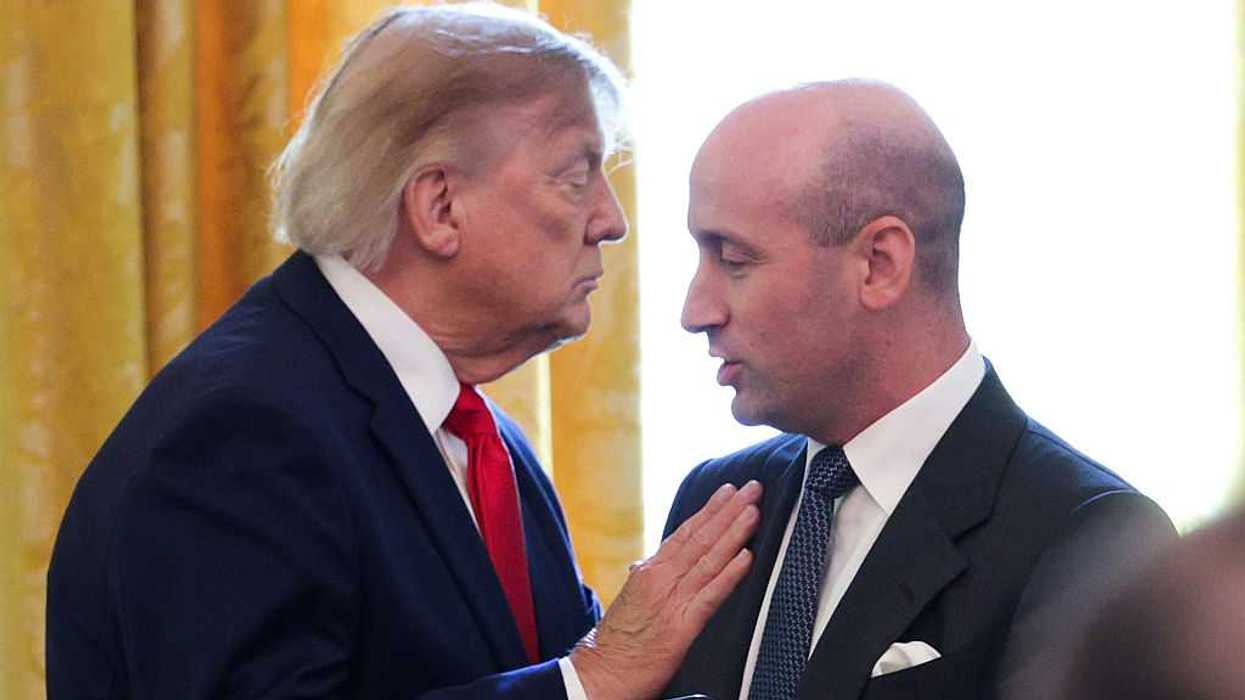
President Donald Trump and Stephen Miller

President Donald Trump departs a roundtable discussion on cybercrime with White House Deputy Chief of Staff and Homeland Security Advisor Stephen Miller (R) in the East Room of the White House on October 21, 2026, in Washington, DC.

(Photo by Alex Wong/Getty Images)

In the immediate aftermath of Tuesday’s sweeping midterm election losses, a chastened President Donald Trump struck an unusually conciliatory tone, signaling a willingness to work with Democrats. But the spirit of bipartisanship proved fleeting.

By forcing out Susie Wiles and elevating Stephen Miller to White House Chief of Staff, Trump has delivered a definitive, defiant message to the American electorate: the era of uncompromising grievance and division isn't over—it is being supercharged.


Selecting Miller is a calculated insult to the democratic process. This is the chief architect of the administration's most draconian, violent, and deadly immigration policies over the last two years. Miller is the ideological engine behind a hard-line agenda that has torn families apart, weaponized federal law enforcement, and brought humanitarian catastrophe to our nation. His policies didn't just stoke fear; they resulted in systemic cruelty that directly compromises the safety, dignity, and lives of thousands.

Voters watched this horror unfold, and on Tuesday, they unequivocally rejected it. The backlash was felt most acutely in the very border states the administration claimed to be protecting, where communities bore the brunt of Miller’s radical social engineering. From California to Texas, voters turned out in record numbers to say "no more" to the weaponization of the border and the dehumanization of immigrant communities. They sent a clear mandate to Washington demanding oversight, humanity, and a return to checks and balances.

Instead of listening, Trump is doubling down on the exact tactics the country just repudiated.

The brutal reality is that Trump feels he has absolutely nothing to lose. With no more elections to worry about and his time in office strictly limited, he is untethered from the traditional accountability of the ballot box. He doesn't have to face the voters again, meaning public disapproval holds no power over his instincts.

Because Trump is liberated from electoral consequences, the burden of governance falls squarely on the shoulders of the congressional Republicans who survived Tuesday's bloodbath. GOP lawmakers saw their ranks severely diminished precisely because they refused to stand up to Trump’s worst impulses over the last two years. If they continue to cower, they will remain complicit in another two years of catastrophic failures delivered to the American people.

These remaining Republicans must find their spines, break rank, and put a check on Miller’s dark vision. If they fail to stop this slide into extremism, the political consequences will be existential. They must realize that if they do not act, the 2028 election cycle will make the 2026 Blue Tsunami look like a mere ripple.

Wiles, whatever one’s political disagreements with her, was widely seen as a disciplined, stabilizing force capable of navigating institutional norms. Replacing her with Miller—a combative ideologue who views governance not as a series of compromises but as a zero-sum war—signals that the White House is preparing for total conflict.

By placing a MAGA purist at the gate of the Oval Office, Trump is slamming the door on any potential for bipartisan legislation. He is signaling to Senate Democratic and House Democratic Leaders that they will face maximum resistance, executive overreach, and contempt for congressional subpoenas.

Voters demanded a course correction on Tuesday. By appointing Stephen Miller, Trump has made it clear that he would rather watch his administration burn in the fires of partisan warfare than concede even an inch to the will of the American people.

Hugo Balta is the executive editor of The Fulcrum and the publisher of the Latino News Network, and twice president of the National Association of Hispanic Journalists.


Read More

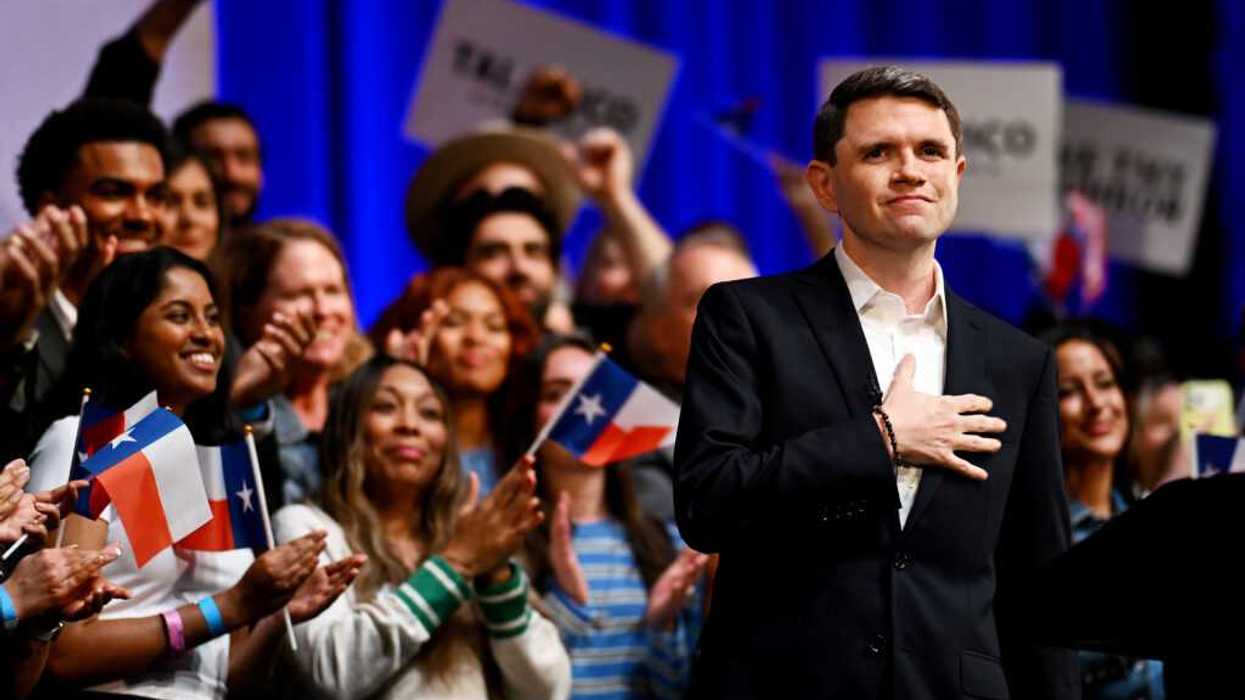
James Talarico

U.S. Sen.-elect James Talarico speaks during a midterm election night event at the Long Center for the Performing Arts on Nov. 3, 2026, in Austin, Texas.

(Getty Images)

Gravity Sends Trump Tumbling Back Down

For many Americans, the last decade of politics has tested their patience — and the laws of physics.

Donald Trump’s rise from reality star to president has been marked by jaw-dropping moments that seemed to bend the conventions long-held not only by conservatives and Republicans, but by the world as we know it.

Keep Reading Show less
2026 midterm voters

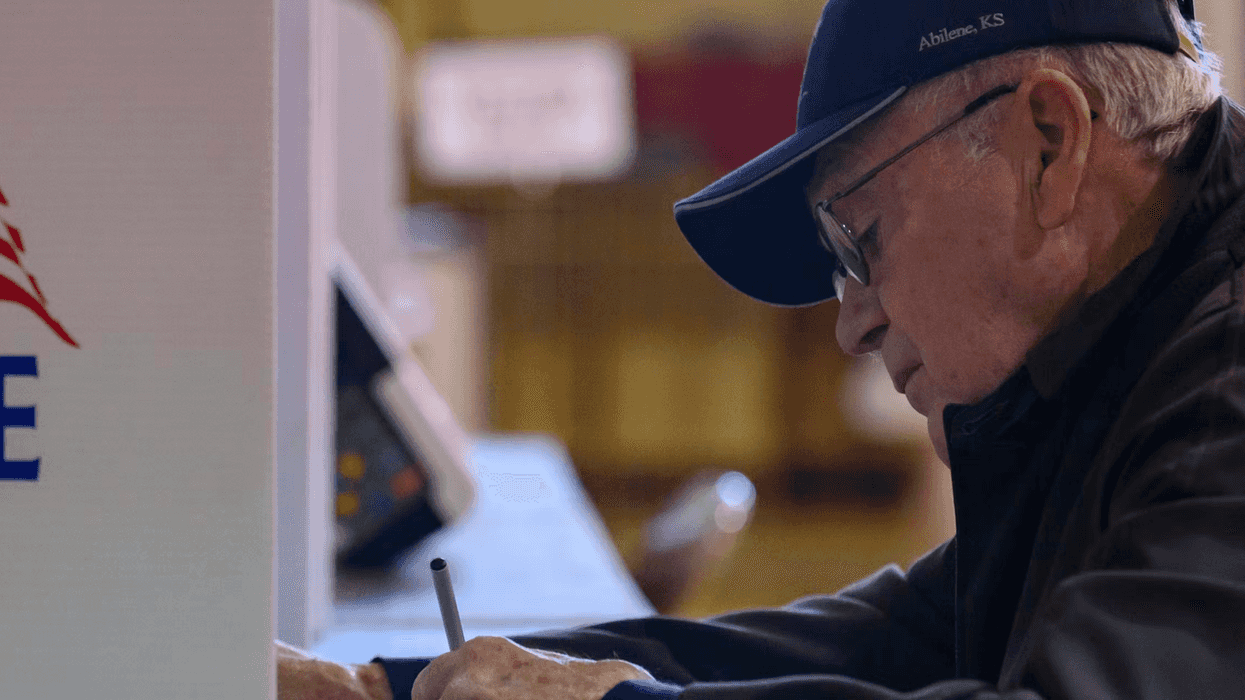
Voters mark their ballots in the Kern County Elections Office on November 03, 2026 in Bakersfield, California.

(Photo by Mario Tama/Getty Images)

Trump’s War on DEI Met Its Match: The American Voter

The noise surrounding the demise of Diversity, Equity, and Inclusion (DEI) has been loud, persistent, and, as it turns out, entirely out of touch with the American voter. For the past few years, a coordinated political backlash attempted to turn DEI into a toxic catchphrase and a scapegoat for societal anxieties. Central to this campaign were Donald Trump and his administration, who consistently weaponized the term to fuel cultural anxieties and rally their political base. But during the 2026 midterm elections, the American electorate delivered a definitive, history-making counter-narrative. DEI wasn't rejected; voters voted it back into the highest seats of state power, soundly rejecting that divisive rhetoric.

Look no further than the extraordinary shift in our nation’s gubernatorial landscape. In a historic wave, voters across 17 states elected female governors, shattering the previous record of 14 and ensuring that starting in 2027, one-third of the nation’s state executives will be women. This isn't just a win for gender representation; it is a profound realignment of who gets to lead and a validation of the core tenet of diversity: that leadership should reflect the demographics of the people it serves.

Keep Reading Show less
midterm election voters

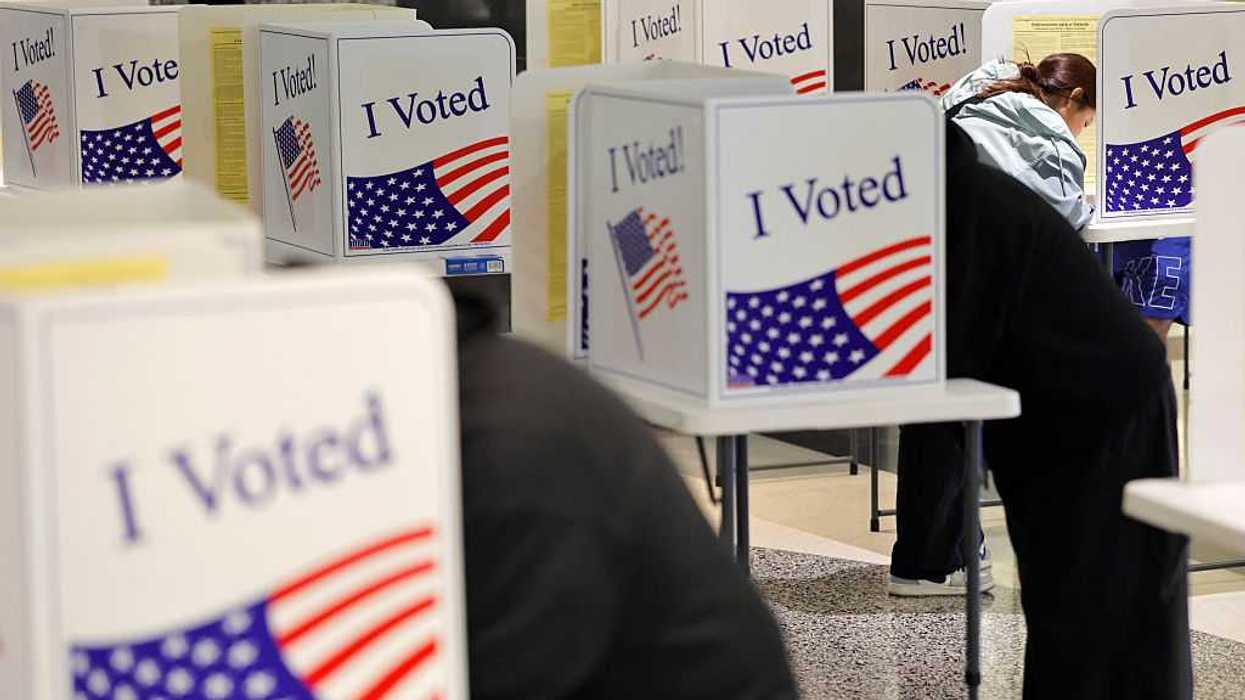
Voters cast their ballots on Election Day at the Cross Insurance Center polling location on November 03, 2026, in Bangor, Maine.

(Photo by Joe Raedle/Getty Images)

The Voter as Estimate: What Commercial Profiles Miss About Independent Citizens

In the late 1980s, when my firm, Price Research, prepared a voter survey for the Bakersfield City School District, we began with a basic administrative record from the Kern County elections office. To clean up addresses and append phone numbers, we turned to Political Data Inc. (PDI)—then a young company operating out of two converted dressing-room trailers on the Warner Bros. lot in Burbank. PDI helped us find and organize voters. But to learn what those citizens actually thought about school facilities, taxes, and local bonds, we still had to do something simple: we had to ask them.

Today, that basic administrative list has become the foundation of a multi-million-dollar commercial enterprise. Major vendors such as L2, TargetSmart, Aristotle, i360, and Data Trust assemble public records into vast dossiers, appending anywhere from 600 to over 2,500 individual data points per record—income estimates, housing specifications, vehicle makes, magazine readership, firearm licensing, travel habits, and predictive behavioral scores. What began as a tool for locating voters has evolved into a system for estimating them.

Keep Reading Show less
The White House
The white house with green lawn and trees
Photo by Josh on Unsplash

The Politics of Gratitude: Why Washington Punishes the Loyalty It Cannot Price

On a Sunday night in August, Senator Jon Ossoff told a campaign rally in Atlanta that President Trump would rather build his ballroom and “travel with Natalie” than do his job. He never used her last name. He did not need to. Natalie Harp, the White House aide known to colleagues as Trump’s “human printer” for trailing him with a portable printer and transcribing his social-media dictation, had become a punchline before most Americans knew who she was.

The backlash arrived within hours. White House officials accused Ossoff of insinuating an affair; Republican Rep. Brandon Gill noted that Harp survived bone cancer only because the Right to Try Act, which Trump signed in 2018, let her seek an experimental treatment outside the normal approval process, and dismissed any other reading of the moment as unfair. Weeks earlier, Harp had been at the center of a far more consequential story: in July, she was one of a handful of aides, alongside the defense secretary and two senior staffers, chosen to accompany Trump on a covert switch of aircraft as he left a security summit in Turkey after officials detected a credible Iranian threat, while most of the traveling delegation stayed behind on a decoy plane. That is the real proximity Ossoff's line was needling. Then came a detail that complicated the story further: Trump had personally given Harp and several other aides cash gifts of $45,000 apiece, which a former federal ethics official called troublesome, since money on that scale can leave a recipient feeling indebted to whoever signs the check.

Keep Reading Show less