


The votes have barely been counted, and Washington is already settling into the familiar rituals of victory and defeat. Republicans are maneuvering over who will lead the minority. Democrats are considering who should lead their newly won majorities. Committees will be reorganized, offices reassigned, priorities announced, and considerable attention devoted to determining which politicians will have the privilege of managing the next round of political disagreements.
These things matter to the people involved. Leadership determines who sets agendas, controls committees, and decides which legislation receives attention. But there's something annoying for the rest of us watching an institution celebrate a change in management before demonstrating the new management can accomplish anything. The American public has just participated in an enormously expensive hiring process, and much of the initial conversation concerns which employees get the corner offices.
Meanwhile, the problems that brought voters to the polls remain largely unaddressed by the flurry of activity.
Healthcare is expensive. Housing remains difficult to afford. Energy costs continue to strain household budgets. Government spending and debt require difficult decisions that neither party has shown much enthusiasm for confronting honestly. These aren't problems waiting for Washington to finish organizing itself. They're the reasons voters were willing to change who was in charge.
The Democrats, having won control of Congress, now have an opportunity to demonstrate they understand the distinction between winning political power and using it effectively. Their early announcements suggest they're preparing an ambitious agenda involving healthcare, affordability, tariffs, and accountability for the Trump administration. All reasonable subjects for a new congressional majority to address, depending on what they intend to accomplish.
The trouble is that an agenda and a plan are not interchangeable, no matter how impressive the first hundred days look on a calendar. Consider the conditions under which the next Congress will operate. Democrats will control both chambers, but they won't have the sixty Senate votes ordinarily necessary to overcome a filibuster on contested legislation. President Trump will retain his veto, which requires two-thirds support in both chambers to override. Budget reconciliation offers a narrower route for certain fiscal measures, and Congress retains substantial investigative and appropriations authority, but neither provides a general exemption from the political arithmetic.
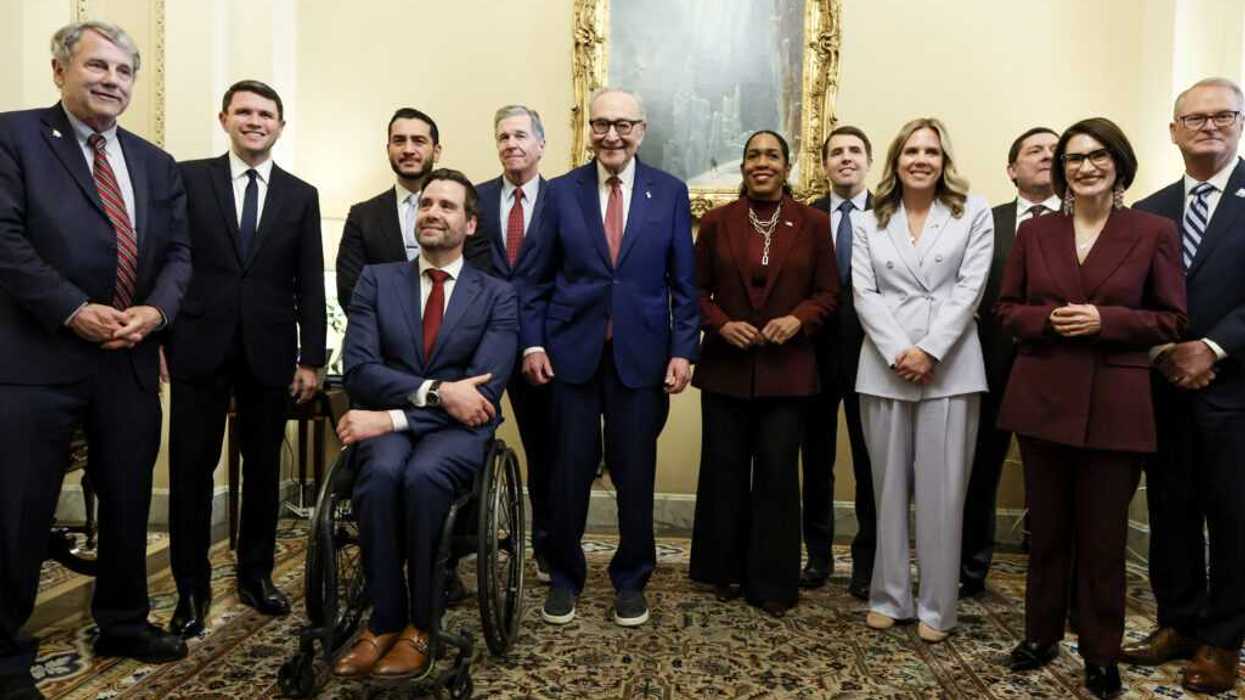
None of this is new information. These obstacles were known before Election Day, when candidates were explaining everything they intended to accomplish if voters returned them to power... and yet, much of what we're hearing resembles the preparation of an ambitious task list rather than a serious effort to overcome those obstacles. Restore healthcare subsidies. Reverse Medicaid cuts. Change tariff policy. Confront the administration. Each can be announced, debated, introduced as legislation, voted upon, and celebrated as evidence of commitment. Congressional offices can produce newsletters describing the effort, accompanied by photographs of lawmakers looking appropriately determined.
The legislation may still go nowhere. Mathematically, none of the agenda works for the Democrats unless they change the equation.
It doesn't make the underlying objectives unworthy. It makes the absence of a credible delivery strategy considerably harder to excuse. If Democrats intend to restore healthcare assistance, the relevant plan should include how they expect to secure the necessary Republican votes and presidential approval, what compromises might be acceptable, and what narrower improvements could be achieved if the original proposal fails. If they cannot identify a plausible route to implementation, they should explain what the legislative exercise is intended to accomplish instead. Perhaps it will establish a negotiating position, expose a disagreement, or create a public record. Those can be legitimate objectives, but they shouldn't be confused with delivering affordable healthcare.
The same confusion is emerging around impeachment. House Democratic leader Hakeem Jeffries has expressed support for impeaching Defense Secretary Pete Hegseth, joining an effort being advanced by Republican Congressman Thomas Massie over the administration's conduct of the war in Iran. The allegations deserve serious consideration, and Congress has a constitutional responsibility to investigate potential wrongdoing regardless of which party occupies the White House, but, a really big BUT, impeachment by the House is not removal from office. Conviction requires two-thirds of the Senate, and no coalition currently approaches that threshold. Unless substantial Republican support materializes, the likely outcome is a confrontation that generates political attention without removing the secretary.
Perhaps that confrontation is justified. An investigation might uncover misconduct, produce consequential disclosures, or establish limits on executive behavior. Those would be legitimate accomplishments. But if the objective is removal, the public deserves an explanation of how that outcome could realistically be achieved. Otherwise, the political machinery can spend months producing precisely the result everyone knew was likely from the beginning, NOTHING.
This is where Washington's understanding of winning becomes troubling. Frustrating. Annoying. Insane by definition of repetition.
Winning an election is an achievement. Winning a leadership position is an achievement. Winning a procedural vote or forcing opponents to defend an unpopular position can be an achievement. However, these victories take place inside the political system, where the rewards often have little connection to the outcomes citizens expected when they cast their ballots. A party can introduce legislation it knows cannot pass, force the opposition to reject it, and declare that the resulting failure proves why voters must elect more members of its party. The opposition can celebrate defeating legislation it never intended to negotiate, presenting obstruction as protection. Both can claim to have defended their principles, satisfied their supporters, and strengthened their position for the next election.
From the perspective of political competition, the exercise may have been entirely successful.
From the perspective of someone trying to afford medication, the distinction is devastation and frightening.
Republicans have hardly demonstrated immunity to this pattern. Their own leadership contest illustrates how rapidly the discussion shifts from what voters wanted to which political personalities are best positioned to reclaim power. After losing congressional control, much of the immediate conversation concerns who can best lead the party back to victory in 2028. That may be necessary for the party's future, but winning the next election is not, by itself, a public outcome any more than winning the last one was.
In this moment, responsibility falls on the Democrats, because they have just been given the opportunity to govern Congress under circumstances demanding cooperation. They cannot reasonably promise sweeping legislative change while treating Republican participation as an optional inconvenience. Nor can Republicans credibly claim to serve the public interest if their principal contribution is ensuring that the new majority accomplishes nothing.
Compromise is frequently treated as a disappointing reduction in political ambition. But in a divided government, cooperation is not an unfortunate obstacle to governing. It is part of governing to the needs of The People. It doesn't mean surrendering values or accepting any agreement simply to demonstrate progress. Some policies are worth opposing, and some principles are worth defending, even when doing so produces no immediate legislative victory. But there is a difference between refusing a harmful compromise and refusing to develop a workable strategy because confrontation offers greater political rewards.
Imagine a business executive presenting a plan to improve a struggling organization while acknowledging that several departments must cooperate, the board will reject the proposed funding, and the necessary approvals are unlikely to be granted. Then imagine the executive announcing that the first hundred days will be devoted to submitting the proposals anyway, documenting the rejections, and explaining why the organization cannot improve until everyone responsible for saying no is replaced.
That explanation may have some truth. It still isn't an operating plan that delivers anything of value.
A credible congressional agenda would start with the constraints rather than treating them as excuses to introduce later. It would identify which outcomes require bipartisan legislation, where sufficient support might be assembled, which changes can be accomplished through appropriations or oversight, and which ambitions simply aren't achievable under the present conditions. It would also distinguish between measures intended to deliver results and those intended primarily to establish political positions.
Most importantly, it would explain what citizens should expect to be different when the work is finished.
The incoming Congress has an opportunity to demonstrate that political victory can lead to something more useful than another round of campaigning conducted from government offices. Democrats can choose to make cooperation part of their strategy rather than a concession demanded after their first proposals fail. Republicans can decide whether their role in opposition is to help shape workable solutions or preserve enough public dissatisfaction to improve their chances in the next election.
Neither choice requires abandoning political principles. Both require accepting that the public's interests extend beyond the fortunes of the parties claiming to represent them.
We have become remarkably comfortable treating political victories as evidence of progress, even when the circumstances that justified those victories remain unchanged. The election ends, the winners celebrate, the losers reorganize, and everyone begins preparing for the next contest. Along the way, the distance between what politicians accomplish for themselves and what they accomplish for the public becomes increasingly difficult to ignore.
Perhaps the next Congress will surprise us. Perhaps its leaders will discover that winning enough cooperation to make a smaller, meaningful improvement is more valuable than winning another argument that changes nothing.
But that would require a different understanding of success.
The American people have already done their part in changing Congress. It would be encouraging if Congress could now demonstrate that changing Congress was worth doing.
Robert Bates is the author of We the People… Are Bad at This: A Declaration for Better Judgment about Power, Promises, and Progress. He has spent more than 25 years working in technology and healthcare, examining the relationship between intentions, decisions, and outcomes.