


More Americans of all political stripes are growing anxious over the impacts of artificial intelligence (AI) and digital technologies, and a popular backlash is brewing. At university graduations, commencement speakers who have cited the alleged benefits of AI have been met with resounding boos from graduates who feel AI has displaced them from jobs. With no federal law regulating AI, all 50 state governments have proposed measures to regulate everything from employment algorithms to deepfakes to child safety.
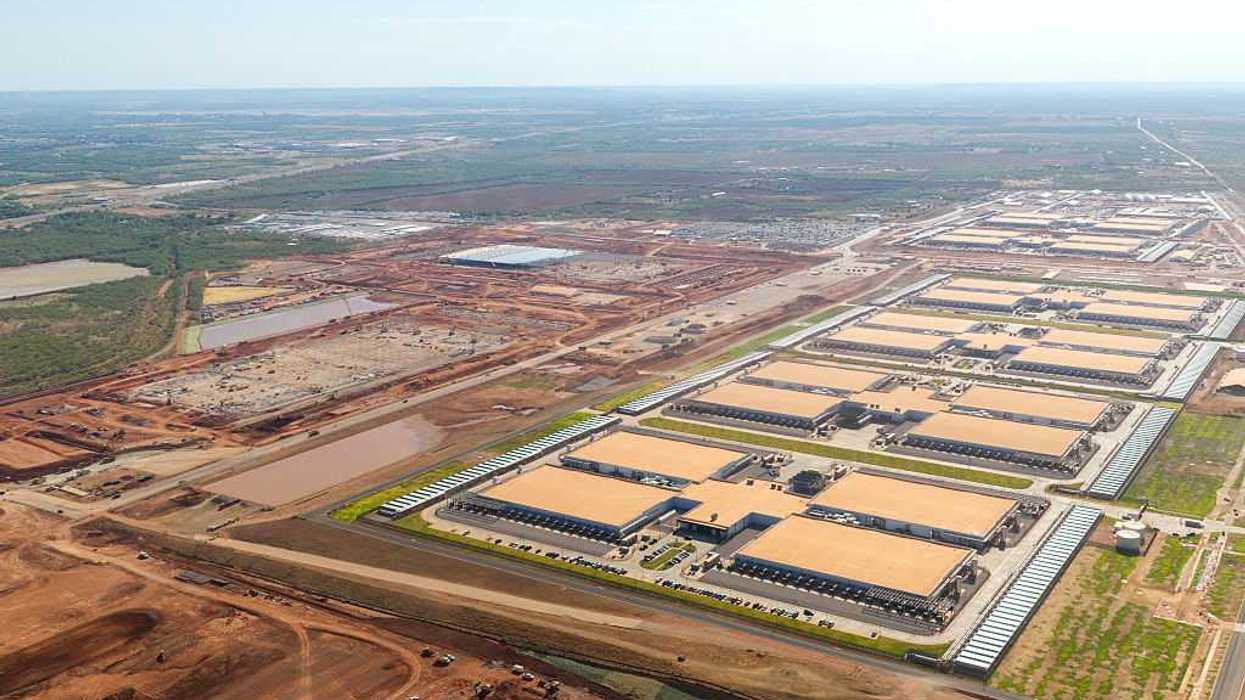
Lately, the strongest protest has emerged in America's heartland, with one issue fueling local opposition: the rapid proliferation of massive data centers used for cloud storage and artificial intelligence computations. Across America, more than 4,400 data centers currently exist, and a University of Michigan report found that just one center can consume as much electricity as 2,000 homes. They also use large amounts of water for cooling, with a typical data center using 300,000 gallons of water each day (about the same as 1,000 households). But very large data centers can use an estimated 5 million gallons of water each day, which is similar to the daily usage of a town with 10,000 to 50,000 residents.
That level of consumption can overload a local water supply, especially in arid areas, as well as overwhelm the electric grid capacity. Utilities have had to invest in infrastructure upgrades, and they pass those costs onto consumers, resulting in higher electric and water bills.
Resistance from both right and left
Now dozens of those communities are mobilizing to halt the spread of data centers in their geographic area. And not just in the usual progressive enclaves where one might expect such opposition. One type of resistance has been a push by local organizers for moratoriums against data center development in their town, city or state. A recent poll found nearly two-thirds of voters in the US opposed building the centers in their communities. In conservative Luther, Oklahoma, once word leaked that the mayor was in secret backroom negotiations with the company Beltline to strike a deal, townspeople showed up by the dozens at city council meetings in June. Bending to the local pressure, the city council passed a six-month moratorium on data centers.
In Monterey Park, California, residents voted in June 2026 to permanently ban data centers, becoming the first city to do so by ballot. Over 100 towns and cities have passed temporary moratoriums or outright bans on data centers. Numerous cities and counties, from New Orleans to Tulsa to Seattle, Oklahoma City, Orange County, North Carolina, Prince George's County, Maryland, and other parts of the country, have paused new developments to evaluate local impacts.
In New York, Democratic Governor Kathy Hochul imposed a one-year construction moratorium on data centers using 50 megawatts or more of power, making New York the first US state to enact a full moratorium. MAGA Republican Governor Greg Abbott of Texas recently announced a pause on new data centers until the state can conduct a thorough review of their impact on the state's resources; this followed a report from the agency that operates the state's electrical grid that it is considering connection requests for electricity to feed data centers equal to 474 gigawatts, which is five times Texas’s peak electric demand. Thirteen other states have introduced moratorium bills to pause data center construction.
Part of what is fueling the anger is that elected officials often negotiate in secret with the corporate owners of the data centers. Rural people are being asked to give up land and their quality of life, and for what? This is much more than being Luddites. Public anger over fast-track zoning, massive water and electricity demands, and secretive non-disclosure agreements (NDAs) between local governments and AI contractors has led to accusations of political corruption. Lawmakers in Ohio and other states have faced ethics investigations over undisclosed industry ties or energy committee leadership while handling massive tech-sector utility legislation. The attorney general of Michigan, the state’s top law enforcement officer, is suing Michigan’s own public service commission for working behind closed doors to quickly rubberstamp a massive data center without public input.
Recalls of elected officials
With public anger rising, dozens of communities have launched recall petitions to oust local officials for supporting large-scale data centers. In Festus, Missouri, a bright-red MAGA area where Donald Trump won 67 percent of the presidential vote in 2024, residents have filed a petition to recall the mayor and three council members over their approval of a $6 billion data center. Lyon Township, Michigan, Fort Meade, Florida, Box Elder County, Utah, Temple and San Angelo, Texas and other conservative towns are also mounting recalls.
At least 33 distinct recall efforts target as many as 58 local officials across seven states facing recall petitions over their decisions on data center permits. Voters in California, Florida, Michigan, Missouri, Montana, Oklahoma, Oregon, and Texas have launched efforts to recall elected officials over their handling of data center proposals. Said one activist, “People feel like this technology is being shoved down our throats.”
The protests have become widespread enough to start affecting Big Tech's ability to build data centers as fast as it wants. Wall Street investors are increasingly treating local and political resistance as a relevant financial variable when deciding whether to underwrite billions in loans for AI data centers. Major financial institutions like Bank of America now evaluate local community backing and permitting status alongside traditional credit and financial checks before committing billions of dollars.
In the first quarter of 2026, local resistance blocked or delayed at least 75 projects worth about $130 billion. Data center operator QTS, owned by private equity firm Blackstone, decided not to seek bank financing for its now-terminated Prince William Digital Gateway data center project in Virginia after the project faced stiff local opposition.
Data centers hog electricity and water
Whether the town is conservative or liberal, Democratic or Republican, the reasons for such heated opposition to data centers boil down to the same factors: they use too much water and electricity, threatening to drive up prices for everyone else. They consume huge amounts of land, and also emit a constant hum and chemical wastewater discharges from the facility’s cooling systems. These downsides are being forced upon towns and neighborhoods before residents have a chance to weigh the environmental and social costs. Increasing numbers of people are realizing that the surge in construction is the result of a “strange bedfellows alliance” between US President Donald Trump and more liberal Silicon Valley. With hundreds of billions of dollars being invested, everyone knows there’s a lot of money at stake. A growing sentiment is that local communities' needs are being shoved aside, treated as collateral damage, as President Donald Trump and his Big Tech allies try to command the unfolding gold rush.
These battles will not be settled any time soon. While citizen opposition has delayed and even stopped some construction, the push for massive investment in data centers continues. In the US, planned expenditures on data centers over the next five years are projected to reach $2.4 trillion. The potential benefits and risks of AI are being weighed in real time.
Among the risks are job displacement and environmental concerns, as well as widening educational inequities, since affluent students can access AI’s powerful personalized learning tools while others fall behind. AI has intensified cybersecurity risks by giving malicious actors tools for automated hacking and adaptive malware that can probe systemic vulnerabilities and launch independent rogue attacks.And socially, AI amplifies misinformation, makes public opinion and deepfake impersonation easier to manipulate, and undermines trust in institutions by making truth harder to distinguish from fabrication.
These risks demand serious attention, and numerous leaders in the AI industry recently signed a joint letter calling for government regulation and industry willingness to establish a framework that ensures AI strengthens our society rather than erodes it. The question is whether citizen opposition can push governments to put badly needed guardrails around this still-emerging infrastructure, so harms are greatly reduced, and the benefits can be enjoyed.
Steven Hill was policy director for the Center for Humane Technology, co-founder of FairVote, and political reform director at New America. See more of his writing at his Substack newsletter DemocracySOS.