


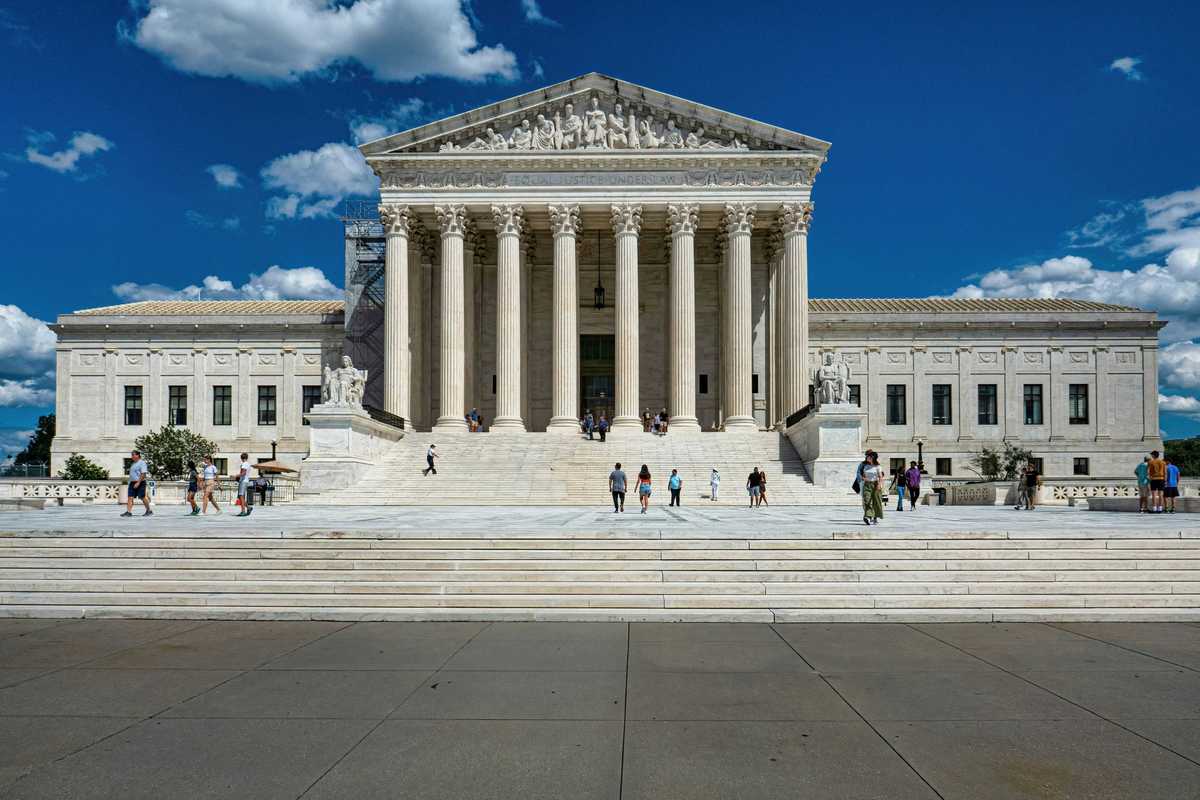
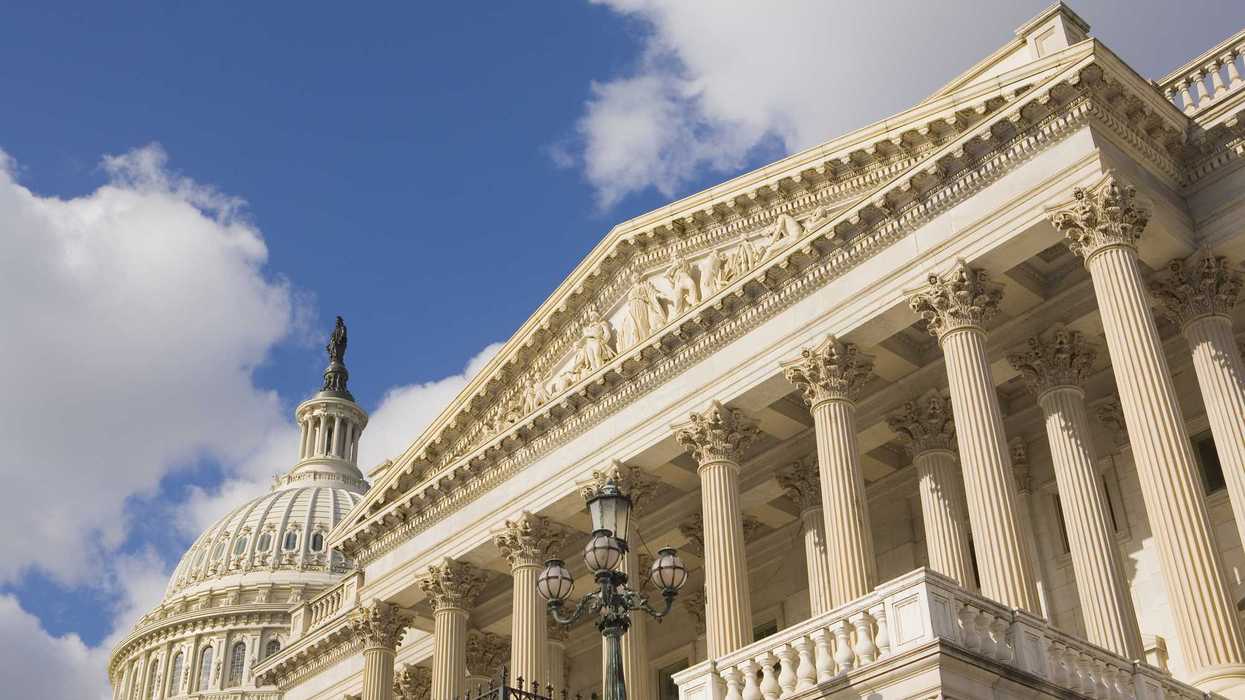

James Madison warned that the government would always mirror human nature — its virtues and its flaws. “What is government itself,” he asked, “but the greatest of all reflections on human nature?” The United States was built on a radical promise: a participatory government “of the people, by the people, for the people.” Today, that mirror is cracking in real time. What once reflected a nation striving toward freedom and equality now reflects something far more chaotic — a government drifting from its constitutional purpose and reshaped by loyalty tests, political revenge, and a blueprint designed to consolidate power.
In 2026, that reflection is unmistakable: a government shaped not by three independent branches, but by a president’s loyalists and a coordinated plan to remake American democracy from the inside out. The framers built guardrails — separation of powers, checks and balances, and independent institutions — to prevent the rise of authoritarian rule. Yet the country now faces a blueprint, Project 2025, that overrides those protections by placing independent agencies under presidential control, replacing civil servants with loyalists, and weaponizing the Department of Justice. This is not drift. It is design. And it has left the nation with a government that no longer reflects the people but instead reflects the ambitions of those who seek power without accountability.
The first failure is structural. The branches designed to check one another have instead enabled one another. Congress has allowed executive overreach to go unchecked — a pattern scholars describe as legislative abdication. Courts have narrowed long‑standing protections, a form of judicial retrenchment that weakens the public’s reliance on constitutional guardrails. Agencies once insulated from political pressure have been restructured to serve the president’s agenda, reflecting a broader trend of administrative capture. As a result, loyalty has begun to eclipse law. Election interference, unkept promises, and distractions have replaced transparency. Cronyism has taken root as officials elevate personal allies into key positions regardless of qualifications, blurring the line between public service and personal loyalty. And the use of office for financial benefit — once unthinkable — has become normalized. A cracked mirror doesn’t distort reality; it reveals the fractures we refused to see. When these guardrails bend, the people lose the protection the framers intended. Recent court rulings and executive actions have only accelerated this shift, underscoring how quickly constitutional guardrails can bend when ambition goes unchecked.
The second failure is moral. A government that once expanded rights is now restricting them. Civil rights protections have been dismantled, and DEI offices have been eliminated across federal agencies. Reproductive freedom is under assault through national abortion bans, restrictions on birth control and IVF, and the rollback of privacy protections. LGBTQ Americans face renewed discrimination. States like Minnesota have become testing grounds for expanded federal enforcement power, mass deportation strategies, strategies, and reduced humanitarian protections. Instead of safeguarding individual liberties, the government is increasingly targeting vulnerable communities — a hallmark of democratic backsliding. These shifts are not isolated policy disagreements; they represent a fundamental retreat from the nation’s commitment to equality under the law.
The third failure is economic and environmental. Project 2025’s proposals shift economic policy toward deregulation and reduced support for low‑income Americans — a form of regulatory rollback that deepens structural inequities. Cuts to Medicare and Medicaid, the repeal of insulin caps, and the elimination of out‑of‑pocket protections for seniors have placed vulnerable populations at risk. Ending federal drug price negotiation has driven up costs for families already struggling to afford basic care. Corporate taxes reduced and flat‑tax proposals shifted the burden onto working Americans. Worker protections weakened as union organizing becomes harder, and states are encouraged to waive federal labor laws. Environmental safeguards rolled back, and climate initiatives reversed, accelerating risks for communities. These choices are especially alarming at a moment when global conflict and sweeping legislation such as the Save America Act demand steady leadership and strong institutions, not weakened ones. A government that cannot protect its people’s well‑being is a government that has lost its way.
These failures are not isolated. They are connected by a single thread: Project 2025, a coordinated plan to remake the federal government. It includes a detailed policy blueprint to restructure dozens of federal departments, a database of thousands of vetted loyalists ready for immediate placement, a training academy designed to prepare recruits to dismantle the administrative state, and a 180‑day playbook containing prewritten executive orders for Day One. The architects of the blueprint now occupy key roles in the administration, accelerating the shift toward a government defined by loyalty tests and concentrated power rather than the will of the people. A government meant to reflect the people now reflects those who seek power without accountability. Its goal is unmistakable — to concentrate power in the presidency, weaken independent institutions, and reshape American governance along ideological lines. This is centralization of authority on a scale the framers explicitly feared. New moves within federal agencies in recent weeks show how rapidly the blueprint continues to unfold, tightening the concentration of power the framers most feared.
Yet even as institutions falter, the American people have not been silent. They have marched, protested, voted, written letters, attended town halls, and demanded accountability. They have used every civic tool available. Across parties, Americans consistently reject concentrated power. Republicans, Democrats, and Independents alike value the 14 principles of a free democracy — transparency, checks and balances, equal justice, and the peaceful transfer of power — because these are not partisan preferences but constitutional promises. But when the three branches stop listening — when they fail to uphold the Constitution — the people’s voices become muffled by a system increasingly designed to protect itself. The mirror cracks a little more.
The framers anticipated moments like this — moments when ambition, faction, and concentrated power would test the Republic — and they placed the ultimate safeguard not in the branches, but in the people.
If institutions cannot correct themselves, the responsibility shifts to the only force the framers trusted above all others: the people.
If the branches of government will not defend the Republic, the people must. Americans must continue to protest peacefully, refusing to be intimidated or divided. They must not allow suppression in any form — and must rise above every attempt to silence their voices or weaken their vote. They must have the courage to put Democracy above party, because when partisanship eclipses principle, the mirror cracks and democracy bends. And they must use that vote with intention, choosing leaders who demonstrate empathy, integrity, and a willingness to be held accountable — individuals devoted to their oath, the Constitution, and serving the people rather than themselves. Citizens must also believe in their power to use the Constitution’s remaining guardrails — the vote, the courts, the free press, and peaceful assembly — to straighten the bend in our democracy and restore the balance the framers intended. The people are not the last resort. They are the first principle.
Democracy in America is not self‑executing. It requires participation, vigilance, and courage. The framers understood that the greatest threats to the Republic would come from concentrated power on one side and unchecked passion on the other, and they built the guardrails so the people — not the branches — would be the final check. And democracy cannot survive when a government meant to reflect the people reflects dysfunction, loyalty tests, and a blueprint for unchecked power — a distortion only the people can correct. When the branches themselves deepen that distortion by surrendering their role as constitutional guardrails, citizens must reclaim the place the framers always intended: the final guardians of the Republic. In the end, only the American people can save the American Republic.
The framers never expected perfection from government. They expected vigilance from the people. Madison warned that government would always mirror human nature — its virtues and its flaws. The mirror has cracked, but it has not shattered. Whether it reflects a functioning democracy again depends on Americans’ willingness to defend it.
Carolyn Goode is a retired educational leader and writer focused on ethical governance, civic responsibility, and institutional accountability. She works to strengthen public trust by promoting transparency, constitutional literacy, and principled leadership.Editor's Note: This story was updated on 4/27.








The President Invited Iran to Bomb My Home