

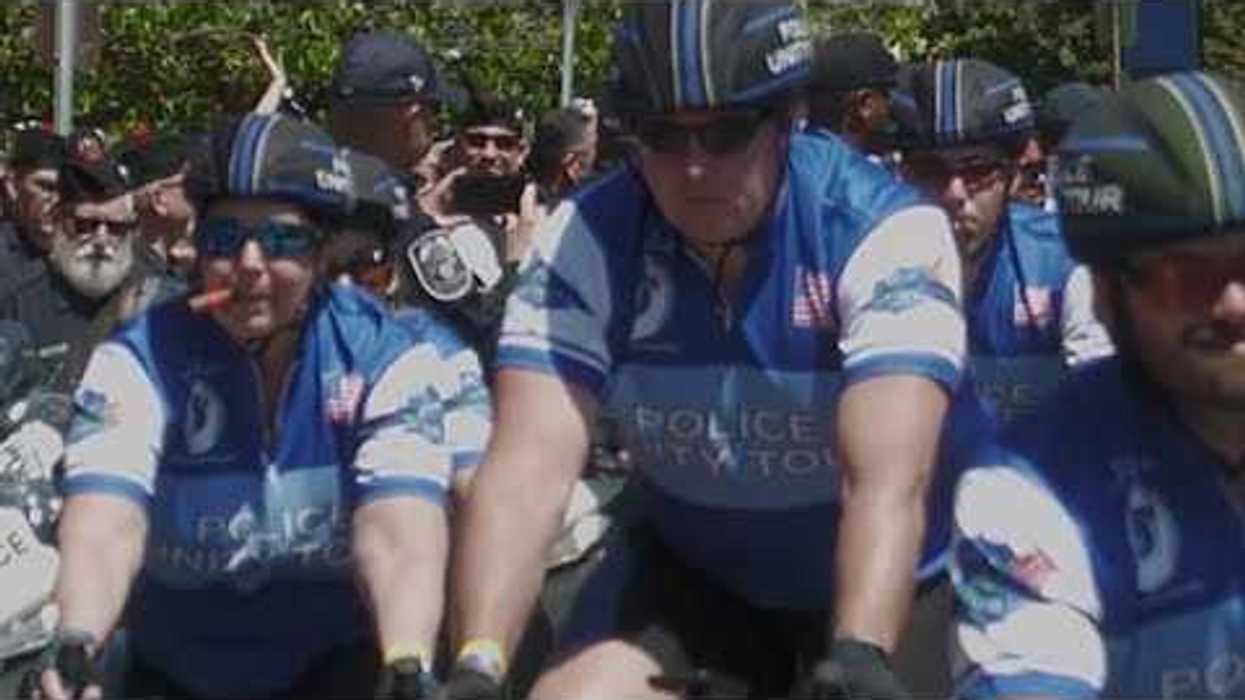

WASHINGTON –More than 2,000 law enforcement officers from across the country rode into the nation’s capital last Tuesday for the annual Police Unity Tour, marking one of many events taking place during National Police Week.
The event, held at the National Law Enforcement Officers Memorial, honors officers who lost their lives in the line of duty and brings together law enforcement officers and surviving families for a multi-day bicycle ride into the memorial.
According to the FBI, 107 officers died in the line of duty, including 43 felonious killings and 43 accidental deaths. More than 24,000 officers have died in the line of duty throughout U.S. history. The National Law Enforcement Officers Memorial honors the names of all of them.
The Police Unity Tour’s origins date back to 1997, when New Jersey police officer Patrick Montoure organized a four-day fundraising bike ride to raise awareness and support for fallen officers. What began with just 18 riders has since grown into a nationwide movement.
Today, the organization has eight chapters across New Jersey, Virginia, California, Florida, and Delaware. While each chapter begins at a different starting point, they all come together in Washington, D.C., for one final ride into the memorial.
For many riders, the journey was deeply personal. New Jersey State Trooper Oluteju Ishola said this was his first time participating in the event and that he rode in honor of his partner, who passed away on January 7.
“It was challenges, some days were challenges. Some days, you know, you had to push through it, you know, early mornings…late nights,” said Ishola.
But he said the support from communities along the route is what kept him going.
Other riders said the event also highlights the realities and dangers of law enforcement work, but reminds surviving families that their loved ones’ sacrifices will never be forgotten.
Kaitlin Bender-Thomas is a graduate journalism student at Northwestern University and a reporter for the Medill News Service.











The President Invited Iran to Bomb My Home