

Skip to content
Search

Latest Stories

Follow Us:
Top Stories

“We Can’t Afford It” Is Never an Acceptable Excuse To Deny Independents a Vote

The DC City Council has refused to fully fund and implement Initiative 83, the semi-open primary and ranked choice voting measure that was approved by 73% of voters in 2024.

Opinion

“We Can’t Afford It” Is Never an Acceptable Excuse To Deny Independents a Vote

DC voting rights advocate Lisa D.T. Rice criticized the DC City Council for failing to fund Initiative 83’s semi-open primary system, leaving 85,000 independent voters unable to participate in taxpayer-funded primaries despite overwhelming voter approval in 2024.

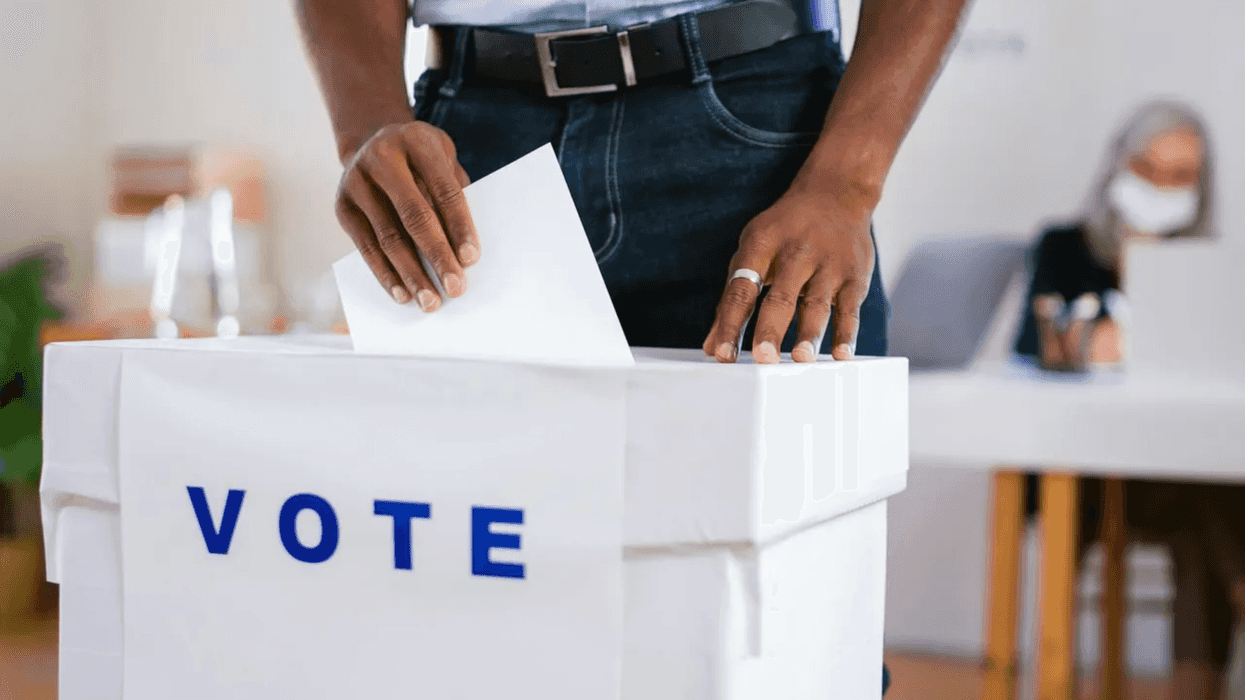
Photo by Getty Images on Unsplash.

WASHINGTON, D.C. - Lisa D.T. Rice spoke before the DC City Council during a Budget Oversight Hearing on May 1 to talk about Initiative 83, the semi-open primary and ranked choice voting measure she proposed that was approved by 73% of voters in 2024.

- YouTube youtu.be


Two years later, as DC residents prepare to vote in the 2026 primaries, 85,000 independent voters are still locked out of these taxpayer-funded elections because the city council decided the will of the people didn’t matter.

A semi-open primary would allow registered independents the opportunity to pick a Republican or Democratic ballot while registered party members would have to vote in their respective party’s primary.

Instead, the Democratic majority voted only to fund ranked choice voting. DC voters took note of this slight against their vote, as did major news publications like The Washington Post, which continues to criticize council members.

Just check out the opinion piece where the Post’s editorial board asks, “Why are DC Dems afraid of independent voters?”

“When I became an independent, I didn’t realize I would be disenfranchised,” said Rice. Our friends at Open Primaries posted her testimony on YouTube (see above).

“Nowhere in the Constitution does it say that to exercise the sacred right to vote, you must belong to a political party. The Republican and Democratic Parties didn’t even exist at the founding of our nation, and yet they have made a fundamental American right contingent on joining one of these private clubs.”

One of the main excuses the council has made for not funding open primaries is the cost. Rice explained that it would cost $1 million to implement a semi-open primary, most of which would go toward paper (i.e. mailers, ballots, and voter registration cards).

For context, $1 million represents not even a percent of the city’s multi-billion-dollar budget.

“We would not tell people with disabilities that it is too expensive for them to vote,” Rice remarked. “We would not accept it if someone told us they could not afford enough ballots for black voters, and we should not accept that excuse for Initiative 83.”

She added that the irony is not lost on her that while Democratic leaders across the country decry the Supreme Court’s recent decision to limit section 2 of the Voting Rights Act, DC Democrats are “fighting tooth and nail” to keep her from voting.

Rice closed out her testimony challenging members of the Council to stand by their words when they say they will defend DC voters and their right to vote. “Which is it? Are the outcomes of our local elections sacred and worthy of respect from elected officials – or not?”

Check out her full testimony above.


“We Can’t Afford It” Is Never an Acceptable Excuse To Deny Independents a Vote was originally published by Independent Voter News and is republished with permission.



Read More

The Supreme Court’s Voting Rights Decision Could Reshape Local Government Across Texas

A landmark Supreme Court ruling on the Voting Rights Act could reshape Latino and Black political representation in Texas. Guillermo Ramos and other leaders warn the decision may weaken protections against discriminatory election systems in school boards and city councils.

The Supreme Court’s Voting Rights Decision Could Reshape Local Government Across Texas

Guillermo Ramos remembers seeing few elected leaders who looked like him while he was growing up in the 1980s in Farmers Branch, a fast-growing affluent suburb northwest of Dallas.

Over the years, Latino representation continued to lag, he said. In 2015, after he had become a lawyer, he decided to do something about it.

Keep Reading Show less
Republican, Democratic and independent checkboxes, with the third one checked

Analysis of California’s open primary system, political reform, and voter empowerment amid gubernatorial tensions and calls to restore party control.

zimmytws/Getty Images

California Schemin’

Both before and after Eric Swalwell’s resignation, the California Gubernatorial race has partisan insiders screaming that California’s innovative, voter-friendly, open primary system should be scrapped. Why? Seven Democrats and two Republicans are running. If all the Democrats stay in the race, and none surges, there is a statistical possibility that the two Republicans advance to the general election.

The attacks are pure opportunism, from people who oppose open primaries, period. Never mind that seven million independent voters have been enfranchised and elections are much more competitive, according to these critics, the fact that the Gubernatorial race might feature two Republicans is absolute proof that the old system needs to be restored.

Keep Reading Show less
Official ballots with a chain and lock over them, and the USA flag behind them.

The impact of election fraud claims and voting laws on democracy in the United States. Daniel O. Jamison examines voter suppression concerns, mail-in ballot policies, and the broader political struggle over election integrity.

Getty Images, JJ Gouin

If It Ain’t Broke, Don’t Fix It

For nearly ten years, claims that our elections are riddled with fraud have threatened the foundation of our democratic republic.

It is alleged that Democrats have flooded the country with illegal immigrants who then illegally vote for Democrats. Purportedly to protect the country from this, Republicans seek legislation that would, among other provisions, restrict vote-by-mail, require potentially expensive and onerous proof of citizenship to register to vote, and require potentially expensive photo identification to vote.

Keep Reading Show less
The Fahey Q&A with Elizabeth Rasmussen

An in-depth interview with Elizabeth Rasmussen of Better Boundaries on Utah’s redistricting battle, Proposition 4, and the fight to protect ballot initiatives, fair maps, and democratic accountability.

The Fahey Q&A with Elizabeth Rasmussen

Since organizing the Voters Not Politicians 2018 ballot initiative that put citizens in charge of drawing Michigan's legislative maps, Fahey has been the founding executive director of The People, which is forming statewide networks to promote government accountability. She regularly interviews colleagues in the world of democracy reform for The Fulcrum.

Elizabeth Rasmussen is the Executive Director for Better Boundaries, a Utah-based organization fighting for fair maps, defending the citizen initiative process, preserving checks and balances, and building a better future. Currently making headlines in the state, Better Boundaries is working to protect Proposition 4, and with it, the rights of Utah voters.

Keep Reading Show less