

WASHINGTON, D.C. -- The D.C. Council may delay the implementation of ranked choice voting (RCV), frustrating pro-democracy forces that understandably want the voter-approved law in place for next year’s elections.
- YouTube youtu.be
Political insiders predictably search for procedural hurdles to try and stop changes that reduce the control of party leaders. Implementation can turn into a slow, uphill battle even after voters speak clearly. The case is no different with Initiative 83 in DC, which calls for both RCV and semi-open primaries.
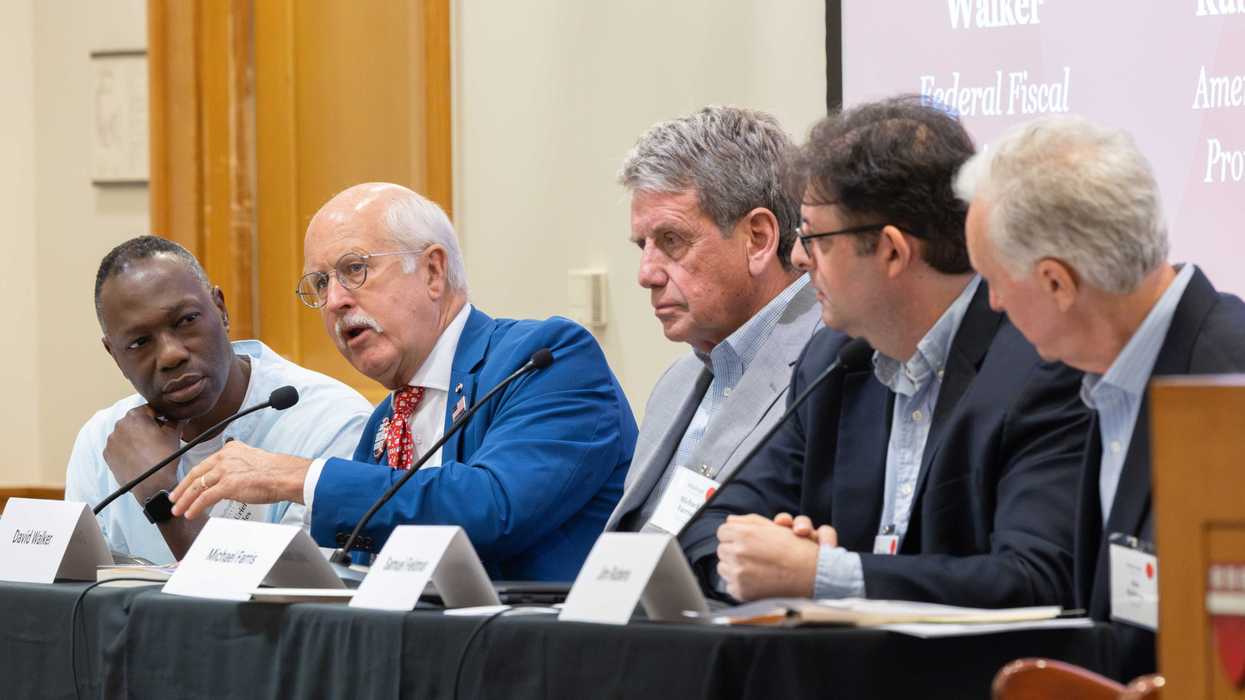
"Honoring [voters'] decision does not mean rushing implementation," said Councilmember Wendell Felder at a November 24 hearing.
At-large Councilmember Anita Bonds says she's also worried the elections board doesn't have the resources and time needed to implement RCV. "We want to make sure that if we’re going to do this in the nation’s capital, it will be good as gold," Bonds said.
Voters in Washington, D.C. approved Initiative 83 on Nov. 5, 2024, with 73% support, adopting a semi-open primary system and RCV beginning in 2026.The summary statement for the initiative was as follows:
If enacted, the Initiative would both: (a) implement ranked choice voting to allow voters to rank up to five candidates according to their preference in each contest for any office (other than political party offices); and (b) permit any voter who is not registered with a political party to vote in the primary election of that voter’s choosing for all offices (other than political party offices). This Initiative will not be implemented unless the D.C. Council separately chooses to appropriate funds for the projected costs.”
In July, the DC Council approved funding for just part of the law's implementation in an 8-4 vote. The Council stopped short of funding the initiative’s open primaries component.
Next year’s races in Washington, DC, are expected to be some of the most competitive in decades. Mayor Muriel Bowser announced on November 25 that she would not seek re-election.
Nevertheless, Felder has introduced emergency legislation requiring what he called a “comprehensive needs assessment” before rollout. He questioned whether election administrators can realistically prepare the system in time for the Democratic primary in June 2026, considered the most decisive election in the heavily Democratic city.“We are not making a small change here; we’re changing the way people vote in the District of Columbia,” Felder said.
At a hearing last week, Board of Elections Director Monica Evans said the agency can still meet the deadline, but her comments suggested it would take a heroic effort to pull it off. “We’ve been asked to do the impossible in the past,” Evans said.
She testified that there is a plan and that the items that need to be finalized include ballot size and design, software updates, and an audit plan.
"Knowing that we have support from individuals who have already been in these shoes is very helpful to us as we finalize our plans and hit the ground running come January," she said.
Felder continued to ask whether she needed more time. Evans said she felt caught between opponents who want to halt the system altogether and supporters who expect immediate implementation. “I feel like I’m being set up to be the fall guy,” she said.“
Do you have sufficient resources to implement ranked choice voting in the DC Primary Election in 2026?” Ward 5 Councilmember Zachary Parker asked Evans. Evans said it was hard to answer with yes or no.
“The reason I say that is [that] more time, more money means more touch points. So we will absolutely be able to engage in a voter outreach campaign, but as far as how robust that campaign will be, that will depend on dollars,” she said.
Felder will need to persuade at least eight other council members on December 2 to support his bill delaying the law.
Ranked Choice Voting Faced Similar Challenges in Maine
In Maine, it took some time to recognize that the primary obstacle to implementing RCV was the unprecedented collusion between senior political leaders from the two major political parties. In the midst of the battle, then-Republican Governor Paul LePage threatened to continue a government shutdown and called RCV “the most horrific thing in the world.”
The Democratic opposition was not as overt but clearly as dangerous. The Democratic secretary of state, Matthew Dunlap, was unwilling to fulfill his legal responsibility to begin the implementation of RCV immediately after RCV became the law on January 7, 2017. Instead, he engaged in a legislative lobbying and public relations campaign to convince members of both parties and his government staff that it was okay to ignore and repeal the results of a free and fair election.
He argued for at least a year that RCV was impossible to implement and would result in “cars burning in the streets” of Maine. He also overestimated the cost of the reform by more than $1.4 million. Ultimately, Dunlap was forced in court to recant his absurd claims and implement the law.
RCV was first used in Maine on June 12, 2018, and voters have used it in 8 statewide elections since then without incident. RCV will be the method used in the Democratic and Republican primary elections for U.S. Congress in June 2026 where both Dunlap and LePage are currently candidates.
DC Ranked Choice Voting at Risk: Council Moves to Stall 2026 Implementation was first published by IVN and republished with permission.