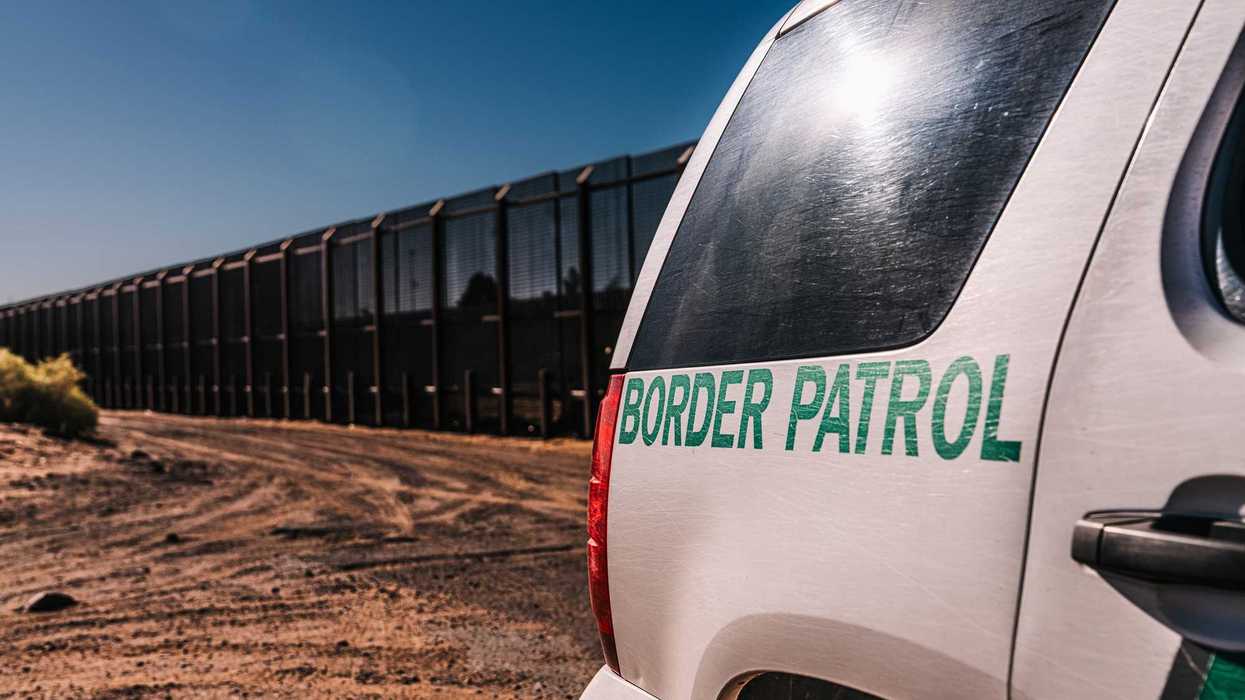


The first year of President Donald Trump’s second term resulted in some of the most profound immigration policy changes in modern history. With illegal border crossings having dropped to their lowest levels in over 50 years, Trump can claim a measure of victory. But it’s a hollow victory, because it’s becoming increasingly clear that his immigration policy is not only damaging families, communities, workplaces, and schools - it is also hurting the economy and adding to still-soaring prices.
Besides the terrifying police state tactics, the most dramatic shift in Trump's immigration policy, compared to his presidential predecessors (including himself in his first term), is who he is targeting. Previously, a large number of the removals came from immigrants who showed up at the border but were turned away and never allowed to enter the country. But with so much success at reducing activity at the border, Trump has switched to prioritizing “internal deportations” – removing illegal immigrants who are already living in the country, many of them for years, with families, careers, jobs, and businesses.
The Trump administration claims to be pursuing only immigrants who are criminals, the “worst of the worst.” But as of January 7, just 26 percent of those deportees in ICE detention had a criminal conviction for something other than their illegal residency status.
Instead, the White House is targeting people like business owner and father Ismael Ayuzo Sandoval. Ayuzo, the owner of the Caldera Bar and Grill in Staunton, IL, technically fit the White House target of an unauthorized immigrant with a conviction. He was charged in 2008 with driving under the influence, and in exchange for pleading guilty, paying a fine, and completing DUI classes, the conviction was not entered on his record. Hardly an example of the “worst of the worst,” by any reasonable definition.
Seventeen years after his DUI, suddenly the rules of the game changed, and he’s a Trump target. Ayuzo’s wife and neighbors testified that he worked hard, supported community causes, and was active in his daughters’ school. His lawyer says, “It is hard to understand how his deportation benefits the US. This is the type of immigrant that we should be welcoming with open arms.” But none of that mattered. Ayuzo was deported in late December.
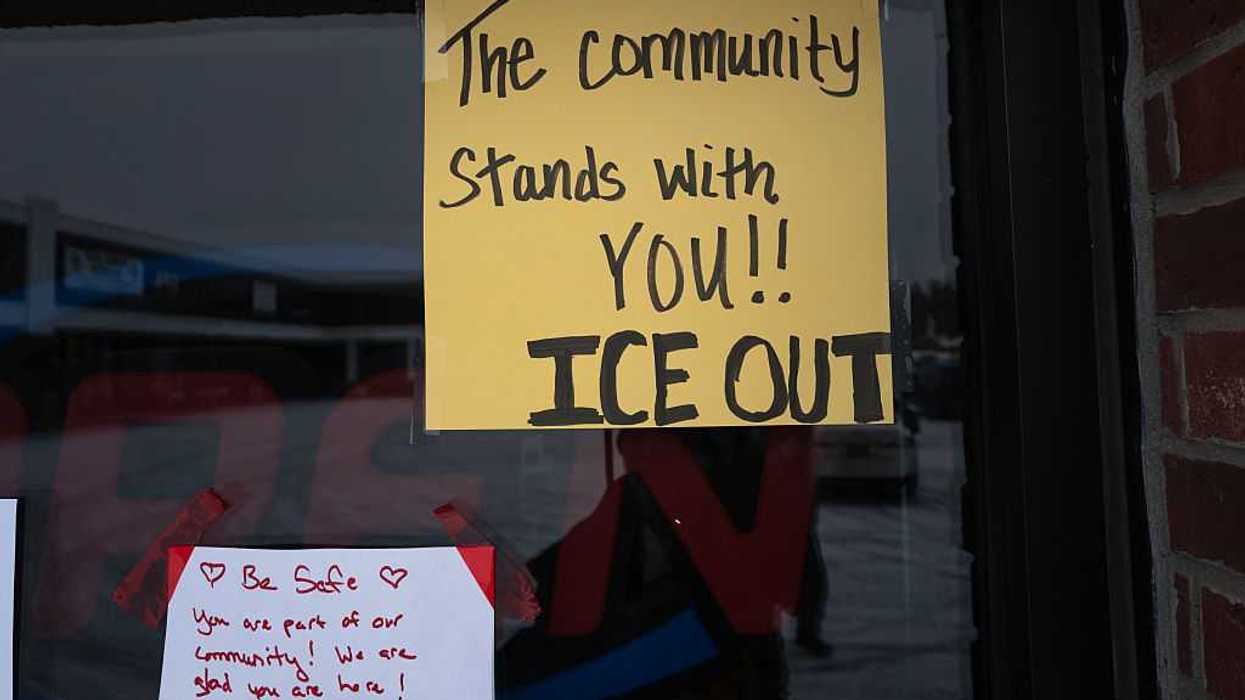
Ismael Ayuzo Sandoval’s tragic story is just one of millions like his. Ripping these people from their lives has led to escalating, ugly incidents between ICE and local residents, including at least two homicides, as the impacted communities fight back. While ICE’s gorilla tactics didn’t hit Trump’s “million deportations in the first year” campaign promise – it removed 622,000 noncitizens, less than President Joe Biden’s 778,000 removals in 2024 -- nevertheless these deportations are part of Trump’s “shock and awe” strategy, a kind of street theater designed to scare people away from the border and even into “self-deportation.” The White House claims 1.9 million people have “self-deported” (though it refuses to provide any data to confirm those numbers), so the tactics appear to show some success.
But at what price? Given the dramatic decline in new arrivals at the border, why is it still necessary to use such inhumane, heavy‑handed, and in some cases illegal tactics by ICE and other federal officers? Why doesn’t Donald Trump declare victory and end the growing police state?
What is the goal here? Should federal policy focus more on deporting so-called internal immigrants like Ismael Ayuzo Sandoval than on new arrivals? Which immigration policy would most benefit America? Besides tearing apart families and communities, the Trump policy is having significant impacts on labor markets, a reduced worker supply, higher consumer prices, and other impacts that the economy has only begun to absorb.
Impact on the economy – is it worth it?
According to various measurements, about 5% of the total workforce – roughly 8.3 million people – are undocumented immigrants. As Trump widens the deportation net beyond illegal immigrants with criminal records to all working immigrants having a bullseye on their backs, entire industries, from construction and health care to agriculture, restaurants, caregiving, and elder care, are being damaged.
In those sectors, immigrant labor accounts for anywhere from a quarter to half of the workers. For example, nearly 2.8 million immigrants account for more than 18% of the healthcare workforce. They fill critical roles for physicians and surgeons (26%), registered nurses, dental hygienists, and home health aides (ranging from 27% to almost 40%). Migrant workers also represent about 40% of all crop farmworkers picking the nation’s food, according to the USDA, and their share of the workforce on dairy farms in some states is even higher. NPR reported back in November on increasing shortages of farmworkers, making farmers desperate to find workers and contributing to rising grocery prices,
Immigrants also make up much of the labor pool for construction jobs, from 33% of carpenters to 37% of brick masons, 47% of roofers, and 64% of plasterers. A survey by the Associated General Contractors of America (AGC) conducted last summer found that, as a result of immigration enforcement, 10% of construction firms said they had lost workers due to actual or rumored ICE raids, and 20% reported those concerns caused subcontractors to lose workers. 92% of firms were struggling to fill positions. Unsurprisingly, this is driving up housing costs, with the cost of construction labor increasing twice as fast as housing materials.
Trump’s immigration czar, Stephen Miller, applauds this labor shortage, saying Americans will fill those jobs. “Mass deportation will be a labor-market disruption celebrated by American workers,” says Miller, “who will now be offered higher wages with better benefits to fill these jobs.”
Others scoff at Miller as being naïve. For example, Nebraska is one of the nation’s top meat producers, and with one of the worst labor shortages. For every 100 jobs, there are only 39 workers, according to the U.S. Chamber of Commerce. Al Juhnke, executive director of the Nebraska Pork Producers Association, says, "People say, 'Well, just double or triple the pay [and] you'll get United States citizens to work.' No, you won't." Why? Because working in a meat packing plant is a hard slog.
Rury Palomino, a Peruvian-born US citizen with his own construction firm, also doesn’t buy the administration’s argument. “Contrary to whatever the government thinks,” he says, the industry is not attracting new, native-born workers. “They don’t want to come to work in construction.”
Kenny Mallick, a plumbing and heating contractor based in Gaithersburg, MD, agrees, saying, “There’s not anyone sitting on the sidelines. Unemployment is low. Where are you going to get them at?"
Mallick, who voted for Donald Trump and agrees with the president’s stance that immigrants who have committed crimes should be deported, says the current broken labor system hurts the economy and is unfair to hardworking migrants. “They’re taking risks every day by coming to work. They could be locked up and deported,” he says. “We can’t do what we do in this country without these people.” In return, he says, “we exploit the shit out of these people.”
Labor shortages were already widespread before the Trump administration launched its anti-immigrant surge. A McKinsey report found that, as of May 2024, the US had 1.5 million fewer unemployed workers than available jobs. But now it’s worse. In places where raids have been occurring, such as California, North Carolina, Georgia, Chicago, Miami, and Phoenix, as many as 75% of immigrant workers, including legal ones, have stopped showing up for work, fearful of getting swept up in the ICE net. Existing staffing shortages at nursing homes and home health businesses are increasing, leading to reduced services and higher costs.
More domino effects
Labor market experts say that the expulsion of these workers is going to have another domino effect – reducing the number of jobs for native-born Americans. Economist Michael Clemens from the Peterson Institute has found that the removal of unauthorized workers in the overall production process has “ripple effects for the jobs of everybody else in the sector — including authorized immigrants, including natives. ” A recent study in the Journal of Labor Economics found that, for every 450,000 immigrants removed from the labor force, employment of complementary production jobs for US-born males also declined by approximately 300,000, many of them high-skilled occupations.
Immigrant workers also contribute some of their wages to Social Security and Medicare, even though they do not receive benefits from those programs. In 2022, immigrants living illegally in the US paid $25.7 billion in Social Security taxes and $6.4 billion in Medicare taxes. The loss of this tax revenue concerns many economists since the Social Security fund is already expected to experience shortfalls by the mid-2030s.
So removing millions of existing workers, and intimidating millions more, is starting to shrink the workforce, drive up business costs and consumer prices, and reduce the economy’s productivity. By Donald Trump continuing to focus his policy on -- not just those new immigrants who show up at the border, and not just those illegal immigrants with a criminal record -- but widening the net to include millions of hard-working people, many with families, jobs and their own businesses, he runs the risk of doing great damage to the national economy, as well as to many local economies that for decades have depended on immigrant labor.
Someone remind me again – what is the goal here?
Steven Hill was policy director for the Center for Humane Technology, co-founder of FairVote, and political reform director at New America. See more of his writing at his Substack newsletter DemocracySOS.