Late February brought two stories that most Americans filed under separate categories. In Kansas, the state government invalidated the driver's licenses and birth certificates of transgender residents, erasing legal identities with the stroke of a pen. In New York, a Columbia University neuroscience student named Ellie Aghayeva was taken from her campus apartment by federal agents who misrepresented themselves to get through the door and held by ICE until the city's mayor personally petitioned for her release. Different people, different states, different mechanisms. The same message: for some of us, the promises of this nation were always conditional.
And yet, many Americans hold onto the lie of equality because acknowledging the truth would mean that the foundational promise we have repeated since childhood — liberty and justice for all — was never meant for all of us. It is far easier to accept comfortable fictions than to reckon with a truth that destabilizes everything you thought you knew. That meritocracy is real. That all are equal. That the documents we carry and the institutions we enter will protect us the same way they protect everyone else. But for many of us, there was never a fiction to hold onto. We were born into the conditions the lie was designed to obscure.
But the lies are coming apart in real time.
In 1848, Horace Mann declared education "the great equalizer of the conditions of men." It was a promise that school would be the institution that leveled the playing field, that made the American ideal available to everyone. But the promise was never universal. It was made to some and withheld from others by design. Can a school deliver on that promise when certain children are told their histories are not important enough to know? Can it equalize when the truth about this nation is buried beneath calls for anti-divisiveness? Can it protect when federal agents abduct children from their communities and take them to detention centers, as they make pleas to disembodied voices on the other side of a prison wall, hoping someone will explain why they are imprisoned for the act of existing?
The library carried a similar promise — a public space, open to all, where knowledge belonged to everyone. But public meant something narrower than we admitted. Patrons who didn't fit the image of the intended public entered through back doors, or not at all. Today, according to PEN America, more than 22,000 books were banned from public schools between 2021-2025, resulting in book banning and censorship “now becoming a routine and expected part of school operations.” Between 2023 and 2024, 44% of the most commonly banned titles featured characters or people of color. Twenty-nine percent included LGBTQ+ characters or people. In my hometown of New Castle, Pennsylvania, the public library was forced to close entirely due to harassment of staff for the sin of housing books that acknowledged the existence of queer people.
The church promised sanctuary — a space beyond the reach of the state, where people could gather, worship, and be held. But the Black church has never been beyond the reach of the state. From 1956 to 1971, the FBI's COINTELPRO program put Black communities under surveillance in their churches, classrooms, and libraries. They infiltrated the Southern Christian Leadership Conference. They wiretapped Martin Luther King Jr. and sent anonymous letters by federal agents attempting to coerce him into suicide. COINTELPRO officially ended. The surveillance did not. Today, congregations of color hold services under security alert, praying for protection from the next Dylan Roof — or from the government that was supposed to protect them from him.
These are not separate crises. They are the same lie, repeating. Policy creates the conditions, fearmongering sustains them, and the comfortable fiction that these promises were ever universal keeps us from seeing the pattern clearly.
The pattern is not new. Policies legalized school segregation. Fearmongering drove white flight, hollowing out the schools that remained and producing the fiction of failing schools and failing children, as though the schools failed themselves. Martin Luther King Jr. observed that eleven o'clock on Sunday morning is the most segregated hour in America — not because people chose separation, but because the promise of shared worship was never seriously made. Libraries required back entrances. Documents were denied. Citizenship itself was withheld, litigated, and conditionally extended to those the state deemed worthy.
What Kansas did to transgender residents in February was not an aberration. What ICE did to Ellie Aghayeva was not a deviation from who we are as a nation. They are the visible edge of a much longer history of conditional promises the nation has always been willing to revoke when the cost of keeping them became politically inconvenient.
America was lying. America's pledge has always been a lie.
But at some point, it has to stop. The promises of this nation — equality, safety, belonging — cannot remain conditional for some and absolute for others. We cannot build a future on a foundation we refuse to name. And only when we tell the truth about what was never given can we begin the work of building something that is.
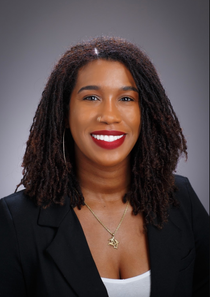
Stephanie Toliver is a Public Voices Fellow and a member of the OpEd Alumni Project sponsored by the University of Illinois.

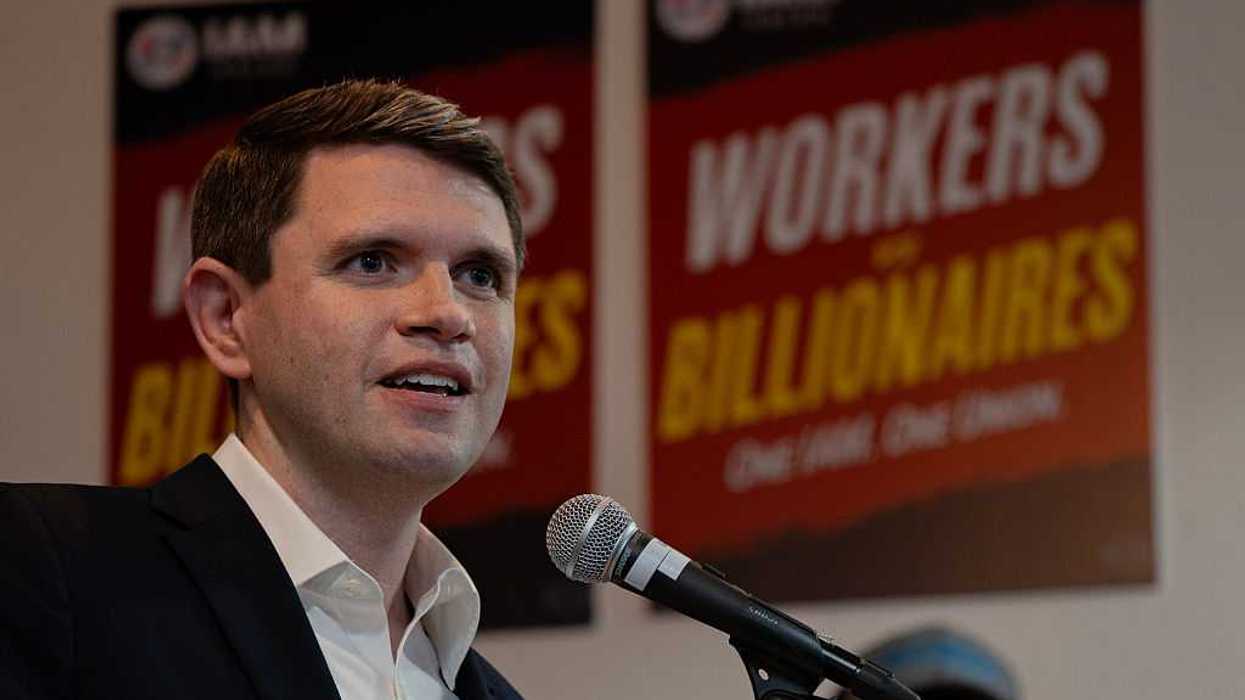







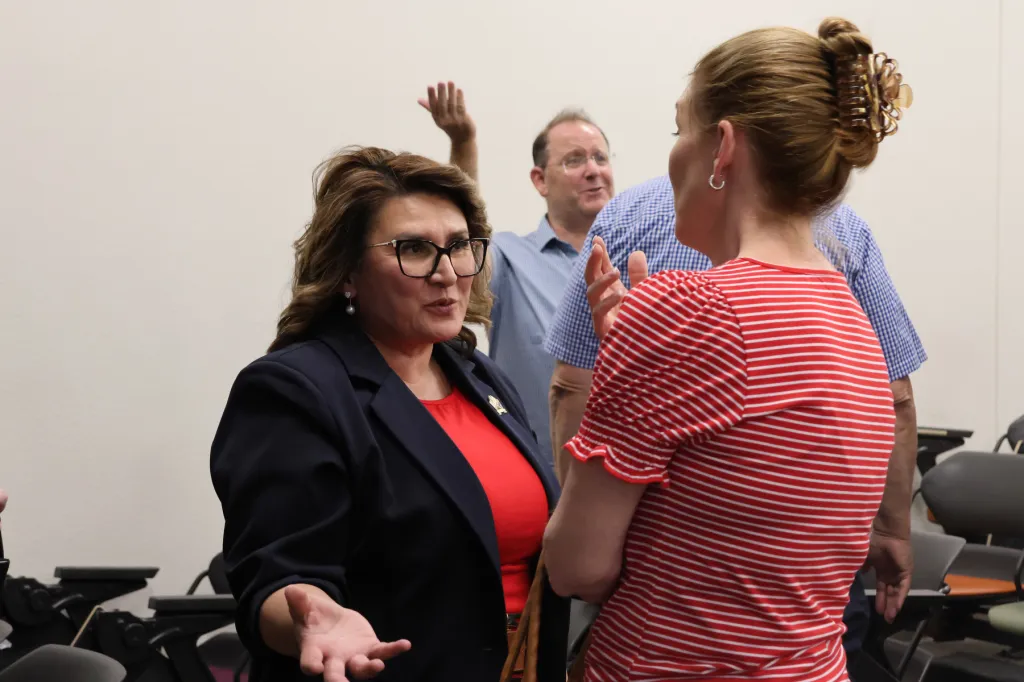 Congressional candidate JoAnna Mendoza has leaned into her working class background as she runs for a seat in the U.S. House to represent Arizona’s 6th congressional district. (Courtesy JoAnna Mendoza campaign)
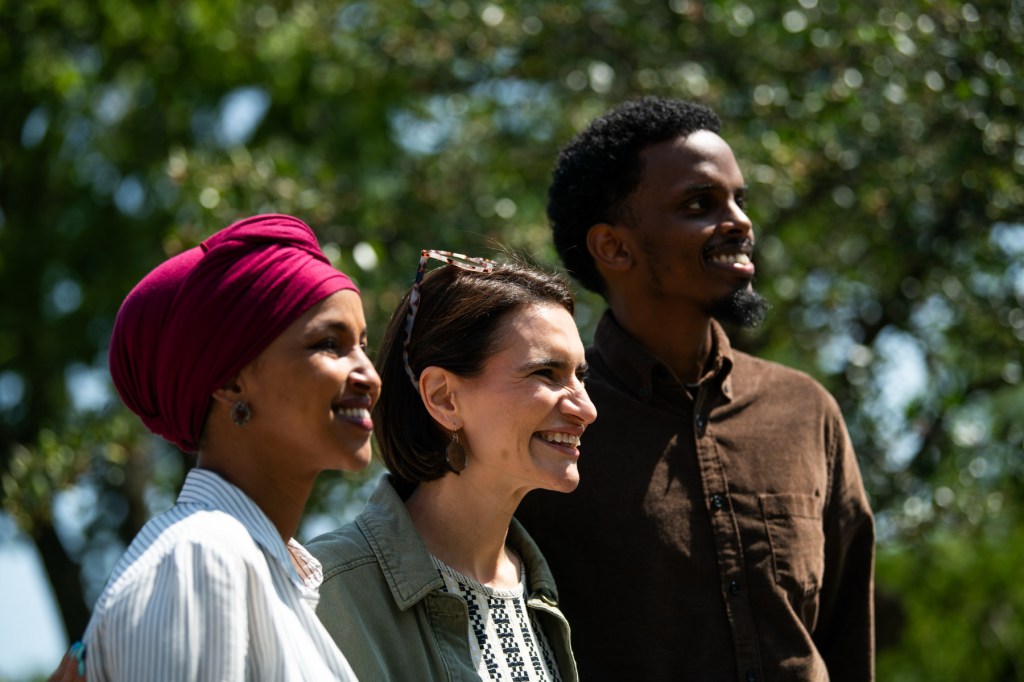 Politicians who come from working class backgrounds, like Minnesota Lt. Gov. Peggy Flanagan (center) and Minnesota state Sen. Omar Fateh (right), are resonating with voters during a particularly challenging economic period. (Stephen Maturen/Getty Images)