


Every spring, as the Scripps National Spelling Bee captures national attention, we celebrate the brilliance of young spellers—children who command stages and spell words that even confuse adults. This time of the year makes me think back to when I was 9 years old, when I won my school’s spelling bee and advanced to the county competition. Standing in a large, crowded room, surrounded by what felt like hundreds of faces that didn’t look like mine, I whispered to myself: “I can’t do this.” Maybe I wasn’t supposed to be there at all.
So instead of showcasing my own brilliance, I committed self-sabotage by intentionally misspelling each word on the spelling test.
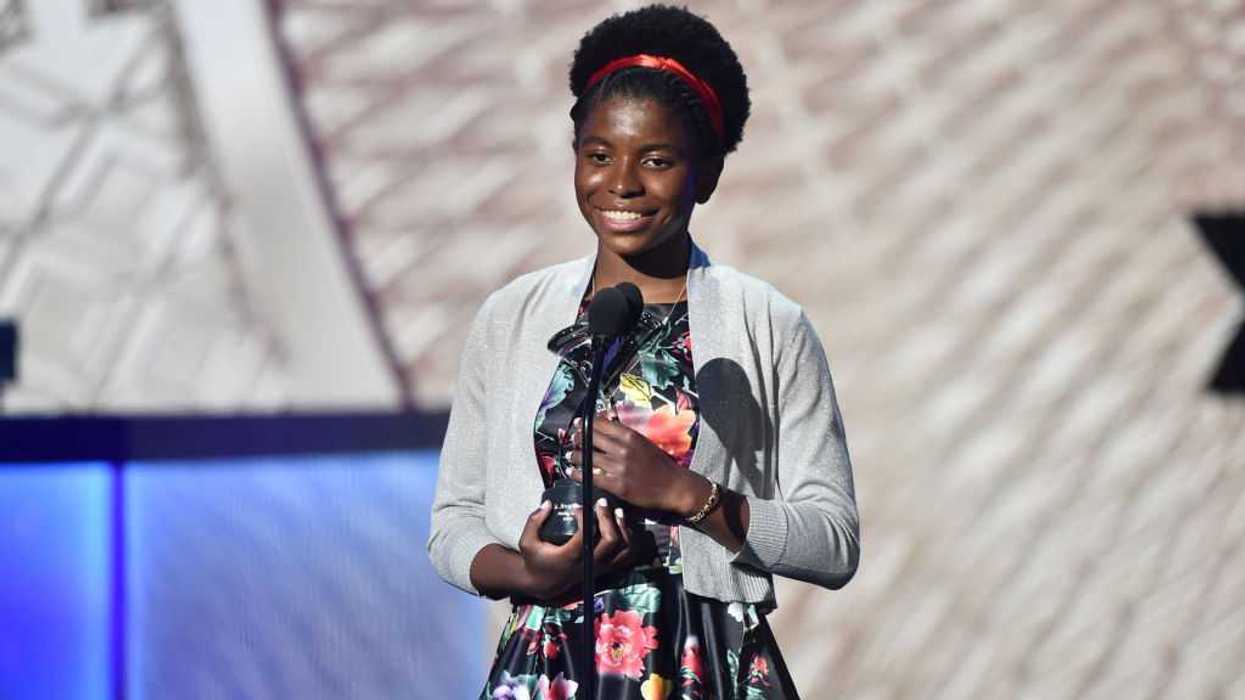
There have been only two Black winners in the 101-year history of the Scripps National Spelling Bee: Jody-Anne Maxwell in 1998 and Zaila Avant-garde in 2021. Scripps is not just a national contest—the contest attracts kids from across the world. And yet, only two Black children have ever won.
So it should come as no surprise that, as a child, I had a feeling that I did not belong at that competition. No one explicitly said, “You don’t belong here;” however, the message was subtle, implied, because of the absence of representation.
In adulthood, I learned these feelings of inadequacy are called imposter syndrome (also known as imposter phenomenon)—the persistent feeling that you don’t belong in spaces, even when you’ve earned your spot. Despite the truth, you feel you’ll be exposed as a fraud, that others will find out you’re not deserving of your accomplishments. While many people believe imposter syndrome develops in adulthood, research suggests that feelings of fraudulence can appear in childhood and adolescence. These feelings can be shaped by context—for example, by the racial and cultural makeup of a classroom, by whose achievements are celebrated, and by whose mistakes are remembered.
A lack of representation is not isolated to spelling bees. It reflects broader patterns in education, including the disproportionate underrepresentation of Black students in gifted and advanced academic programs. Despite three-quarters of Black students attending high schools offering almost a half dozen Advanced Placement (AP) courses, Black students have shown some of the slowest growth in AP participation. As opportunities to take AP courses expand, Black students are not gaining access, which reinforces the silent but deafening message that these spaces are not designed with them in mind.
Research shows that many students, particularly students from marginalized communities, have fewer opportunities to complete grade-level assignments and engage in rigorous instruction—the type of rigor that prepares them for AP courses. These disparities send powerful messages about who is expected to excel and who is not. These feelings of not belonging are also reinforced when students are the “only ones” in an advanced course, when their intelligence and abilities are questioned more than their peers’, or when success feels like an exception rather than the rule.
The absence of Black students in academically rigorous spaces is so loud that it was depicted in the 2006 film Akeelah and the Bee. In this movie, 11-year-old Akeelah Anderson is a Black girl from South Los Angeles who competes in the Scripps National Spelling Bee. The film resonates because it offers what’s rarely depicted: a Black child centered on a national stage for their intellectual prowess.
And despite a lack of representation, there are moments of breakthrough. Jody-Anne Maxwell and Zaila Avant-garde’s historic wins are two examples of what is possible. Their visibility also highlights how rare these moments are and how much work it takes for Black children to see themselves reflected in spaces of academic excellence.
When I think back to that day at the county spelling bee, I don’t think about the words I misspelled on purpose. I think about the moment before that—the quiet, whispered realization that I did not see myself reflected in that space, and my decision to step back.
But what that moment revealed is something I learned as an educator: students respond to the environments we create—environments that signal, in ways both obvious and subtle, who belongs. Building these spaces requires intention. It means expanding access to enrichment opportunities early. It means educators and mentors identifying and nurturing talent, sometimes when children do not recognize it in themselves. Because imposter syndrome is not perpetual feelings of self-doubt or an individual failing—it’s a response to environments that communicate who belongs and who does not.
To be sure, just because a Black child is in a homogenous environment does not mean they will never develop imposter syndrome. Imposter syndrome is not an internal individual failing—it’s contextual, shaped by the environments students move through and the messages those environments send about belonging. I attended an elementary school that was 98% Black, where my brilliance and ability were affirmed, and I was celebrated. Even still, it did not shield me from societal messages about who belonged.
When I advanced to the county spelling bee, I found myself in a space where I was one of a handful of Black students in the room. Instead of rising to the occasion (because I could spell the words), I intentionally misspelled words to avoid moving forward. That experience reflects a broader pattern: when students don’t see themselves in academically rigorous spaces, those spaces can feel out of reach. Affirmations are important, but are not enough. Students need to see themselves reflected in the spaces in which they are entering.
If we want more children to step onto spelling bee stages and into cognitively demanding spaces, we have to build environments where they never question whether they deserve to be there in the first place.







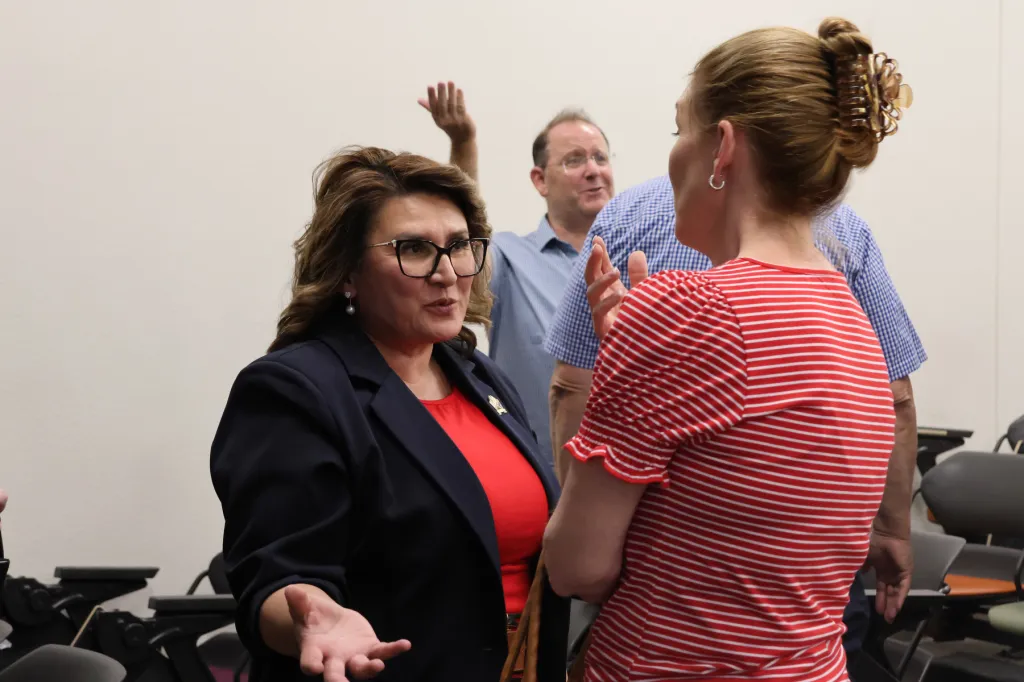 Congressional candidate JoAnna Mendoza has leaned into her working class background as she runs for a seat in the U.S. House to represent Arizona’s 6th congressional district. (Courtesy JoAnna Mendoza campaign)
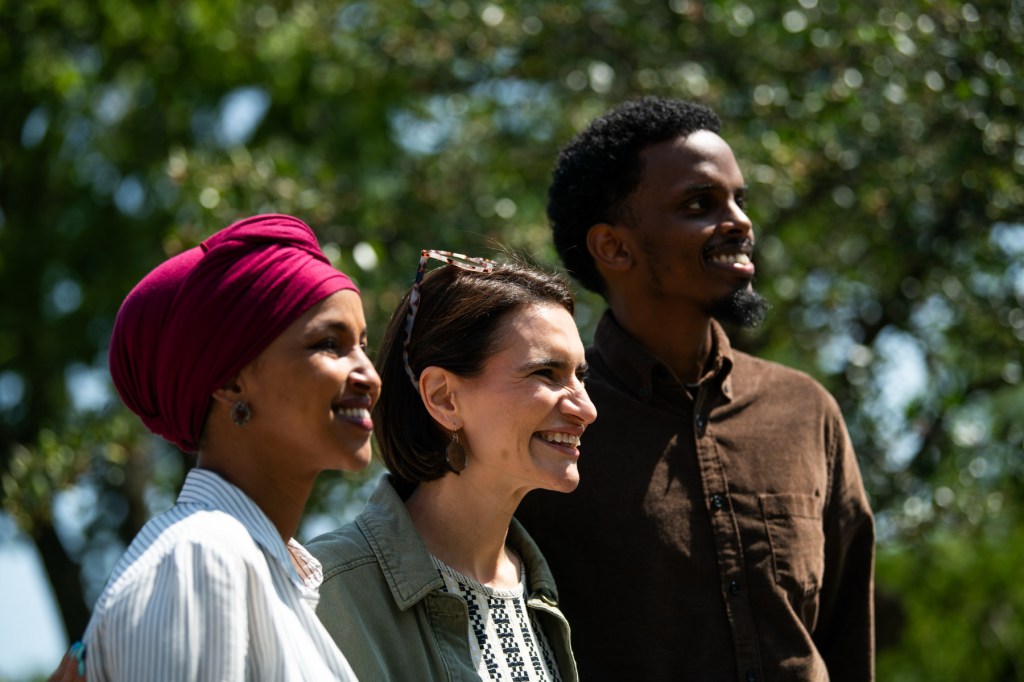 Politicians who come from working class backgrounds, like Minnesota Lt. Gov. Peggy Flanagan (center) and Minnesota state Sen. Omar Fateh (right), are resonating with voters during a particularly challenging economic period. (Stephen Maturen/Getty Images)
The President Invited Iran to Bomb My Home