
We have just completed another tough year for America’s most prestigious colleges and universities. Problems are legion; solutions are hard to find.
By their own telling, the richest places are confronting a gloomy economic future. They are cutting staff, freezing hiring, and limiting faculty salary increases. They are also beginning to face the ugly reality of runaway grade inflation and student disengagement from the academic work that is supposedly the lifeblood of their institutions.
However, in perhaps the most important development of the just completed 2025-26 academic year, a few of America’s universities are waving the white flag in a long-running war mounted by conservative critics of higher education. Five years ago, JD Vance argued that conservatives should declare that college professors are “the enemy” and treat the most prestigious schools as “totalitarian” institutions.
His proposed solution: Conservatives need “to seize the institutions of the left and turn them against the left. We need a… de-wokeification program.” They need “to deinstitutionalize the left, reinstitutionalize the right.”
As the 2025-2026 academic year comes to a close, Yale, Harvard, and others like them are on board with the “de-wokeification program.” Vance wants these colleges and universities and their students, faculty, and staff to be more deferential. Alas, that will not help prepare their students for the responsibilities of democratic citizenship.
Viewpoint diversity does not guarantee that students will be willing to practice empathy before judgment, to read deeply, and to listen attentively to any argument, left, right, or center. Only if they do can they live well in a democracy.
And as hard as it is for universities to hire faculty with conservative views, it is much harder to rediscover the habits of mind, like those I just enumerated, that are necessary if free speech and democratic political life are to flourish. Trying to appease the JD Vance‘s of the world or powerful alumni who complain that we need to hire fewer faculty to teach about the evils of colonialism or the injustices of America’s past and more who will teach about the virtues of capitalism and our country’s founding ideals, is a mistake that elite colleges and universities seem eager to commit.
The problem is cultural, not representational. Conservatives think that addressing the latter will cure the former and bring a vibrant marketplace of ideas back to our campuses.
Sadly, this year, some of the most prestigious colleges and universities seem to have bought that line.
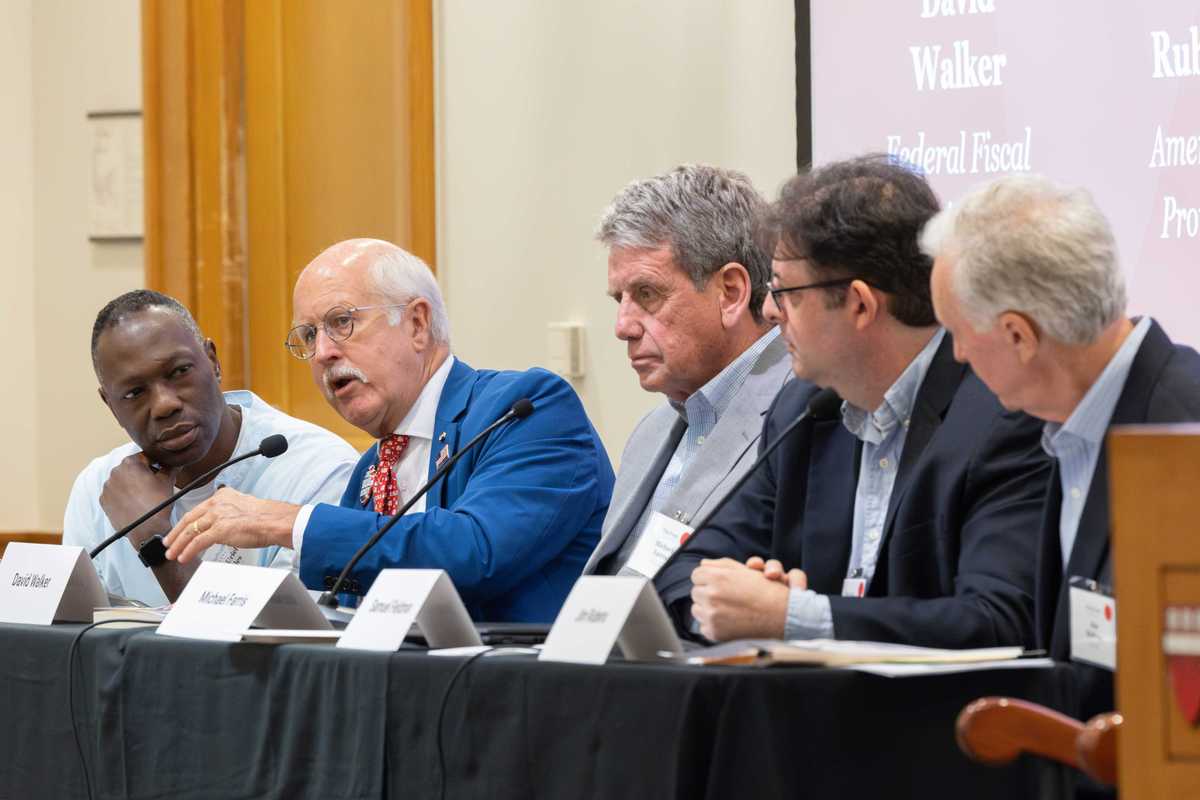
In November 2025, the New York Times published an interview with the leaders of Dartmouth College, the University of Wisconsin, Madison, and Wesleyan University. They did not agree on everything, but here is one example of how they are drinking the Kool-Aid on viewpoint diversity.
Jennifer Mnookin, then Chancellor at Wisconsin and now incoming president of Columbia University, put it this way: “I think that many universities, not all, but many, were for a period of time deeply focused on identity diversity, and really not so focused on viewpoint diversity or belief diversity. I think there’s a danger of a pendulum swinging too far in the other direction, and we need to worry about that.”
“But,” she continued, “I think universities should be spaces where ideas, and different ideas, embodied by people from different backgrounds, come together, and where it won’t always be comfortable, but where we will learn and do better from that engagement.”
Note how Mnookin elevates viewpoint diversity and offers a vision of higher education as bringing together “different ideas, embodied by people from different backgrounds….” She assumes, I guess, that a good college will be a place where the whole is greater than the sum of its parts.
But she said nothing about how that alchemy is supposed to take place once her Noah’s Ark has been assembled, nor how it would help to be equipped for the responsibilities of democratic citizenship.
Moreover, Mnookin pushed back when Wesleyan’s president, Michael Roth, warned about the danger of parroting the White House’s talking points about higher education and the Trump Administration’s plan “to capture higher education for ideological purposes.”
“Michael,” she responded, doubling down on her “commitment to viewpoint diversity and to pluralism,” it “should prevent external capture and internal capture. And it should be a way of thinking about a piece of our mission and looking for excellence that can actually bring people together, even across their differences.”
Then in April, Yale University issued the report of a committee charged with the task of addressing the crisis of trust in higher education. It highlighted the conservative talking point that “the nation’s leading universities, including Yale, tend to exclude conservative intellectual traditions.”
“Some,” it said, “point to the partisan composition of the faculty, noting that professors overwhelmingly identify with the Democratic party. Others focus on the curriculum, or on the suggestion that liberal professors indoctrinate their students. Taken together, these critiques frame universities as intellectual and ideological echo chambers, out of touch with the American nation and out of step with its political currents.”
While the committee did not agree on whether that was the right diagnosis of the problem of free speech and academic freedom at Yale, it did conclude that in ways that would please conservatives that “Echo chambers do not produce the best teaching, research, or scholarship.”
Of note, two years ago, a prominent conservative intellectual, Prof. Keith Whittington, was hired to join Yale’s law school faculty. At that time, Whittington seemed clear about one of the reasons he was hired and about his mission.
As he explained, “I'm not unmindful of the significance of this move at the present moment….Yale has notoriously lacked right-of-center public law faculty for decades…The lack of political diversity on elite law school faculties,” he added, “is unhealthy, and I'm glad to be able to do my small part to mix things up.”
“With the very meaning of the conservatism in the United States up for grabs,” Whittingham said, “I look forward to lending what perspective and expertise I can to public debates.”
Yale seemed to be conceding that conservatives have been right about elite colleges and universities all along.
Not to be outdone, we also learned last month that “Harvard is quietly asking donors for $10 million gifts to establish new endowed professorships in a sweeping bid to reshape its faculty under the banner of ‘viewpoint diversity.’ The campaign, driven by Harvard’s top brass, aims to raise several hundred million dollars to support a new cohort of professors. If successful, the funding could bring dozens of faculty members to campus and drastically shift Harvard’s academic makeup.”
Wow.
As an article in the Chronicle of Higher Education published in the wake of that revelation points out, Professor Harvey Mansfield, “the sharpest conservative thorn in the side of Harvard’s body politic,” is “entitled to a kind of victory lap…” He has long said, “I think it has to be explicit that you’re hiring conservatives,” and now it seems that Harvard is doing just that.
There is nothing wrong with viewpoint diversity, but it will neither fix the problems that elite schools are experiencing nor equip their students to preserve and improve democratic life. In fact, this year’s let’s hire conservatives crusade may make matters worse.
As my colleague Leah Schmalzbauer and I have argued, that crusade “misses the point and distracts us from the work that needs to be done to further improve the quality of the education students receive in American colleges and universities. Put simply, instead of fixating on who is in the classroom, and whether they are liberal or conservative, we should be focused on how we are in the room.”
“Higher education’s greatest challenge to achieving open inquiry,” we argue, “is not one of ideology or viewpoint diversity, but of disposition….You can decorate campuses with all the colors of the political rainbow, but not make them better places to learn.”
Unfortunately, 2025-26 may go down as the year when elite colleges and universities started doing that kind of decorating. Conservatives may take a victory lap, and the Trump Administration may think its pressure campaign is working.
But for those of us who are privileged to teach in privileged places and want to get students ready for democratic citizenship, our most important work will remain the same whether or not we bring more conservatives to campus: Teaching students to think democratically.
Austin Sarat is the William Nelson Cromwell professor of jurisprudence and political science at Amherst College.