

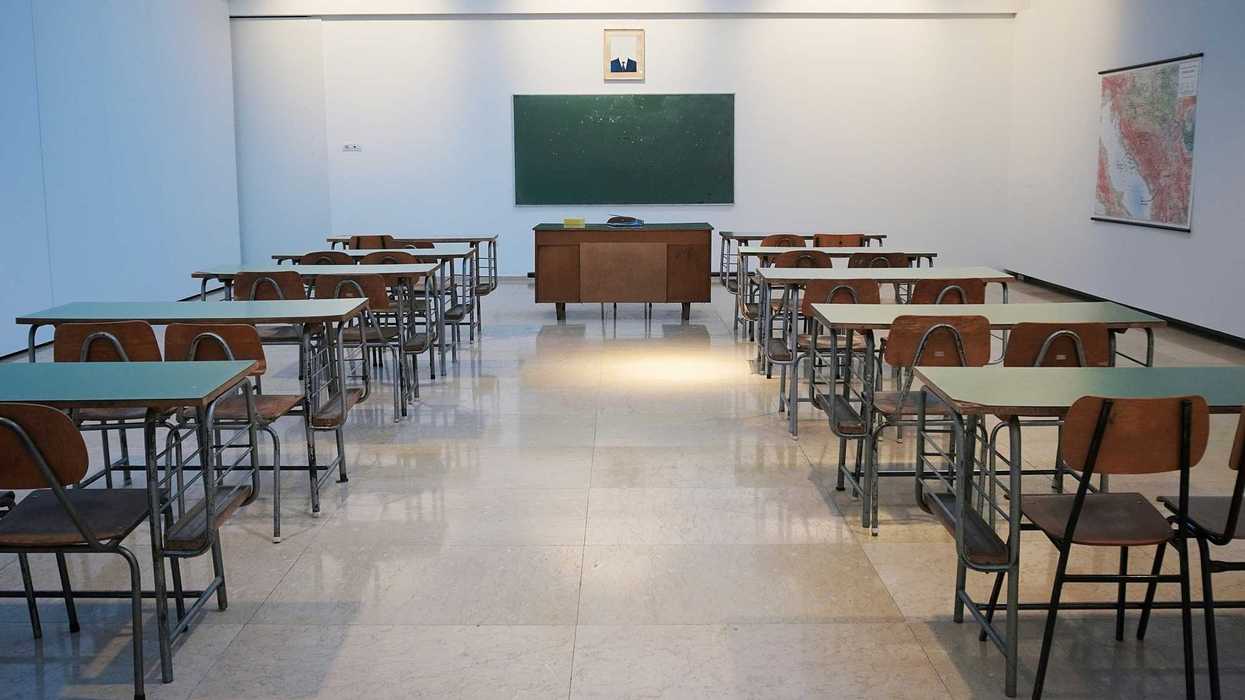
When I entered my second-grade classroom in 1982 at Chicago’s Moos Elementary School, in the heart of the Puerto Rican community of Humboldt Park, I was greeted with “Mirelsie, que nombre bello, de donde tu eres?”
“Mirelsie, what a beautiful name, where are you from?”
Even now, decades later, I still remember the smile on the face of Ms. Navarro holding the door open for me, and the joy I felt for the first time when she was able to find my home on a map of Puerto Rico; a home I had left just two years before walking into her classroom.
Unbeknownst to me, Ms. Navarro had also said goodbye to Puerto Rico just a few years before our encounter, and perhaps in me she saw herself. I would never know that feeling again in my K-12 experience.
Decades later, she and I would reconnect, sharing stories of our three years together, our times reflected of shared experiences of displacement, migration, and linguistic erasure.
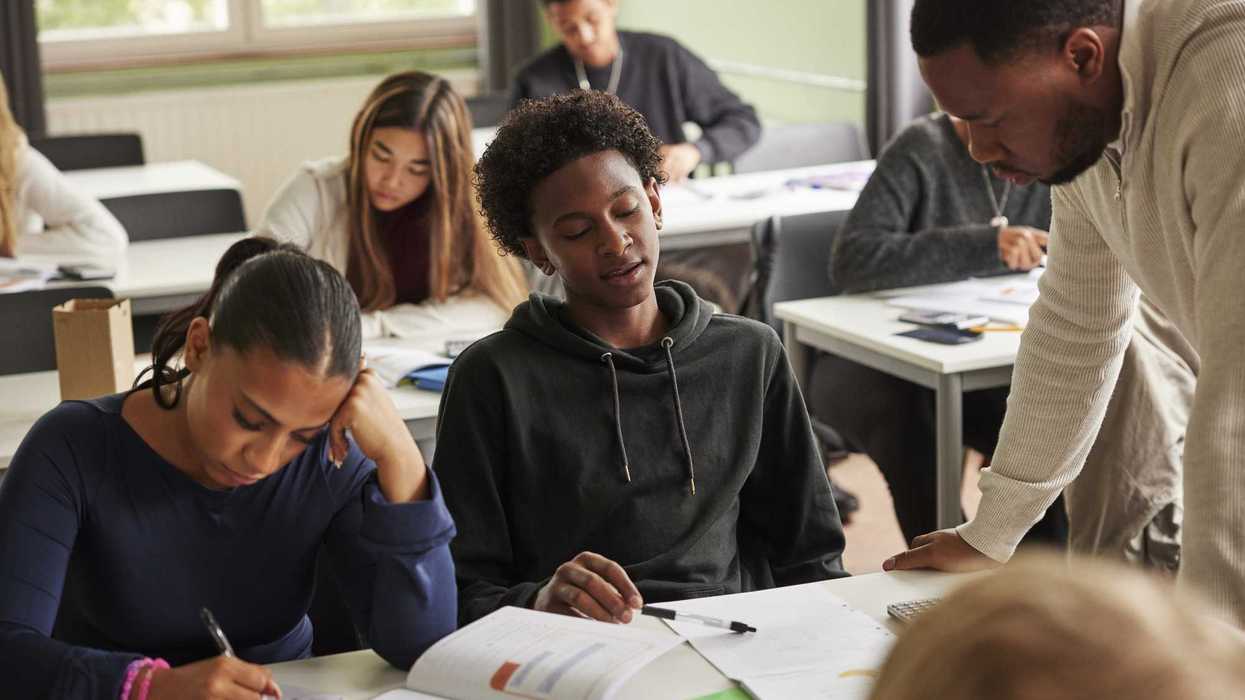
Perhaps today in a small classroom, tucked in a corner of a community whether in Florida, Georgia, Illinois or Oklahoma, a Puerto Rican teacher and an eight-year-old child are sharing the same experience.
My hope is that child is being greeted by their own kind teacher at a time when environmental injustices, climate change, political discourses and economic violence, is shifting the future for Puerto Rico and its people.
As local communities and schools across the country use the next month to celebrate and highlight Latine Heritage, September 15- October 15, possibly many are thinking of this new generation of migrants sitting in classrooms, carrying the consequences of a history of political and economic instability, and the residual effects of environmental harm in their everyday life.
No amount of music or food finding its way to their classrooms this month, can soften their relationship to this history and continued reality.
Since Hurricane Maria in 2017, there has been a dramatic shift in the populations number across the archipelago, with the number declining to about 3.2 million according to reports from the Pew Research Center.
In 2024, it was reported that over six million Puerto Ricans resided in the United States, with 27% of that population under 18 years of age. Who these Puerto Ricans are matter, as schools in places like Texas, Oklahoma, Georgia, and Florida are seeing an increase of students in districts either struggling to provide services to the population or unsure of what kind of services these children need most.
But there are also recruitment efforts in Puerto Rico to bring teachers to U.S. cities to support the increase of Latina/o students in classrooms in states such as Oklahoma, with very little thought of the unique needs and skills of these educators.
This outmigration of teachers and students does not just reflect an opportunity but a necessity. Between 2017 and 2021, Puerto Rico has seen numerous school closings and schools sold to private organizations.
In communities such as Vega Baja, the hometown of global artist Bad Bunny (whose own mother is a retired schoolteacher), numerous schools sit close, limiting the opportunities for local teachers and students.
And for those schools that remain open, disinvestment in schools and services across the archipelago have made it imperative that families make the decision to leave Puerto Rico to meet the needs of their children.
Puerto Rico’s territorial status leaves in limbo in many areas, with education and educational reform and opportunity often left out of discourses on the future of the archipelago.
For example, although federal policies such as 1965’s Elementary and Secondary School Act and the Education for All Handicapped Children Act of 1975 provided a framework on serving the needs of students and earmarked federal funds to provide much needed services, it failed to consider localized needs in Puerto Rico.
These gaps in learning outcomes continued to be exasperated by natural disasters, fiscal collapse, and outside oversight over Puerto Rico’s decision making and policies.
Students are arriving in classroom in states like Florida in large number, where the Puerto Rican population was over 1.3 million in 2024 ,with close to a quarter of that number young people under the age of 18.
For those students arriving from Puerto Rico they experienced underfunded schools, including rural schools failing to receive much needed federal resources because of discrepancies in reporting agencies. These young students experience this alongside the consequences of natural disasters and their impact in the very physical infrastructures of schools.
There are so many reasons to be concerned with the consequences of the over 125-year history of United States involvement in Puerto Rico. But one main reason is perhaps now sitting in a corner classroom in a school in Florida—or any state– hoping their own Ms. Navarro is there to greet them. Chances are they will find someone who until very recently couldn’t point to Puerto Rico on a map.
What needs to happen now is for policy makers in the U.S., as well as educational institutions, advocates, educators, community leaders and nonprofits to continue to work to create a future in Puerto Rico that includes children.
Mirelsie Velázquez is Associate Professor of Latina/o Studies at the University of Illinois at Urbana-Champaign, a Public Voices Fellow through The OpEd Project, and author of Puerto Rican Chicago: Schooling the City, 1940-1977 (University of Illinois Press).
The Future Of Puerto Rico: Consider Needs of The Children was first published by Common Dreams and is republished with permission.





The President Invited Iran to Bomb My Home