What good are rights if the people who hold them cannot understand how to exercise them?
Imagine seeking refuge in a strange land, far from everything you know, and being handed papers in a language far from your own. State officials loom overhead as they urge you to sign your name on a dotted line. You can't quite make out what they’re saying, but you get the impression that signing your name will end this experience.
You sign the papers without fully understanding what they mean. Handcuffs are tightened around your wrist. And there is nothing your loved ones can do to stop your deportation.
According to Mary Jose Prudente, co-founder of the Colibrí Interpreters Collective, this is a common story among some families navigating immigration proceedings. Immigrants would sign deportation orders without knowing how the documents in front of them could change the course of their lives. When she and others later tried to help, there was little they could do to reverse what had happened.
This underscores a fundamental flaw in American civil life: How can people be expected to consent to consequential decisions about their livelihood without fully understanding the language in which those decisions are suggested?
Prudente’s work as an indigenous interpreter is rooted in mending this flaw through linguistic justice — the principle that all people should have equitable access to communication in a language they know best. She believes access to a system is not the same as understanding it.
“Estás en un cárcel abajo de los Estado Unidos,” said Prudente, “Esto es la consecuencia de no tener una intérprete.” (“You’re in a prison under the United States. That’s the consequence of not having an interpreter.”)
This is even harder for Indigenous migrants who are often only given Spanish as an alternative, if any. Something Prudente knows from personal experience.
Prudente immigrated to the United States at 13 from Guerrero, Mexico. She’s from one of Mexico’s indigenous communities known as the Ñuu Savi (or Mixtec), speaking Tu’un Savi as her native language.
After suffering much discrimination from employers, Prudente learned early on that language would be a barrier that kept her from defending her rights. Most interpreters and translations were offered in Spanish. And while Prudente had grown up bilingual, many people from her community did not have that same privilege.
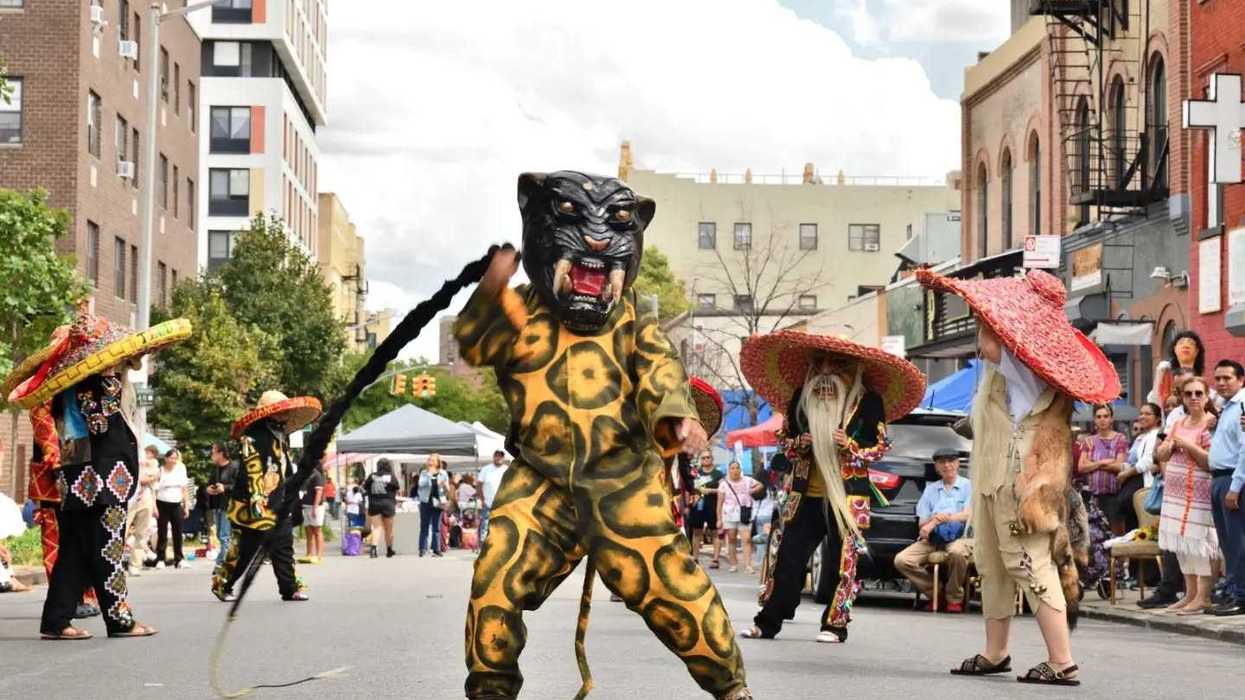
Having seen the ways her people were discriminated against in the U.S., Prudente began to act as an interpreter for other Tu’un Savi-speaking migrants. She’d been volunteering her interpretation services to different organizations when she connected with the Red de Pueblos Nacionales — a network of indigenous communities in New York City who advocate for the rights of Indigenous migrants.
The network allowed her to work as a formal interpreter. In doing so, she realized there was a gap in American civil rights that left Indigenous people like herself vulnerable to harm in the United States.
In 2021, Prudente helped establish the Colibrí Interpreters Collective – the first indigenous interpreters collective in New York City. The collective advocates for linguistic justice in every aspect of American life. They provide interpretations for academic, medical, and legal proceedings for nine different indigenous languages.
Their clients range from individuals to entire government bodies such as the Mayor's Office of Immigrant Affairs and the Federal Court system. Most notably, they’ve assisted in translating during immigration proceedings for children who arrived in the United States without a parent.
Colibrí's work comes at a time when language access is scrutinized across the United States. In 2025, President Donald Trump signed an executive order that revoked policy aimed at improving access for people with limited English proficiency by declaring English as the official language of the United States. While federal agencies that have previously offered translators may continue, some people are concerned that support for immigrants navigating public institutions could quickly disappear. For indigenous migrants, Colibiri fills a gap in the system where immigrants from south of the border would often be treated as monolith.
Despite noncitizens having a right to a competent interpreter, Indigenous Americans from communities outside of the U.S. are not politically or legally recognized as such. Instead, they are viewed as citizens of their respective home countries which limits access to Native American recognition and rights.
Prudente hopes that the Colibrí Interpreters Collective can serve as a resource for Indigenous people navigating the immigration system while they wait for the government to provide an accessible pathway to citizenship.
“No es culpa de nosotros como seres humanos porque la migración era algo para siempre,” said Prudente. (“It’s not our fault as human beings because migration has existed forever.”)
Alejo Cruz, a student at CUNY's Craig Newmark Graduate School of Journalism, is a fall fellow at The Fulcrum.








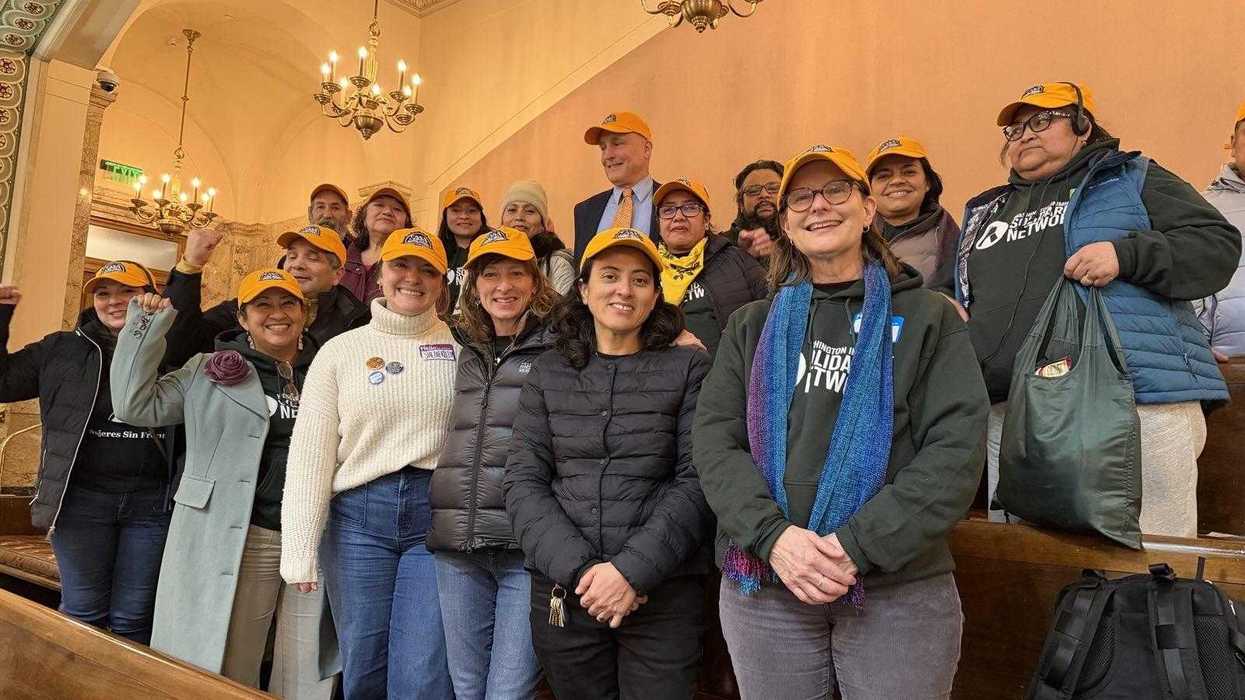
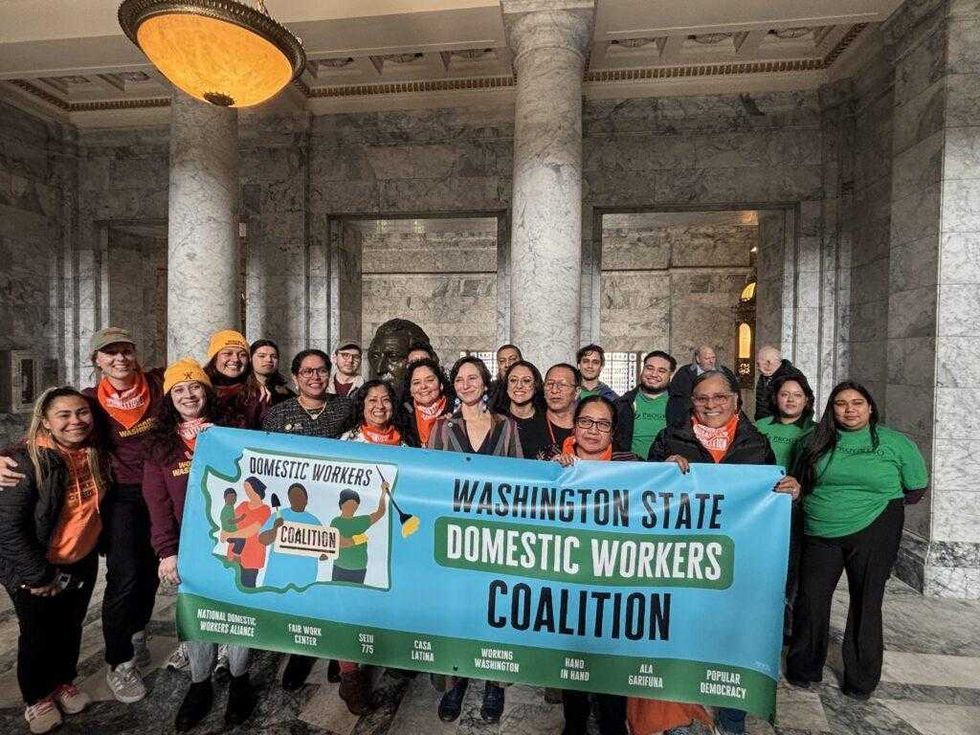 State Sen. Rebecca Saldaña, center, stands with members of the Washington State Domestic Workers Coalition at the state Capitol on Feb. 28, 2026. The Domestic Workers Bill of Rights passed in the House that day, before being signed into law in March. (Photo courtesy of Casa Latina)