




In 2024, Donald J. Trump made major gains with Latino voters. Pew Research Center found that 48 percent of Hispanic voters backed him, up from 36 percent in 2020. Two years later, polling suggests some of that support may be softening. A Reuters/Ipsos poll released this month found that just 24 percent of Hispanic adults approved of Trump’s performance, the lowest level of either of his terms. In the same poll, 52 percent of Hispanic registered voters favored Democratic congressional candidates, compared with 26 percent for Republicans.
One reading is that some Republican support among Latino voters may now be moving toward Democrats. But what, if anything, does that apparent shift tell us about Latino identity?
After Latino voters moved toward Republicans in 2024, some commentators pointed to assimilation, while others suggested that the connection between Latino identity and partisan affiliation was weakening across generations. Now that polling points in the opposite direction, it may be tempting to conclude that Latino identity has reasserted itself. Both interpretations risk the same mistake: treating partisan choice as a measure of the strength of Latino identity.
My research suggests we should be more careful. Changes in political support do not, by themselves, show that Latino identity has grown weaker or stronger. Even when Latino identity remains meaningful, it does not automatically dictate a political conclusion. People can remain attached to being Latino while disagreeing over what that identity should mean for their politics.
Over five years, I conducted 85 in-depth interviews in South Texas, including 75 with Latino Republicans, to understand how people experiencing this political shift made sense of their partisan choices. These overwhelmingly Latino communities had long Democratic histories but moved sharply toward Republicans. Yet many of the people I interviewed continued to speak about their Mexican roots, family migration stories and sacrifices, speaking Spanish with relatives, connections to Mexico, and belonging in Latino communities as important parts of who they were. Those attachments remained meaningful even when participants rejected the idea that they should determine how they voted or where they stood politically.
I use pseudonyms for the participants quoted here. Ernie Hernandez, 41, was born in the United States and raised in Nuevo León, Mexico. He remembered being told, “as a Latino…you should be voting for Democrats.” After moving toward the Republican Party, he still described his Mexican heritage as “very dear to my heart” and continued speaking Spanish and maintaining cultural ties. What he rejected was the idea that those ties obligated him to support one party.
Martha Torres, 37, a naturalized immigrant from Tamaulipas, Mexico, shows how the same distinction can shape policy views. “As an immigrant myself,” she told me, “I can say that we [Republicans] are for legal immigration and against illegal immigration.” Members of her own family had spent years waiting through the legal process. Martha did not set her immigrant experience aside; she drew on it to emphasize waiting, rules and fairness rather than treating shared immigrant experience as requiring one immigration position.
These accounts show what election analysis often misses: a vote does not reveal how people connect identity to political choice. Latino identity and immigrant experience can remain meaningful while people disagree over what should follow politically.
That matters because treating party choice as a stand-in for Latino identity can turn political disagreement into a test of ethnic authenticity. Republican support can be read as evidence that someone is less Latino, while movement toward Democrats can be treated as proof that Latino identity has returned. Both shortcuts obscure why people make political choices and encourage parties to mistake demographic belonging for partisan loyalty.
Surveys can tell us about Latino identification, group connection and perceived discrimination. But those measures cannot, by themselves, tell us what political conclusions people believe should follow. A voter may see an issue as affecting Latinos yet reject the idea that it should determine a vote or policy position.
As the 2026 midterms approach, recent polling should be read with that caution. Whatever happens in November, election results will tell us which candidates Latino voters supported. They will not, by themselves, tell us whether Latino identity grew stronger or weaker—or what voters believe being Latino should require politically.
Republicans should not interpret Latino support as evidence that ethnic and immigrant ties no longer matter. Democrats should not assume those ties guarantee their support. Latino identity can remain politically meaningful even as Latinos disagree over what, if anything, it should require of them politically.
–
Latino Political Support Alone Doesn’t Tell Us How Strong Latino Identity Is was first published on Latino News Network and is republished with permission.
Rodolfo Solís is a political scientist specializing in American politics, political psychology, and Latino politics.











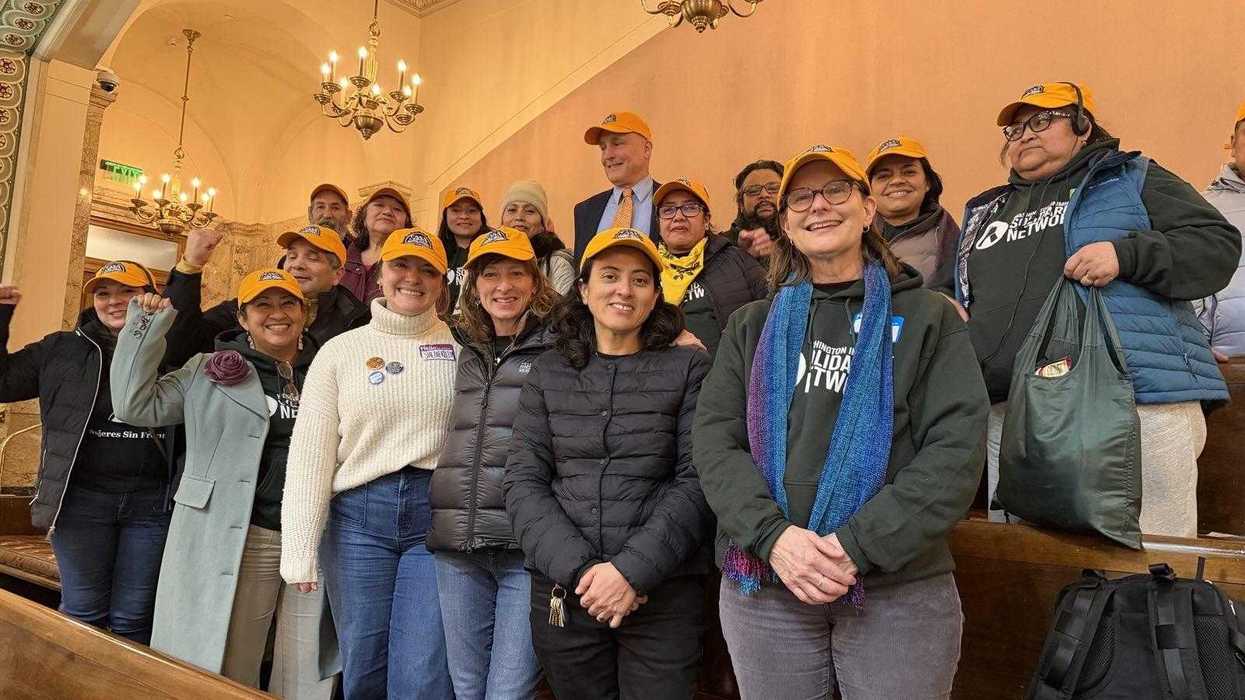
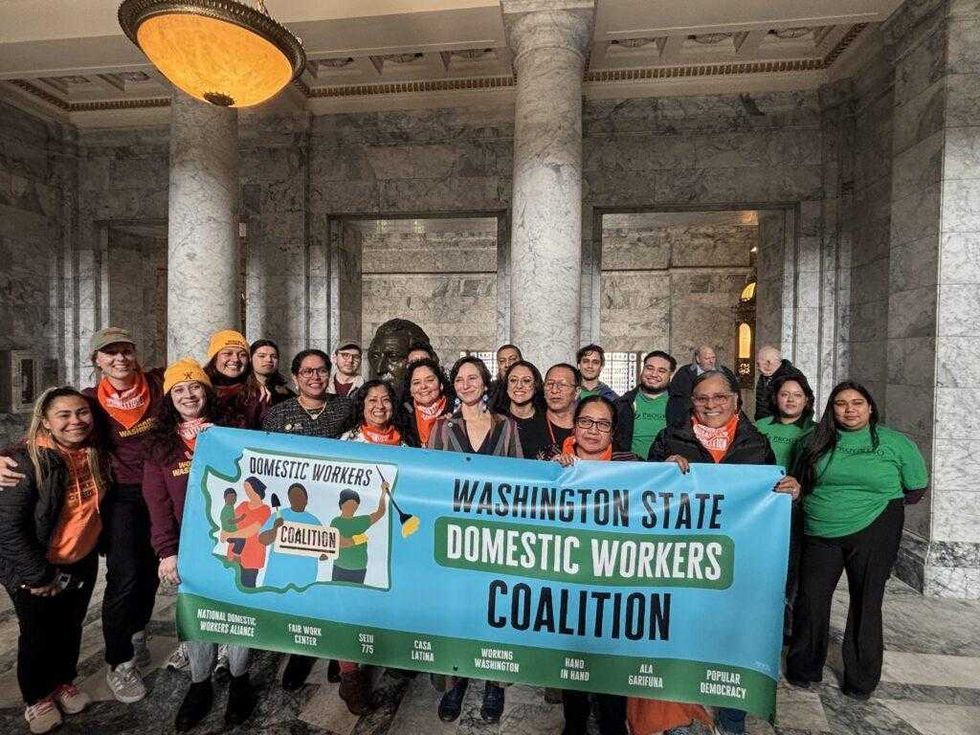 State Sen. Rebecca Saldaña, center, stands with members of the Washington State Domestic Workers Coalition at the state Capitol on Feb. 28, 2026. The Domestic Workers Bill of Rights passed in the House that day, before being signed into law in March. (Photo courtesy of Casa Latina)