


Communities around the world gathered last month to honor remembrance, life, and heritage through the traditions of Day of the Dead and All Saints’ Day. In this story, Jessica Valencia explores how Spanish-speaking women and Latinas living in Poland navigate culture, connection, and memory across borders.
–
Moving to another country can be daunting, requiring far more than learning a new language or adapting to local customs. Relocation can transform how individuals perceive and express themselves, sometimes inspiring those disconnected from their roots to build a new community.
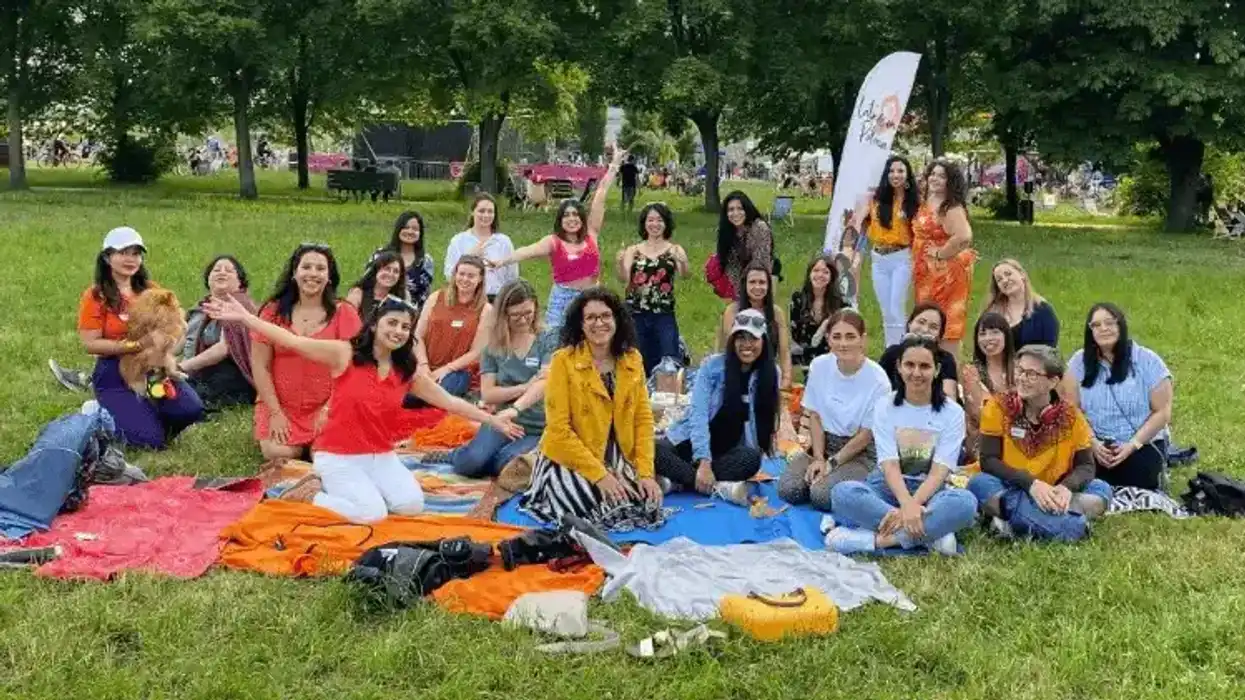
For Priscila Bravo, who moved from Ecuador, and Valeria Olivo, who arrived from Mexico, what started eight years ago as a casual gathering among friends evolved into a community of more than 3,500 Spanish-speaking women seeking connection, advice, and belonging in Poland.
As Bravo and Olivo shared their experiences, they wondered whether others felt similarly isolated or if longer-term residents were willing to share guidance.
They decided to create a group chat where women in similar situations could connect, initially expecting no more than 10 to 15 participants.
“But we never imagined that there were so many Latinas here,” Bravo recalled. “Little by little it began to grow from 100 to 500 and soon 1000.”
While initially open only to Latinas, the group later expanded to include any Spanish-speaking women interested in learning about Latine cultures and sharing practical tips for living in Poland.
Today, the organization unites over 3,500 Spanish-speaking women across 11 cities through dedicated WhatsApp group chats, local ambassadors, a Facebook group, a website named Latinas en Polonia, and a free e-book titled “Tips para vivir bonito” (“Tips to Live Beautifully”). These resources are designed to reach diverse demographics, including those who do not use social media.
Beyond cultural and linguistic adaptation, some Latin American migrants in Poland have also encountered labor exploitation and deceptive recruitment practices.
Following Russia’s full-scale invasion of Ukraine in 2022, Poland’s labor market underwent changes that helped drive increased recruitment of workers from Latin America. According to Al Jazeera’s October 2025 reporting, Ukrainian refugees gained greater access to Poland’s labor market after the invasion, prompting temporary employment agencies seeking lower-cost labor to recruit workers from other regions, including Latin America.
The increase is reflected in employment figures. According to Notes from Poland, Poland issued 7,935 work permits to Latin American nationals in 2022, compared with 43,906 in 2024. The majority of those permits went to Colombians.
However, the growth in recruitment has also brought concerns about working conditions and employment protections. In its reporting, Notes from Poland documented cases involving dishonest employment agencies and business owners who take control of migrants’ legal residency applications and obstruct the process, potentially leaving workers undocumented and more vulnerable to exploitation.
The report cited immigration lawyer Maria Ossowska, who said some employers use this practice to obtain power of attorney over workers’ cases, making it more difficult for employees to seek help from authorities without risking detention or deportation.
Despite these challenges, Bravo noted that many Polish people are welcoming and eager to learn about Latine culture.
“Polish people go out of their way to ask members of the Latine community more about their culture, customs, traditions, and the kind of music they like and listen to,” said Bravo.
“Within the last two years, there has been a huge adaptation and inclusion of Latine music like Karol G and Bad Bunny in the [radio] and in restaurants,” said Bravo.
Although local venues increasingly embrace Latin music and cultural influences, Bravo noted that Polish music and customs remain central to daily life.
As in the United States, stereotypes about the Latine community exist in Poland. However, Bravo described a generally positive perception overall, noting that Latine individuals are often viewed as bringing joy, warmth, and cheerfulness to their communities.
Maintaining a connection to one’s Latine roots while living abroad can be challenging, though what that connection looks like varies for everyone.
Bravo stays deeply connected to her heritage by sharing customs and traditions with friends, family, partners, and members of Latinas en Polonia, viewing cultural exchange as both personal grounding and community education.
She also integrates Latin American traditions into Polish holidays. For instance, she bakes Guaguas de pan—an Ecuadorian traditional bread similar to Mexico’s Pan de Muerto—which is prepared as an offering to deceased loved ones during Day of the Dead observances.
While distinct in many ways, Poland also honors the deceased through All Saints’ Day, sharing thematic parallels with Day of the Dead.
Unlike the vibrant festivities of Day of the Dead, All Saints’ Day in Poland is a solemn occasion where visitors wear formal attire to cemeteries. Rather than standard candles, participants place decorative votive candles known as znicze and arrange colorful chrysanthemums at gravesites.
Cultural parallels between Poland and Latin America extend to everyday settings as well.
During a visit to Sukiennice in Krakow’s central square, the market’s atmosphere and crafts recalled El Mercado de Dulces y Artesanías (Market of Candy and Handicrafts) in Morelia, Michoacán, Mexico.
The Krakow market features architectural elements and a vibrant bustle reminiscent of Mexican artisanal markets.“[Much like in the United States],” Bravo said, “when one Latin[e] individual commits a crime or a mistake, the media tends to blow it out of proportion.”
Such coverage can foster stereotypes and negative perceptions in Poland. However, Bravo noted that hostility and negative press in Poland remain significantly less severe than coverage in the United States.
“There will always be bad people [who may represent us], but there are more good people [in our community]” exclaimed Bravo.
Had it not been for a simple gathering between friends, thousands of Spanish-speaking women in Poland might never have found a community that helps them stay connected to their heritage and feel a little closer to home.
–
How Latinas in Poland Are Redefining Culture, Identity and Belonging was first published by the Latino News Network and is republished with permission.
Jessica A. Valencia is a recent graduate from California State University.
Jessica was a fellow with Fuente Latina, an organization that sponsors journalists and students to visit Poland and learn about the Holocaust and Jewish history in the region.