


Skip to content
Search

Latest Stories

Follow Us:
Top Stories

Democrats need to level set with voters

Opinion

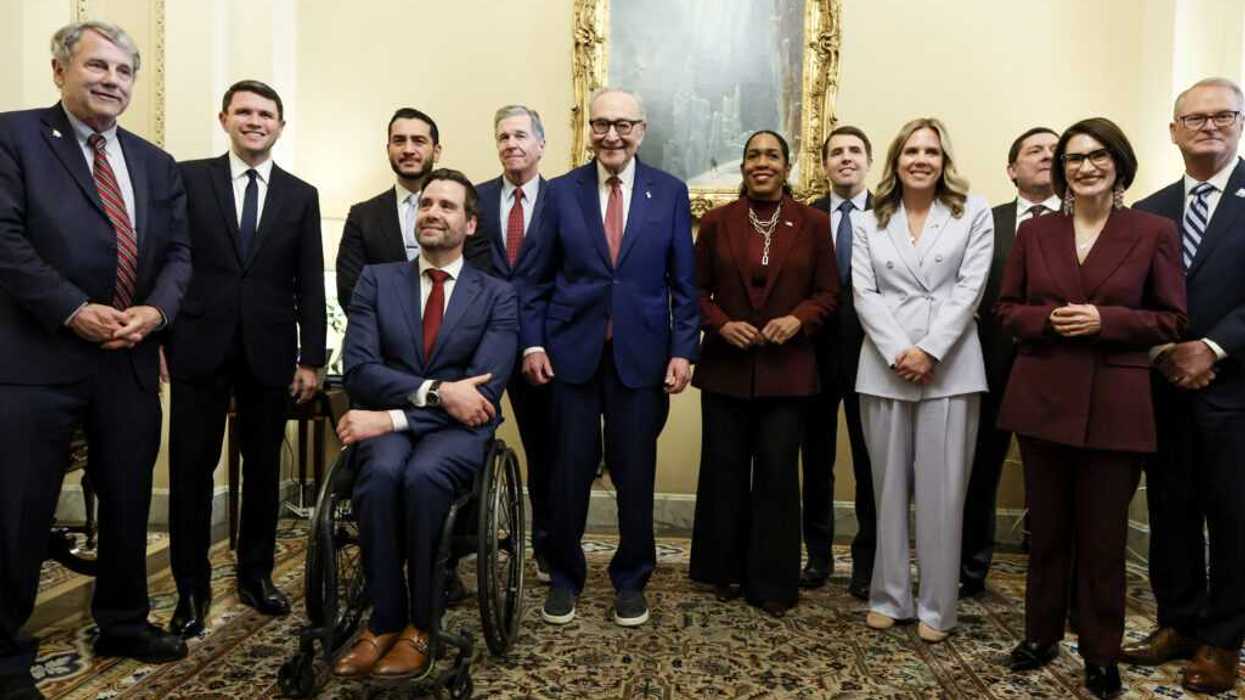
Newly elected Democratic Senators in his office in the U. S Capitol Building

U.S. Senate Minority Leader Chuck Schumer poses for a photo with newly elected Democratic Senators in his office in the U. S Capitol Building on Nov. 9, 2026, in Washington, D.C. Schumer posed for a photo with U.S. Sen.-elect Sherrod Brown, U.S. Sen.-elect James Talarico, U.S. Sen.-elect Abdul El-Sayed, U.S. Sen.-elect Josh Turek, U.S. Sen.-elect Roy Cooper, U.S.

Getty Images

It’s been two weeks, but many Americans are still reveling in the Democratic tsunami that swept the country on Election Day, brimming with excitement, teeming with hope for the future, and gloating from the ass-whooping Republicans just took.

After 10 long years of Donald Trump’s brute dominance over our political system— whether he was in office or lurking menacingly outside of it — MAGA, the nativist, nationalist, nihilistic movement he created, was finally beaten back. And not just in the expected places — but on new frontiers like Texas, Mississippi and South Carolina.


More than 123 million people voted, making these midterms the second-highest turnout since 1914, when neither women nor African Americans could vote.

And ultimately, most of those millions came out for Democratic candidates and, they told us in exit polls, the most important issue to them was the economy. Not surprising, but the second-most important issue was corruption and the state of democracy.

That enough Americans believed Republicans and the Trump administration’s corruption and attempts to subvert and destroy our democratic institutions were urgent enough to flip 46 House seats and nine Senate seats, should be a flashing red warning for the GOP.

Now Democrats need to deliver, or at least look like they can in what will be a divided government for the next two years. That shouldn’t stop them from attempting some accountability for Trump’s large cohort of self-dealers and grifters. But they should level set with the American people about just how much they can accomplish, and what “success” will actually look like.

Rep. Robert Garcia sent document retention letters to nearly a dozen Trump cronies and family members, including his sons, Jared Kushner, Susie Wiles, Stephen Miller, Todd Blanche, Kristi Noem and more, alerting them to the fact that they will likely be called before Congress.

But before voters start salivating over potential perp walks, it’s very likely many of these folks will plead the Fifth, or that they’ll refuse to testify at all. And Trump’s DOJ is unlikely to compel them to. Many accused of crimes will likely be offered pardons. Some may pay in some way for their actions, many will not.

As Garcia said: “Oversight Democrats are fighting to put an end to this administration’s self-dealing, misconduct, and abuse. These investigations will lay the groundwork for legislation which helps all Americans.”

Laying the groundwork for legislation that would prevent future similar corruption is incredibly important, and a worthwhile pursuit. Sen. Elissa Slotkin put it another way recently:

“We need to make sure that a very unsexy group of people are thinking very hard about how to Trump-proof the government going forward so that no leader can do this again — no leader can enrich themselves on the backs of the American people, Democrat or Republican.”

Where Dems can be most effective, perhaps, is in exposing the rank incompetence of many cabinet officials. Agriculture Secretary Brooke Rollins should have to answer for the spate of foodborne illness outbreaks that happened on her watch. HHS Secretary Robert F. Kennedy Jr. should have to answer for the measles outbreak he is responsible for. Interior Secretary Doug Burgum should have to answer for selling out our national parks. Defense Secretary Pete Hegseth should be impeached for war crimes.

That’s accountability, too. But if voters expect Democrats to put the Trump family and cabinet officials behind bars, they’ll be sorely disappointed.

Dems need to be honest and forthright. Accountability will happen, but it might not look like what voters’ expect. Trump-proofing our government might not be the deterrent that perp walks are, but it’s the prevention that we all need.

S.E. Cupp is the host of "S.E. Cupp Unfiltered" on CNN.


Read More

two cars on a highway
Cars drive on a highway next to a river

Why Your Town’s Roads Run Through Washington: Unpacking Transportation Infrastructure Funding

Introduction

Access to reliable transportation is a critical part of most Americans’ daily lives. In 2022, Americans took an average of 2.28 trips per day, traveling 28.55 miles on average — figures including every mode of transportation and every purpose, for the full population. However, little attention is paid to transportation infrastructure until there are obvious problems like potholes or broken sidewalks linked to sharp decreases in road safety and quality of life for nearby residents. Given widespread reliance on transportation infrastructure makes examination of the governance structures underpinning its funding an important area of consideration.

Process-Shaping Priorities and the Federal Level

At the federal level, transportation infrastructure is primarily governed by the United States Department of Transportation (USDOT), an executive branch agency split into nine main operating administrations overseeing a specific part of the national transit system. USDOT then uses this oversight to distribute federal funding and ensure that individual transit outlets comply with national policy and safety standards. Distributed federal funding is drawn from the Highway Trust Fund, a dedicated federal fund financed through taxes on gas and other transportation costs, and distributed to states through formula-based approaches or competitive grant programs based on spending caps established by Congress. While federal funding plays an important role in transportation infrastructure, it only represents one-quarter of all public spending on roads and highways. The remaining three-quarters of long-term financing and associated maintenance is provided by state and local governments.

Keep ReadingShow less
Capitol Building in Washington, DC
white concrete building under blue sky during daytime

The Public Is Demanding Ethics Reform. Will Congress Listen?

At the end of the 2026 midterm elections, “corruption” emerged as a central issue in the campaign. The public outrage had been building for years. In a September 2026 Gallup poll, 89 percent of Americans agreed that corruption is “widespread throughout the government,” an all-time high. Allegations that members of Congress use insider information for stock trading have become a common belief. Additionally, a raft of sexual harassment and sexual assault scandals has shed light on the inadequate protections in place for congressional employees. As the 120th Congress convenes in January, Congress must respond to this national cry for ethics reform in the legislative and executive branches.

Historically, Congress has always needed a scandal to act. The Honest Government and Open Leadership Act of 2007 – famously proclaimed by Speaker Nancy Pelosi as an act to “drain the swamp” – was passed as a result of the lobbyist Jack Abramoff scandal involving illegal gifts and favors to members of Congress. It appears the swamp was harder to drain than anticipated.

Keep ReadingShow less
a piece of paper cut out of the shape of a donkey
Photo by Kelly Sikkema on Unsplash

America Adrift—Our Future Depends on Returning to American Principles and Standards

The Democratic Party won the recent midterm elections overwhelmingly. But this was not because voters returned to the way people—whether Republican or Democrat— used to think about government and their relationship with it.

It was simply a matter of people being fed up with ever-increasing prices and with the Iran War. It was not a rejection of Trump's vicious, narcissistic, megalomaniac, mendacious personality nor his anti-democratic actions.

Keep ReadingShow less
Woman sleeping on the floor in a detention center

Woman sleeping on the floor in a detention center

Getty Images

Who Benefits When the Process Fails?

In my previous article, I wrote about TK, a lawful permanent resident who has lived in the US for 61 years and now faces possible deportation. I questioned whether immigration enforcement could coexist with fairness, compassion, and respect for the lives people have built in this country.

Since then, I have learned something equally troubling. The legal proceedings are only part of the ordeal. What happens outside the courtroom can be just as devastating.

Keep ReadingShow less