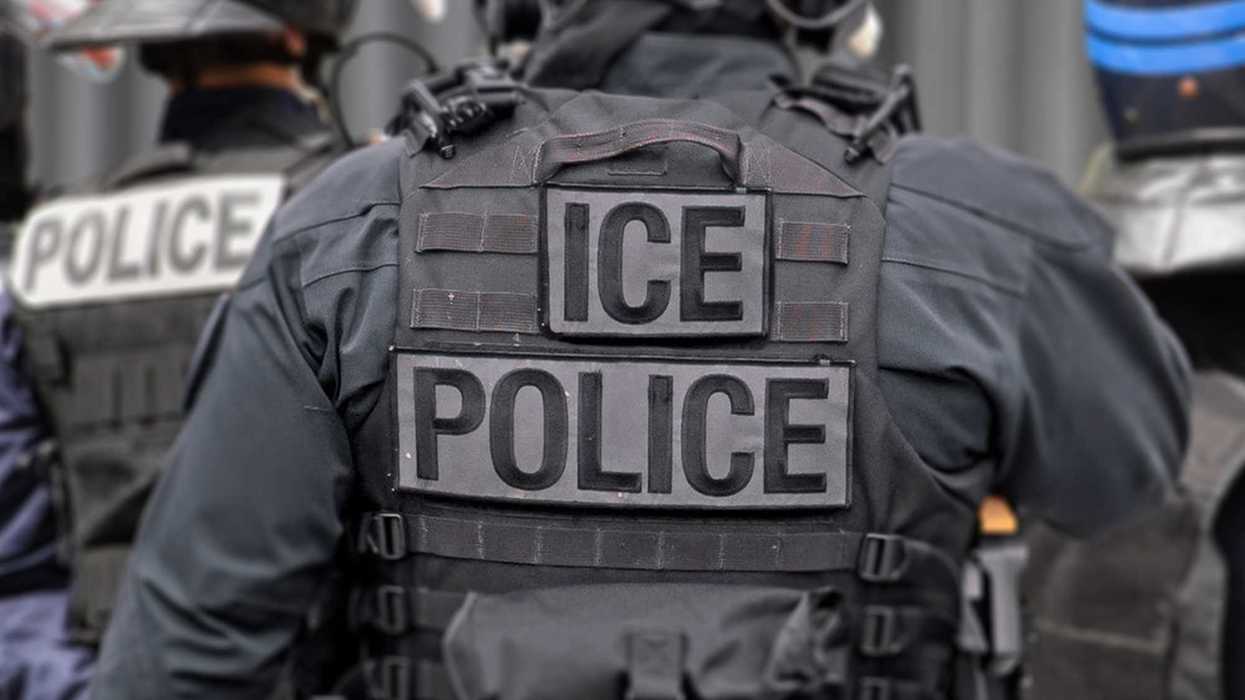

On October 1, Maryland’s Public Safety Law, which bars police officers from wearing face masks, went into effect across the state. Within hours, the U.S. Justice Department sued the state and two of its most liberal counties, Montgomery and Prince George’s, which had passed similar legislation earlier in the year.
The 2020 Census ranked Maryland as the most diverse state on the East Coast and fourth in the nation. As a Democratic-led state with a Democratic governor, Maryland has been in the crosshairs of the Trump administration since the start of the president’s second term. The mask ban is the latest in a series of laws passed in 2026 to protect immigrant communities across the state.
Earlier this year, Governor Wes Moore signed legislation barring Maryland jurisdictions from cooperating with U.S. Immigration and Customs Enforcement (ICE). The law ended 287(g) agreements, which allowed local officers to transfer people booked into jails directly to ICE, even if they had not been convicted of a crime. The Community Trust Act, passed a few months later, set additional limits on collaboration between local police and ICE.
The state simultaneously approved the Maryland Data Privacy Act, which forbids local agencies and private businesses from sharing personal information for immigration enforcement. In June, Maryland expanded its guidelines on “sensitive locations” originally outlined in the Maryland Values Act of 2025 to include schools, school vehicles, designated school bus stops, public libraries, and courthouses.
“The legislation we have in Maryland protects basic constitutional rights,” Ninfa Amador-Hernandez, policy manager for We Are CASA Maryland, told The Fulcrum. The group is the state chapter of a national organization that works to empower and improve the lives of Black, Latino, Afro-descendant, Indigenous, and immigrant communities. “We don’t want our taxpayers’ dollars to add more fuel to the fire of mass deportations. Immigration enforcement is the duty of the federal government. We should not be spending our scarce resources on that.”
Opposition exists, especially in the state’s conservative areas. In May, sheriffs representing 17 of Maryland’s 24 counties filed a civil lawsuit challenging the ban on 287(g) agreements. They argue it undermines public safety by preventing local law enforcement from sharing critical information about criminal suspects with federal agencies. Limiting collaboration with ICE, they say, also prevents sheriffs from advocating for wrongly detained immigrants.
“I used to be able to pick up the phone and call ICE on behalf of families to find out why someone had been detained and where they had been sent, but I can no longer do that,” Frederick County Sheriff Charles Jenkins said to The Fulcrum. “Maryland is now designated as a sanctuary state because of that law. I believe it has emboldened the Trump Administration to say: you laid this down, you passed laws that restrict cooperation with federal agents, now we are coming in.”
And they have. August and September saw a surge of arrests and detentions across Maryland and Virginia. According to the Department of Homeland Security, 1,328 people were arrested during the first two weeks of August in a sweep dubbed “Operation Safe Community.”
Immigrant rights groups, including We Are CASA Maryland, say that fewer than a third of those arrested had prior criminal convictions. In early September, an ICE operation in a residential area of Frederick, Maryland, prompted neighbors to form a human chain around a targeted house, resulting in several protesters being beaten with batons. State senators and members of Congress have demanded an investigation into ICE tactics in Maryland.
According to the Deportation Data Project, 9,168 arrests were documented in Maryland from January 2025 to July 2026. “Many sheriffs have pushed this false narrative that ICE had stayed out of counties where there was collaboration with federal agencies,” Sebastian Brown, campaign strategist with the American Civil Liberties Union of Maryland, said to The Fulcrum. “This is not true. The data shows us that where there is collaboration with ICE, there’s also more street enforcement and a general presence of federal agents in those communities.”
An analysis published in October by The Prison Policy Initiative shows a decline in mass deportations in places that restrict collaboration between local law enforcement and ICE. Immigrants in Maryland have more protections than those in other states, but even here, they live with the constant fear of being picked up by ICE regardless of their legal status.
At San Mateo parish in Hyattsville, Maryland, the Reverend Vidal Rivas, who was featured in TIME magazine for his role as a legal guardian to dozens of immigrant children, told The Fulcrum, “Trauma is personal and collective. Even people with legal documents experience panic.” His parishioners who do regular check ins with ICE must now wear ankle monitors. “Is this truly necessary? It is a form of control meant to be humiliating. It is like living in an open jail,” he said.
Despite the climate of fear, immigrant day laborers across Maryland continue to gather around Home Depot stores or at established pickup spots like the parking lot across from the Crossroads Farmers Market in Langley Park, Maryland. Their numbers have dwindled, and many nearby Latino-owned shops have no customers. When I visited on a Wednesday morning, a few women walked around the market and sat near day laborers, ready to document ICE raids.
“Our area has been greatly impacted by ICE terrorizing our community,” Omar Marroquin, Farmers Market Program Manager with Crossroads Community Network, said to The Fulcrum. “The community is strong and resilient. People know that fear is not going to feed their families. Fear is not going to pay their bills. To survive, they must push the fear to the back of their minds and continue their lives.”
–
A Question of Trust: What Maryland’s New Laws Mean for Immigrant Communities was first published by the Latino News Network and is republished with permission.
Beatrice Spadacini is a journalist who writes about social justice and public health.