



Skip to content
Search

Latest Stories

Follow Us:
Top Stories

California Latinos Showed Up—Now Party Insiders Want to Shut Them Out

Opinion

California Latinos Showed Up—Now Party Insiders Want to Shut Them Out

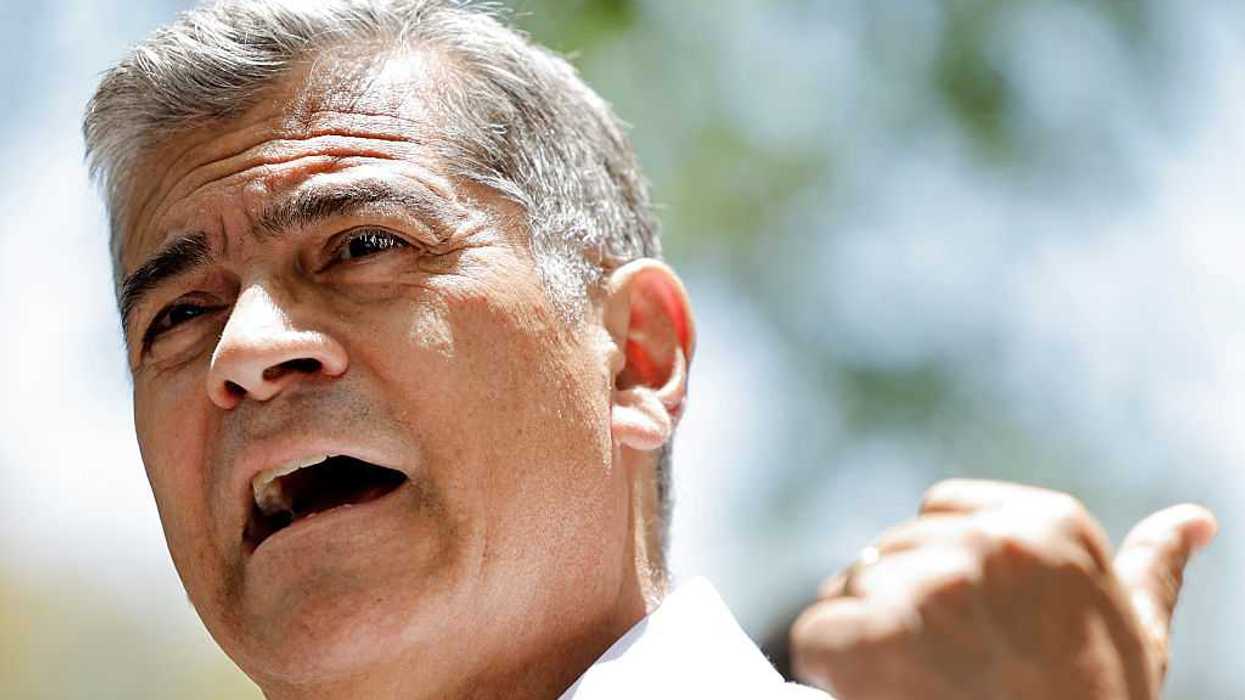
Xavier Becerra

Getty Images

Political strategist, IVN commentator, and The Latino Century author Mike Madrid has a blunt warning for California: The campaign to repeal the state’s nonpartisan Top Two primary would disproportionately silence the fastest-growing segment of the electorate.

In a new Sacramento Bee op-ed, Madrid argues that Latino voters—particularly those who do not align with either major party—played a significant role in California’s record-setting June primary.


The state counted more than 9.4 million ballots, the highest turnout for a California gubernatorial primary since recordkeeping began in 1914. Turnout among Latino independent voters tracked near 16.5%, roughly 40% higher than in 2022.

Their participation is also growing three times faster than the electorate overall.

Madrid points to Xavier Becerra’s success in the governor’s race as evidence of what can happen when these voters participate. Becerra advanced from a crowded field while billionaire Tom Steyer, who ran what Madrid characterized as the race’s most partisan campaign, fell short.

The larger issue, Madrid argues, is that Latino voters are moving away from strict loyalty to both major parties. California’s Top Two system allows them to vote for any candidate without first choosing a party ballot.

Repealing the system would once again make their participation dependent on rules established by the political parties.

Madrid calls the repeal campaign “voter suppression aimed at the fastest-growing share of the electorate, dressed up as a return to party order.”

Polling suggests Latino voters are not asking California to go backward. A May Independent Voter Project survey found that 53% wanted to retain Top Two or expand the number of candidates who advance.

Only 22% supported eliminating the nonpartisan system and restoring partisan primaries.

Madrid’s message is simple: Latino independents showed up, helped reshape California’s most important statewide race, and demonstrated their growing political influence.

Party insiders should not respond by shutting the door in their faces.

Read Mike Madrid’s full op-ed in The Sacramento Bee.


California Latinos Showed Up—Now Party Insiders Want to Shut Them Out is republished as part of The Fulcrum’s partnership with IVN and the Latino News Network to expand voter‑first journalism and strengthen public‑centered coverage of democracy.


Read More

A Democracy Cannot Run on an AI Model

Artificial intelligence and voting.

Getty images

A Democracy Cannot Run on an AI Model

Tallying the results of Washington, D.C.’s first ranked-choice election last month took about 10 days – longer than many voters are used to. In an age when artificial intelligence can generate an answer in seconds, waiting days for election results can feel old-fashioned, inefficient, even suspicious.

But that slowness may be one of its most democratic features.

Keep ReadingShow less
Dan Osborn is Ready to Represent the Working Class in Congress. Is Nebraska Ready to Let Him?

Dan Osborn

Obtained from Dan Osborn's Facebook page.

Dan Osborn is Ready to Represent the Working Class in Congress. Is Nebraska Ready to Let Him?

Independent voters now represent the largest share of the American electorate, and yet they remain mostly unrepresented in federal office. Both major parties have spent decades optimizing for their bases, almost always leaving the near majority of Americans who identify as independent with the choice of either voting for a party candidate they don't fully support or staying home.

A handful of high-profile independent candidates for the US Senate are trying to change that. 2026 is seeing one of the largest surges of interest in independent candidates in recent memory. However, these candidates are often covered as fringe candidates, and stories about them focus more on how they'll impact the outcome of the election between a Republican and Democrat than they do on the substance of the candidate's campaign.

Keep ReadingShow less
Why hasn’t the Princeton Redistricting Project spoken out?

The exterior of Capitol Hill

Getty Images

Why hasn’t the Princeton Redistricting Project spoken out?

The 2026 congressional map is finally set after ten states adopted new congressional redistricting maps for the November 3 General Election. Observers note that the Princeton Gerrymandering Project (PGP) has not graded any state’s maps since it gave California’s Proposition 50 an “F” on October 30, 2025.

The PGP has officially paused grading its Redistricting Report Card because founder Dr. Sam Wang, who transitioned from the Gerrymandering Project to the Electoral Innovation Lab, has launched a campaign for Congress in New Jersey’s 12th District, requiring him to step back from his academic roles, including his leadership at PGP.

Keep ReadingShow less
Voting
Voting
krisanapong detraphiphat/Getty Images

Can Independents Run Through the Jungle?

Last week, the independent movement’s road to Washington hit a snag in, well, the other Washington. One promising campaign for the US House has ended, and another teeters, and all of it raises the question of whether the sort of jungle primaries they face can be conducive to success for nonparty candidates, and what they might take to successfully navigate moving forward.

In Washington’s 1st Congressional District, located just northeast of Seattle, independent James Etzkorn finished 3rd in his primary race, garnering just over seven percent of the vote. Suzan DelBene, the seven-term incumbent and DCCC Chair, came in first with 53%, while Republican Mary Silva - the lone R in the seven-candidate field - earned about 27%. Several Democrats running to the left of DelBene finished lower in the ranks, sharing the remainder of the vote.

Keep ReadingShow less