

Skip to content
Search

Latest Stories

Follow Us:
Top Stories

Latino Voter Landscape Shifts as Economic Pressures Reshape Support for Both Parties

Opinion

Latino Voter Landscape Shifts as Economic Pressures Reshape Support for Both Parties

Your Vote Counts postid

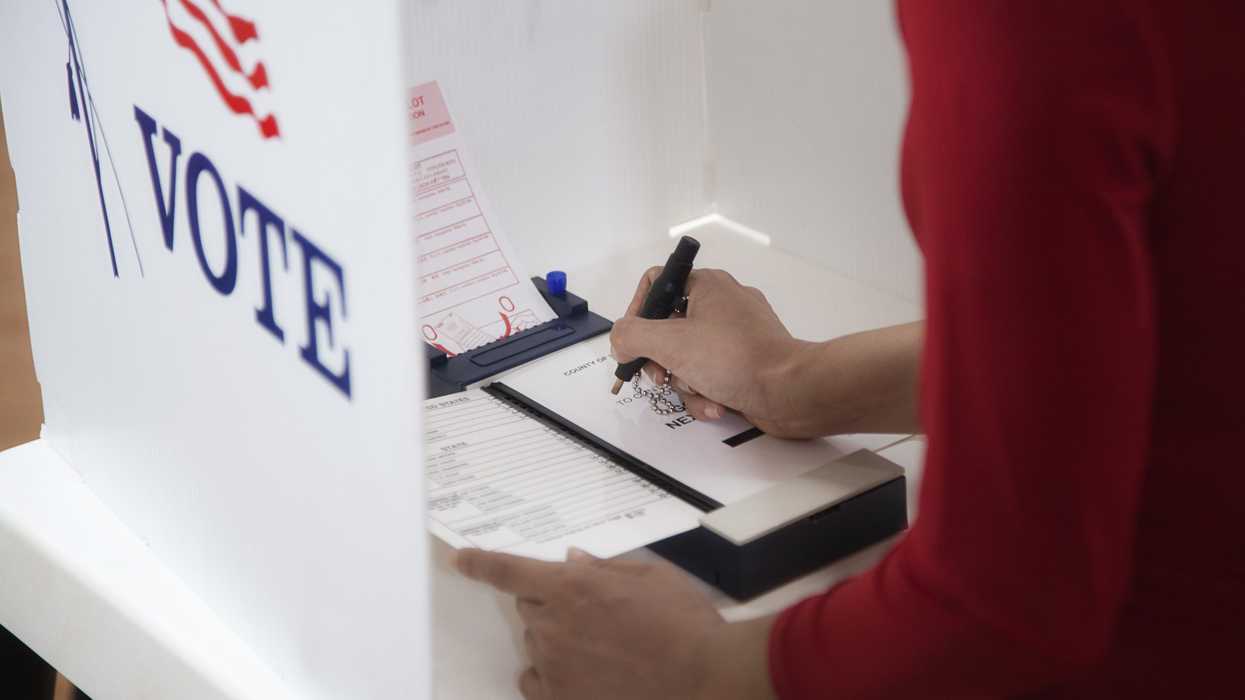
New polling and expert analysis reveal a shifting and increasingly complex political landscape among Hispanic and Latino voters in the United States. While recent surveys show that economic pressures continue to dominate voter concerns, they also highlight a broader fragmentation of political identity that is reshaping long‑standing assumptions about Latino electoral behavior. A Pew Research Center poll indicates that President Donald Trump has lost support among Hispanic voters, with 70% disapproving of his performance, even though 42% of Latinos voted for him in 2024, a ten‑point increase from 2020. Among those who supported him, approval remains relatively high at 81%, though this marks a decline from earlier polling.

At the same time, Democrats are confronting their own challenges. Data comparing the 2024 American Electorate Voter Poll with the 2020 American Election Eve Poll show that Democratic margins dropped by 23 points among Latino men, raising concerns among party strategists about weakening support heading into the 2026 midterms. Analysts argue that despite these declines, sustained investment in Latino voter engagement remains essential, particularly as turnout efforts have historically influenced electoral outcomes.


Underlying both parties’ shifting fortunes is a broader trend: the Latino electorate is becoming more politically diverse and less predictable. Polling consistently shows that affordability, jobs, and housing are the top priorities for Latino voters, far outpacing issues like immigration. This focus on economic pressures cuts across ideological lines and contributes to what some experts describe as a fragmentation of the Latino vote, with voters increasingly aligning based on personal circumstances, generational differences, and varied cultural identities rather than a unified political bloc.

Together, these findings point to a dynamic and evolving electorate whose political behavior is shaped less by traditional party loyalties and more by economic realities and diverse lived experiences—making Hispanic and Latino voters one of the most closely watched groups ahead of the 2026 midterm elections.

Latino Voter Landscape Shifts as Economic Pressures Reshape Support for Both Parties was first published on the Latino News Network and was republished with permission.
Read More

Immigration Was the Loudest Silence in Trump’s State of the Union

U.S. President Donald Trump delivers the State of the Union address during a joint session of Congress in the House Chamber at the Capitol on February 24, 2026 in Washington, DC.

Immigration Was the Loudest Silence in Trump’s State of the Union

President Donald Trump spoke for 108 minutes during the 2026 State of the Union — the longest address in American history. He covered the economy, foreign policy, manufacturing, and national pride. But for all the words, one of the most consequential issues facing the country was reduced to a single statistic and then set aside.

Immigration — one of the administration’s signature issues — was nearly invisible in the address. A Medill News Service analysis shows the president devoted less than 10% of his remarks to the topic, amounting to roughly ten minutes in total.

Keep ReadingShow less
U.S. Citizenship and Immigration Services envelope
Honor migrants’ quest for a better life
Evgenia Parajanian/Getty Images

Exploring New Pathways to Citizenship: Renewing the Immigration Act Registry Statute

Background

Since the introduction of the visa quota system under the Immigration Act of 1990, average wait times for visas have doubled from 2.8 years to 5.6 years. With the backlog reaching a record high of 11.3 million in 2025, at least 675,000 would-be immigrants are expected to die while awaiting their visa approval. Consequently, analyses of current pathways to citizenship and possible reformation continue to spark public and Congressional action.

Keep ReadingShow less
Person's hands holding prison bars
America is guilty of over-incarceration
Victor de Schwanberg/Science Photo Library/Getty Images

Constitutional Democracy Requires That Prisoners No Longer Be Treated Like Slaves

When the United States added the Thirteenth Amendment to the Constitution in 1865, it ended slavery but left a loophole, which allowed involuntary servitude to continue “as a punishment for crime.” Today, state constitutions in places like Georgia, Indiana, Kansas, Michigan, and Mississippi still contain a similar provision.

For example, Article I, Section 37 of Indiana’s Constitution prohibits slavery or “involuntary servitude, within the State, otherwise than for the punishment of crimes, whereof the party shall have been duly convicted.” Article I, Section 9 of the Michigan Constitution says: “Neither slavery, nor involuntary servitude unless for the punishment of crime, shall ever be tolerated in this state.”

Keep ReadingShow less
President Trump speaks in Rome to endorse Clay Fuller, protestors demonstrate outside rally

U.S. President Donald Trump (R) looks on Republican congressional candidate, Clay Fuller speaks at the Coosa Steel Corporation on February 19, 2026 in Rome, Georgia. Trump delivered remarks on the economy and affordability as the state has started voting to replace the seat vacated by former Rep. Marjorie Taylor Greene.

(Photo by Chip Somodevilla/Getty Images)

President Trump speaks in Rome to endorse Clay Fuller, protestors demonstrate outside rally

Following his endorsement of Clay Fuller for Majorie Taylor Greene’s former house seat, President Donald Trump spoke about the economy, allegations of voter fraud and his support for Fuller at the Coosa Steel Corporation in Rome on Thursday.

Fuller is one of 13 remaining Republicans vying for the 14th congressional district seat but is the only candidate to receive Trump’s influential endorsement. He said his experience was the reason Trump endorsed him.

Keep ReadingShow less