

Skip to content
Search

Latest Stories

Follow Us:
Top Stories

Trump’s UFC Birthday Bash Dwarfs Flag Day’s Meaning and History

While the nation honors sacrifice, Trump marks June 14 with gladiatorial showmanship.

Opinion

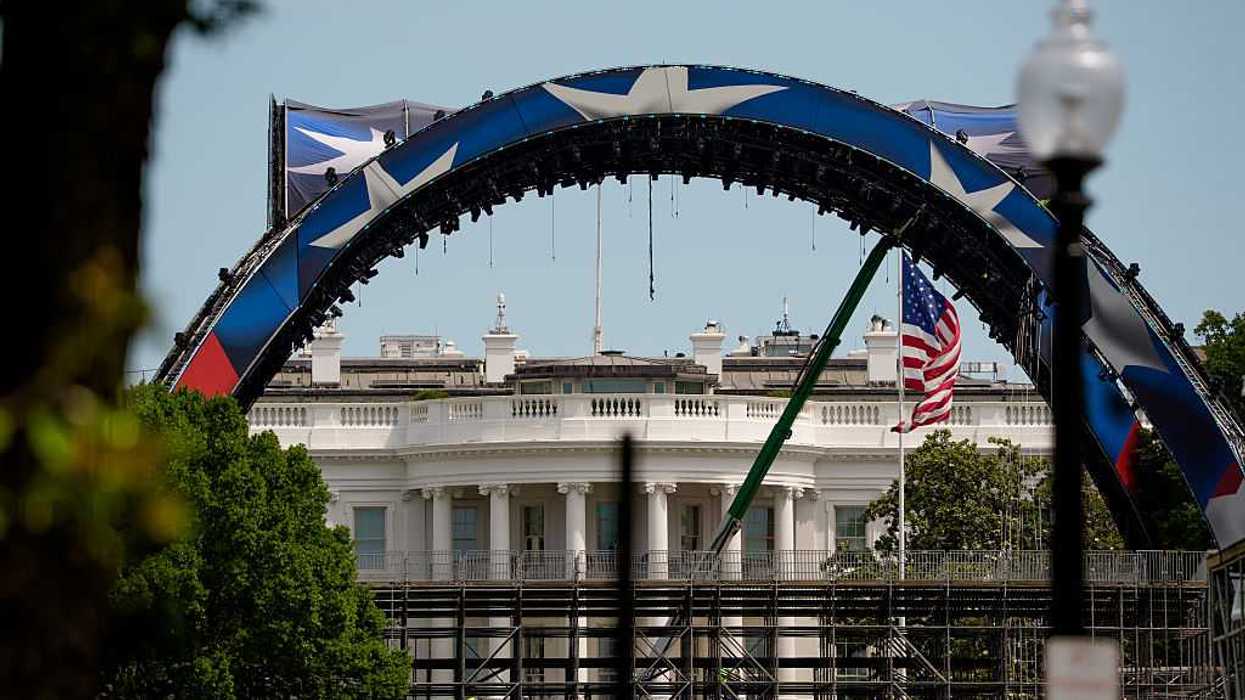
The White House's Lawn.

Construction continues on a venue for the upcoming UFC match on the South Lawn of the White House on June 1, 2026 in Washington, DC.

Andrew Harnik / Getty Images

In the days between Memorial Day—when we as a nation mourn and honor U.S. Military Personnel who died while serving in the Armed Forces—and July 4—when this year we will celebrate 250 years of our Democracy—there will fall, on June 14, a holiday known as Flag Day.

Since 1777, when the Second Continental Congress designated June 14 to commemorate the adoption of the U.S. flag, Flag Day has become a nationally celebrated holiday. But this year it has been overshadowed by a “tremendous” occasion taking place on the same day.


This June 14 is President Trump’s 80th birthday.

Could there possibly be a more fitting tribute to our gold-gilded President than a colossal live UFC (Ultimate Fighting Championship) on the South Lawn of the White House?

Trump’s massive new ballroom, larger than the rest of the White House complex, will unfortunately encroach a little on the South Lawn’s driveway. Thankfully, the glamorous aesthetics for the ballroom are intact, classic Roman with highly ornate gilded gold finishes. Perfect.

An iconic “claw” octagon cage is now being constructed on the South Lawn, with 5,000 seats around it. For $1.5 million, you can snag a prestigious VIP “package” for the event to avoid being amongst the 85,000 plebeians watching from giant screens at nearby Ellipse Park.

Peaking in the first century BC to the second century AD, gladiatorial games offered their sponsors extravagantly expensive and extremely effective opportunities for self-promotion. As befitting the “ruler” of any great empire, modern-day “gladiators” will “do battle” for the President’s birthday bash.

The main event for these modern gladiators will pit American Justin Gaethje against Spanish Georgian Ilia Topuria. Gladiators in the earliest Roman games were named after the Roman leaders’ enemies. Shall we then dub them “Biden” and “Obama”?

The event’s weigh-in will take place at the Lincoln Memorial. If Abraham Lincoln could “weigh in” on the spectacle, he might comment on the shredding of the Republican Party, as well as express concern about the future of the Republic itself.

In our modern age, where do we find the true warriors? No doubt they would be members of the Armed Forces, likely of the elite Navy SEAL team.

The Navy SEALs constitute less than 1% of the entire U. S. Navy. Only 20-25 percent who qualify to begin make it through the 62-week intensive training and the next 18 months of pre-deployment. There are eight active-duty teams and two reserve teams. The odd-numbered teams are stationed in Coronado, California, the even-numbered in Little Creek, Virginia.

The SEAL Ethos begins: “In times of war or uncertainty, there is a special breed of warrior ready to answer the Nation’s call … to serve the American people and protect their way of life.” The oath continues expressing a SEAL’s personal commitment: “…I do not seek recognition for my actions…but place the welfare and security of others before my own.”

So, where will these real heroes be on June 14th? They will be doing their jobs. They have already demonstrated their resolve; they are willing to join those who made the “ultimate sacrifice” for the greater good of our country.

And where will the birthday boy, also known as their Commander in Chief, be? Committed, as always, to glittering showmanship and garnering public accolades, whooping it up at his birthday bash.

Or possibly, he will be busy declaring wars or, as he calls the Iranian war, “excursions.” Or threatening whole civilizations with mass destruction and issuing wildly contradictory statements. “We won the war.” (March 3) "We must attack." (March 9) "We won the war." (March 13) "We will bomb the hell out of them.” (April 7)

President Trump did not serve in the Armed Forces when he was eligible, but received a total of five military deferments, his fifth a medical deferment for a bone spur. The podiatrist who provided the diagnosis later disclosed he did so as a favor to Trump’s father, who was the doctor’s commercial landlord. (New York Times, Dec., 2018)

Hail to the Chief.

Despite an already enormous debt, Julius Caesar, who also prided himself on his showmanship and unprecedented use of public funds, outfitted 320 pairs of gladiators with silver armor in a show of strength and scale in the closing years of the Roman Republic.

Let us not follow his example. We cannot allow these to be the closing years of our own Republic.

As the President’s birthday party also serves as the “unofficial launch” of the summer-long semiquincentennial celebrations, we have some time to reflect on our country’s upcoming birthday and the direction it will take.

So, from Coronado, California, to Little Creek, Virginia, from “Sea to Shining Sea,” let us remember the true heroes who have come before us and those who are with us now.

Let us commit to preserving “…this worst form of government, except all the others that have been tried.” (Churchill)

And let us fly our American flags high and celebrate our democracy, and all it has survived, and all it will continue to.


Amy Lockard is an Iowa resident who regularly contributes to regional newspapers and periodicals. She is working on the second of a four-book fictional series based on Jane Austen’s “Pride and Prejudice."
Read More

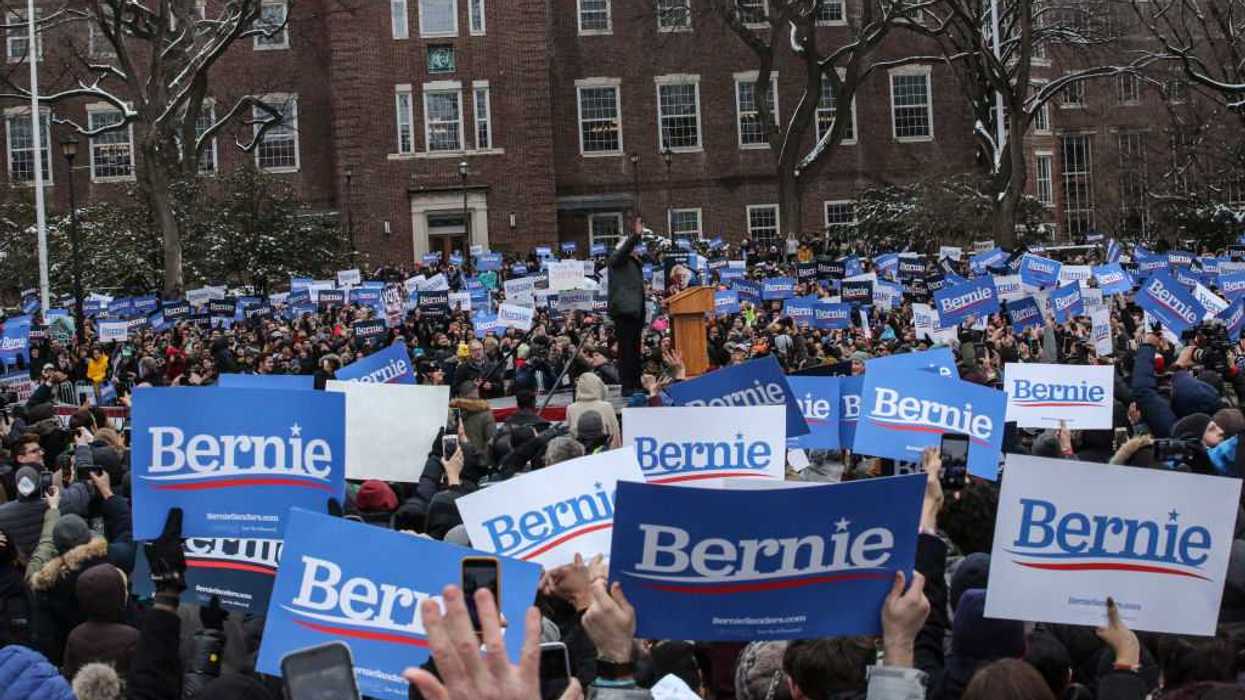
Democratic Presidential candidate U.S. Sen. Bernie Sanders (I-VT) holds his first presidential campaign rally at Brooklyn College on March 02, 2019 in Brooklyn, New York.

A lobbyist who worked for both Bernie Sanders and Fortune 500 clients explains what democratic socialist wins mean for business, and how to prepare.

VIEW press/Getty Images

I Campaigned for Bernie Sanders Then Lobbied for Amazon

In 2016, my political outreach company, Firehouse Phones, worked on the presidential campaign of a democratic socialist. It was one of many campaigns my firm touched, but that one stays on my resume for a reason: it taught me more about how persuasion actually works than any client engagement before or since.

Today I run Ohio River South, a government affairs firm focused on the nation's fastest-growing region — the American South. Over the past decade we've advocated for nearly two dozen Fortune 500 companies — Amazon in my earlier lobbying years, and later growing a client roster that included Alphabet, Microsoft, General Motors, United Healthcare, and Capital One.

Keep ReadingShow less
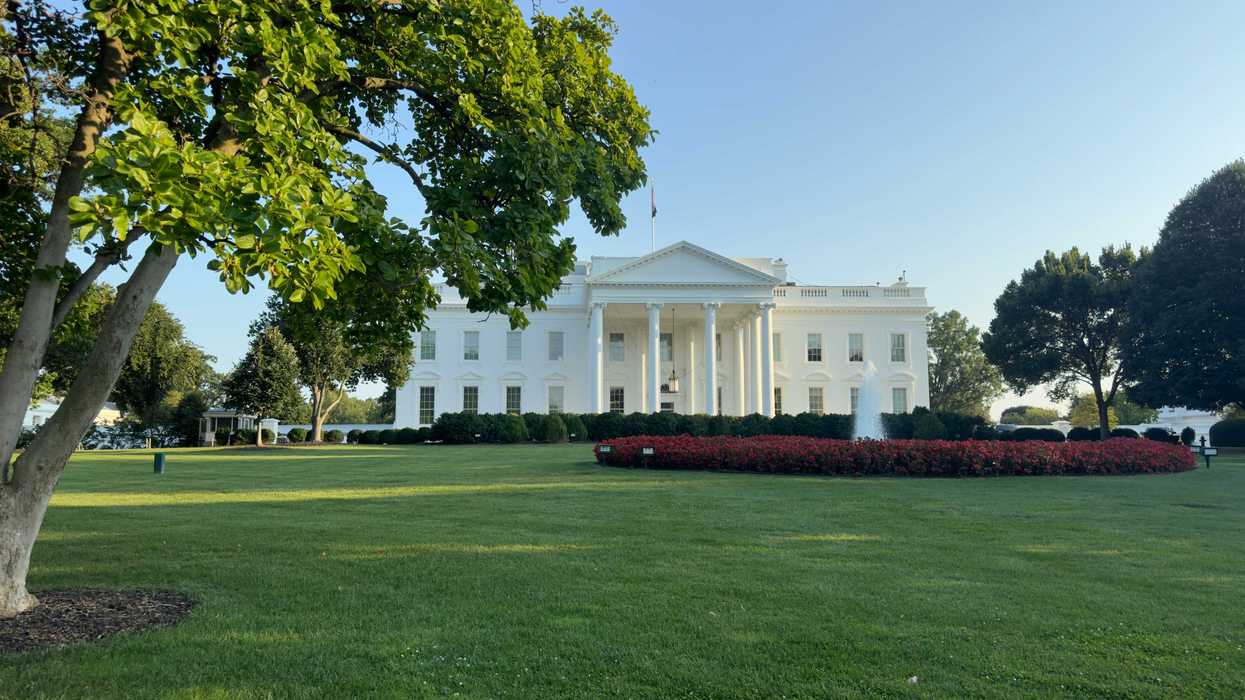
The White House
The white house with green lawn and trees
Photo by Josh on Unsplash

The Politics of Gratitude: Why Washington Punishes the Loyalty It Cannot Price

On a Sunday night in August, Senator Jon Ossoff told a campaign rally in Atlanta that President Trump would rather build his ballroom and “travel with Natalie” than do his job. He never used her last name. He did not need to. Natalie Harp, the White House aide known to colleagues as Trump’s “human printer” for trailing him with a portable printer and transcribing his social-media dictation, had become a punchline before most Americans knew who she was.

The backlash arrived within hours. White House officials accused Ossoff of insinuating an affair; Republican Rep. Brandon Gill noted that Harp survived bone cancer only because the Right to Try Act, which Trump signed in 2018, let her seek an experimental treatment outside the normal approval process, and dismissed any other reading of the moment as unfair. Weeks earlier, Harp had been at the center of a far more consequential story: in July, she was one of a handful of aides, alongside the defense secretary and two senior staffers, chosen to accompany Trump on a covert switch of aircraft as he left a security summit in Turkey after officials detected a credible Iranian threat, while most of the traveling delegation stayed behind on a decoy plane. That is the real proximity Ossoff's line was needling. Then came a detail that complicated the story further: Trump had personally given Harp and several other aides cash gifts of $45,000 apiece, which a former federal ethics official called troublesome, since money on that scale can leave a recipient feeling indebted to whoever signs the check.

Keep ReadingShow less
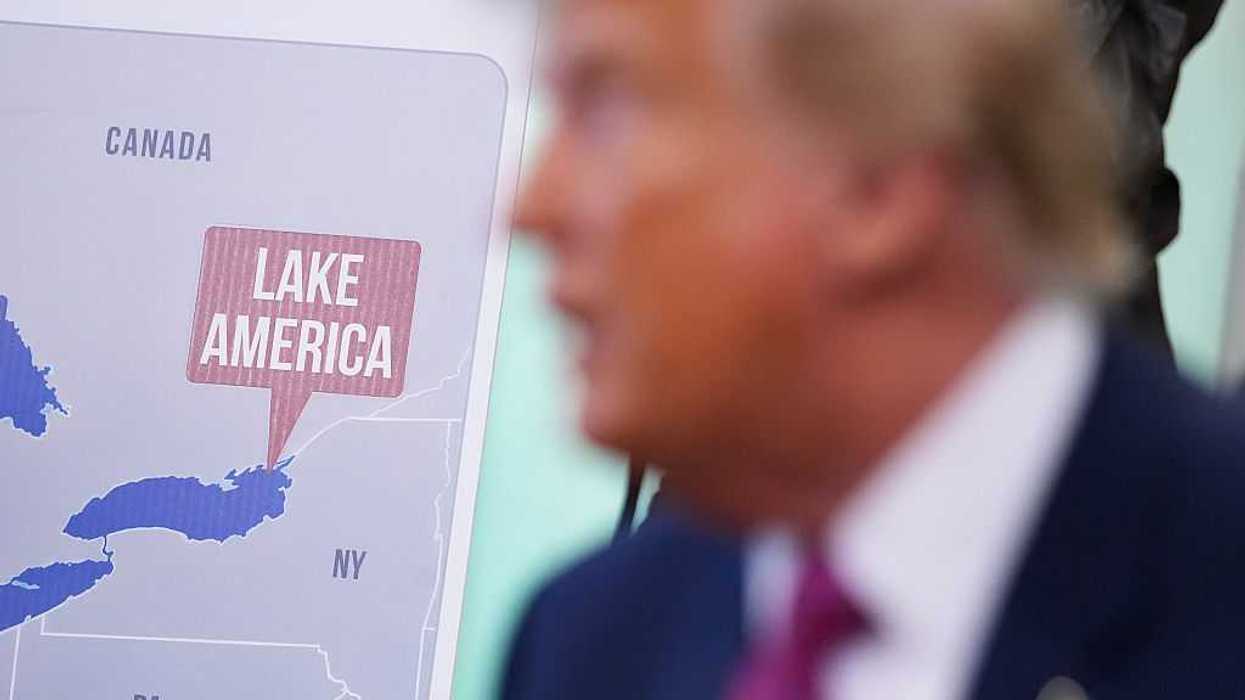
A map labeling Lake Ontario as "Lake America" is displayed behind U.S. President Donald Trump.

A map labeling Lake Ontario as "Lake America" is displayed as U.S. President Donald Trump signs an executive order during an event in the Oval Office of the White House on August 27, 2026 in Washington, DC.

Andrew Harnik/Getty Images

Cartography of Convenience: Why Rushed Renaming Erodes Public Trust

In tough economic times, governments often reach for the easiest kind of progress: a new name on an old sign. Wage stagnation, inflation, crumbling roads, and rising rents are hard problems that take years and real money to fix. Renaming a street, a lake, or a strait is not. It costs a fraction as much and lets officials point to something they “did.” A new name never fixes a pothole or lowers a grocery bill. This year offered an unusually rich catalogue of the habit, reaching from a city council in Texas to a wartime waterway in the Persian Gulf.

A Concept Borrowed From the Cremation Ground

Indian philosophy has an old idea called shmashana vairagya, describing the sudden clarity a person feels standing at a cremation ground, when ordinary ambitions look small. The feeling fades once the mourner goes home. Public policy has its own version of this cycle. In the raw hours after a tragedy, a scandal, or a surge of national feeling, officials decide, sometimes within a single social media post, what belongs on a map or a sign forever. The emotion passes in hours. The bill, when there is one, stays for years.

Keep ReadingShow less
Donald Trump

U.S. President Donald Trump on February 6, 2026.

(Photo by Samuel Corum/Getty Images)

A Demagogue in the White House: Will the Guardrails Hold?

A demagogue does not seize all power at once. He takes it piece by piece.

In Trump’s second administration, those pieces accumulated in plain sight. The president generated so much disruption and noise that Americans struggled to keep pace. Each new controversy displaced the last, obscuring a more consequential story: the steady accumulation of presidential power.

Keep ReadingShow less