




I often get asked for my advice on how to vote. I’m the first to concede these requests come from a very niche slice of the electorate — that tiny remnant of people who know who I am, value my opinion and share my exasperation with both parties.
I am going to answer the question. But first let me explain why I don’t like it.
I think too many pundits on the left and right fall into the habit of confusing or conflating the fortunes of a party with that of their philosophy. Many come by this tendency honestly. As the parties have polarized ideologically, it’s a natural assumption to think that the GOP and Democrats are the sole vessels for conservatism and progressivism, respectively.
Add in the very human tendency to favor the politicians who return your phone calls and seek your approval, and that rooting interest can get even more intense.
One problem with this approach — and there are many — is that what is best for the GOP in an election year is not necessarily what is best for conservatism in the long run. The same goes for the Democrats and progressivism.
For instance, on many issues — abortion, trade, industrial policy, etc. — President Trump has moved the GOP leftward over his two terms. But just try telling most Republicans in 2016, 2020 or 2024 that a Republican victory would be bad for conservatism.
President Obama wanted a very progressive agenda, and he got some of it. He also cost his party roughly a thousand elected offices across his two terms, and left behind a political climate that made the Trump presidency possible (and which erased many of Obama’s executive orders). President Biden left his cause and his party in an even uglier ditch.
The point isn’t about political point-scoring. It’s simply to note that ideological and intellectual progress — however you define progress — doesn’t move in lockstep with electoral success or failure. In his 1996 State of the Union address, President Clinton declared that “the era of big government is over” and moved rightward on welfare reform. This was a victory for conservatism and a political loss for Republicans, because his triangulation got Clinton reelected.
Single-issue activists often understand this logic better than generic ideologues or partisans do. The last thing abortion rights activists want is for antiabortion Democrats to become a major faction, just as antiabortion advocates don’t want Republicans who support abortion rights to gain political traction. But the same activists would love to see the other party move in their direction — because the goal isn’t to use the issue of abortion as a wedge issue or for fundraising, but to forge a bipartisan consensus.
That’s how I think about the proper goal of the “conservative movement” — to move America’s center of gravity rightward, not just the GOP’s. Put simply, conservatives should celebrate when conservative Democrats are nominated, even if that’s bad for Republicans electorally.
I also believe that candidates who discredit or deform conservatism by claiming to be conservative should lose.
Which brings me to my advice. I think that voters should be more interested in rewarding good behavior and good character than in ideological or partisan purity. That doesn’t mean ideology and partisanship are irrelevant. I think these things can be balanced.
Take the Senate race in Texas. Democrat James Talarico is ideologically not my cup of tea, and he is quite far to the left for Texas. But his Republican opponent, Texas Attorney General Ken Paxton, is in my view a corrupt gargoyle simply unfit for any office. I’m not here to debate that opinion, because the people seeking my advice generally share it.
So, if you’re a conservative who thinks Talarico is too left-wing and Paxton is bat-winged, don’t vote for either of them.
But you should still vote.
You can leave the Senate line blank while voting for other Republicans on the ballot (you can also select Libertarian candidate Ted Brown). Sending the message that your problem is Paxton, not Republicans, is one that Republicans and conservatives need to hear.
If I were a progressive, I would have the same approach toward candidates aligned with the Democratic Socialists of America who will hurt either the party or the cause. Vote for all the other Democrats, just not the radicals who spout the sort of nonsense that turns off more mainstream voters than they attract.
One reason our politics are such a mess is that fringe candidates know they can count on the reflexive support of their parties — and their pundits! — the moment they get the nomination. Strategically voting to end that dynamic is not inconsistent with the best interests of your ideological cause or your party, because those interests are often in tension in an election year.
Jonah Goldberg is editor-in-chief of The Dispatch and the host of The Remnant podcast. His Twitter handle is @JonahDispatch.
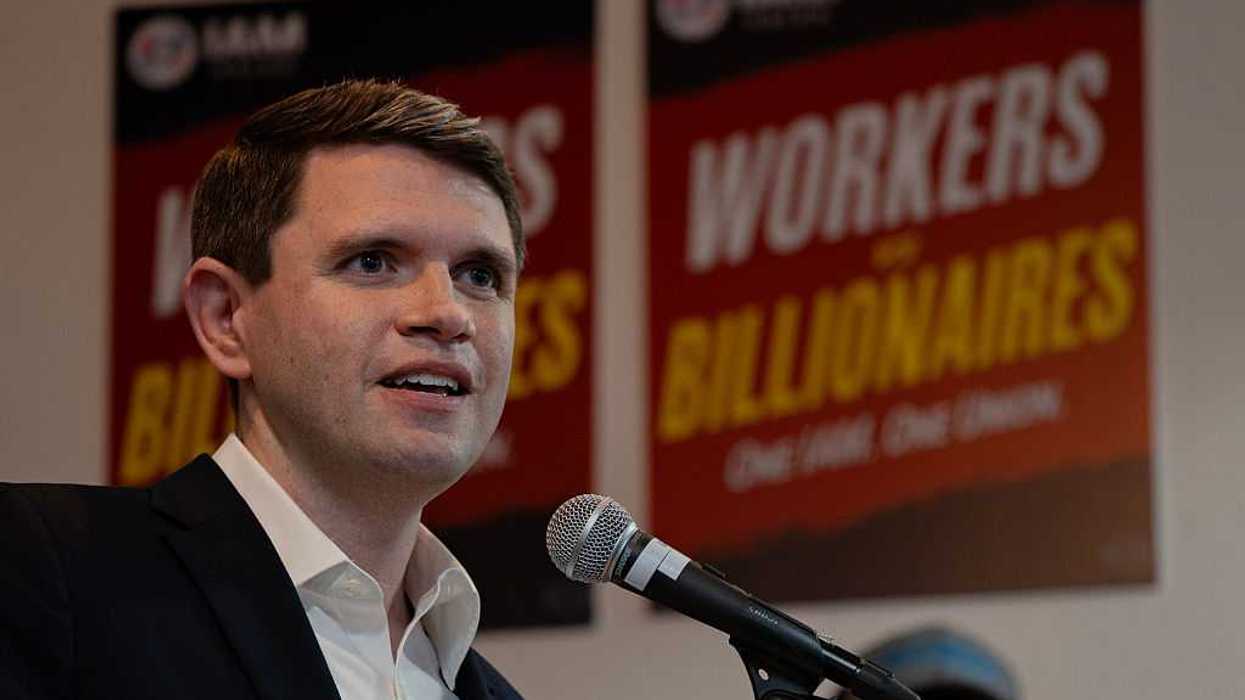











A golden tray sits on the Resolute Desk as President Donald Trump speaks during an announcement on American nuclear innovation in the Oval Office at the White House on July 24, 2026, in Washington, D.C. Trump is signing multiple executive orders targeting the nuclear energy sector and easing rules for new reactors and nuclear fuel supply chains.
Trump’s hubris rivals the fallen heroes of ancient Greek mythology
In January, the New York Times asked President Donald Trump if there were any limits on his global powers.
“Yeah,” the president responded, “there is one thing. My own morality. My own mind. It’s the only thing that can stop me.”
That was eight months ago, but fortunately Christopher Nolan’s blockbuster adaptation of “The Odyssey” has made ancient Greek literature newly relevant. Before that window closes, I’d like to talk about hubris.
Today, the term mostly means excessive pride or arrogance. That’s part of what the Greeks meant by it too, but the meaning was a bit richer and more specific. Hubris was an insolent or outrageous act that offended the gods, often because the transgressor was claiming abilities or authorities that solely belonged to supreme beings.
Nolan renamed and slightly modified the concept of xenia for the film, calling it “Zeus’ law.” In the director’s telling, mortals should follow the rules laid out by the gods, specifically the requirement to treat strangers with respect lest they be gods in disguise.
In a sense, hubris is the opposite, or at least the rejection, of xenia. The hubris of the suitors, and at times Odysseus himself, invites punishment by the gods and their mortal instruments.
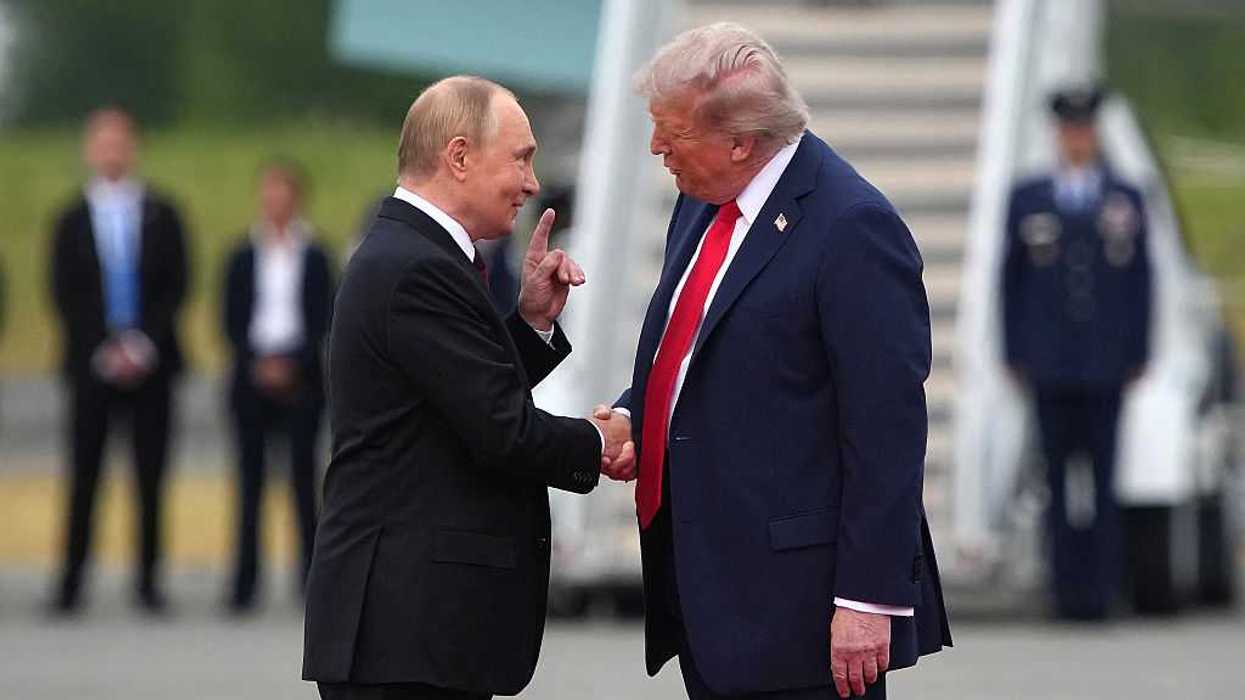
Which brings me back to Donald Trump. His claim that there are no constraints on his personal power to dictate events on the global stage was one of the greatest expressions of hubris ever uttered by a political leader.
Trump’s claim was obviously false when he made it.
He vowed that he could end the Russia-Ukraine war in 24 hours. He’s proved powerless to make that happen. If he had divine powers to work his will, why would he have balked at implementing his tariffs so often that Wall Street adopted the “TACO trade” term for his deals? “TACO” stands for “Trump always chickens out.”
And why would Trump have made so many embarrassing concessions to China — from rescinding tariffs on Chinese goods to allowing them to buy crucial and incredibly valuable computer chips?
But Trump saw his success at capturing Venezuelan strongman Nicolas Maduro as proof of his ability to launch missiles to the same effect as Zeus’ lightning bolts. Trump believed he was the most powerful man who ever lived.
This is no exaggeration. In March, when the Iran invasion seemed successful, Trump gave a document penned by“Presidential Historian David King” to New York Times reporters Maggie Haberman and Jonathan Swan purporting to prove that Trump was “the most powerful person to have EVER walked this planet.” King was, in fact, a businessman and occasional caddy for legendary golfer Gary Player.
King compared Trump favorably to many of history’s most powerful, and often heinous, figures: Alexander the Great, Attila the Hun, William the Conqueror, Napoleon Bonaparte, Joseph Stalin, Genghis Khan, Mao Tse Tung, Adolf Hitler and Vladimir Lenin. Many of these men thought they were the most powerful person in the world, too. And many were defeated precisely because they believed it.
At least Napoleon and Hitler had a string of truly impressive victories before they learned the folly of hubris. The limits on Trump’s power have been exposed by far less august forces than the combined might of the allies in World War II or the fearsome Russian winter.
Iran is a comparatively middling power. But the regime’s ability to absorb punishment while imposing its will on the Strait of Hormuz has proved to be a greater constraint on Trump’s power than his morality or mind. We should note that, at least rhetorically, his morality has not proved much of a constraint. He has repeatedly promised to destroy Iranian “civilization” if the regime refuses to capitulate.
But they haven’t — and won’t anytime soon — because the regime’s tolerance for pain far outstrips Trump’s. The combined fear of skyrocketing oil prices, outrage of Gulf state potentates, diminishing weapon supplies and domestic unpopularity is doing the work that international law, congressional oversight and the collective opinion of foreign policy experts can’t or won’t do.
If I considered Trump more heroic than reason and facts could allow, I would say his Sisyphean predicament has the whiff of Greek tragedy to it. Trump is vexed by the fact that the Iranians won’t honor deals or ratify his countless premature claims of victory — giving new meaning to his vow that his presidency would make people tired of winning. It’s almost like they’re out-Trumping Trump.
Things might have gone better if he’d heeded that great Greek tragedian Sophocles: “For Zeus utterly abhors the boasts of a proud tongue.”
____
Jonah Goldberg is editor-in-chief of The Dispatch and the host of The Remnant podcast. His Twitter handle is @JonahDispatch.