

Skip to content
Search

Latest Stories

Follow Us:
Top Stories

AI’s Information Crisis: Why Trust Is Harder to Sustain Than Ever

AI’s Growing Role in Information Demands New Scrutiny, Safeguards, and Human Judgment

Opinion

Woman sitting and typing on laptop on her lap.

AI chatbots are always guessing, even when they sound sure. Experts and Claude itself explain the AI trust gap, bias and why to check sources.

Oscar Wong/Getty Images

In all the debates about human and machine intelligence, one thing has become clear: We humans love to talk about AI. We’ve speculated whether AI will create or eliminate jobs, revolutionize or destroy science, comfort or torment us, entertain us brilliantly or rot our brains, or some combination of all these things. But amid the noise, we may have paid too little attention to a subtler impact: how AI is disrupting our relationship to information and making it harder to know what to believe.

The problem isn’t just deepfakes, the malicious manipulation of images, video, and audio. Even benign, well-intentioned AI applications can be profoundly misleading. The nature of the large language models that power chatbots means that they are always guessing, however confident they seem. How can we use AI to produce reliable information that improves public discourse rather than distorting it?


To explore this dilemma, I moderated a webinar on Trust in Information in the Age of AI, co-sponsored by NAPA, CODE, and the Bridge Alliance, with four leaders in the field: Richard Coffin of USAFacts, Professor Renée Cummings of the University of Virginia, Meghan Herbst of WIRED, and Dr. Alan Shark of NAPA and George Mason University. I also interviewed Claude (Opus 5.5 Extra), which assessed its own limitations and offered some useful advice.

The human experts and the machine intelligence agreed on several points.

A significant AI trust gap exists. Several surveys show that more Americans use AI, but few trust its results. However, many of us still have no firm opinion on AI, suggesting that trust in AI will depend on how it performs in the future.

Our skepticism is justified: AI often gets things wrong. Large language models don’t actually “know” anything – they answer queries based on patterns they deduce from the data they’ve been trained on. While accuracy rates depend on the task and how you measure success, rough estimates hold that chatbots make errors about half the time. The general consensus is that these AI hallucinations can be reduced but may be impossible to eliminate.

AI is often biased in ways that can be hard to detect. Algorithmic bias has been a concern for years, long before today’s chatbots were developed. Because AI is trained on historical data, it can reinforce old biases about gender, race, or ethnicity in hiring, criminal justice, and other areas. This can be a serious issue in any AI application used for public policy.

AI doesn’t quite know how to use government data. Chatbots often rely on secondary sources even when more reliable primary government data is available. The problem stems from the fact that much government data isn't “AI-ready,” and AI models aren't designed to go to government sources first, even when they are fit for use.

AI’s impact on information needs regulation. The debate over AI regulation has focused on the big picture: the need for guardrails to ensure AI doesn't turn on or even destroy humanity. While that priority is hard to argue with, we also need regulations to prevent AI from misleading or misinforming us. The European Union now requires a watermark on images or text produced by AI. In the U.S., several states are moving to prevent bias in public uses of the technology.

AI may offer real benefits for all kinds of human endeavors, but its flaws remind us to treat the technology with caution and care. This is especially true for using AI in public policy and decision-making, where poorly informed plans can have major repercussions.

For now, the best advice is to use AI with an awareness of its shortcomings, don’t put human judgment aside, and ask for and review your chatbot’s sources. As Claude said about our interview at the end: “If your readers take away one habit from it, I hope it’s checking the sources I’ve cited rather than taking my word for any of this.”

You can watch the full video of the webinar “Trust in Information in the Age of AI” on YouTube at: https://napawash.org/event/napa-technology-leaders...


Joel Gurin is the president and founder of the Center for Open Data Enterprise.

Read More

Emergency Medical Team Rushing Down a Hospital Corridor, Carefully Pushing a Stretcher with an Injured Patient. Nurses and Doctors Coordinate the Urgent Situation

An emergency doctor with 28 years on the front lines explains why HBO Max's award-winning drama "The Pitt" isn't Hollywood exaggeration, but an urgent, accurate look inside America's buckling healthcare safety net.

gorodenkoff/Getty Images

“The Pitt”: Emergency Department TV Fiction Or Prediction IRL?

In its first two seasons, the HBO Max series “The Pitt” about the fictional Pittsburgh Trauma Medical Center, has received over 30 nominations and has won 11 Emmy’s including Outstanding Drama Series for the last two consecutive years. It may be fair to say, “The Pitt” has connected.

People ask me constantly: Is "The Pitt" real?

Keep ReadingShow less
Illustration of a man and woman arguing

Arguments or debates, disputes or conflicts, verbal clashes. Angry men and women roar at each other

Getty Images

What If Polarization Is the Wrong Diagnosis?

I just listened to political scientist Lilliana Mason challenge one of the most familiar explanations of what is wrong with American politics.

We are constantly told that America suffers from polarization. Republicans and Democrats have moved too far apart. They distrust each other, increasingly regard one another as enemies, and have lost the ability to compromise. The prescribed remedies are familiar: more civility, more dialogue, less hostility, and a return to the political center.

Keep ReadingShow less
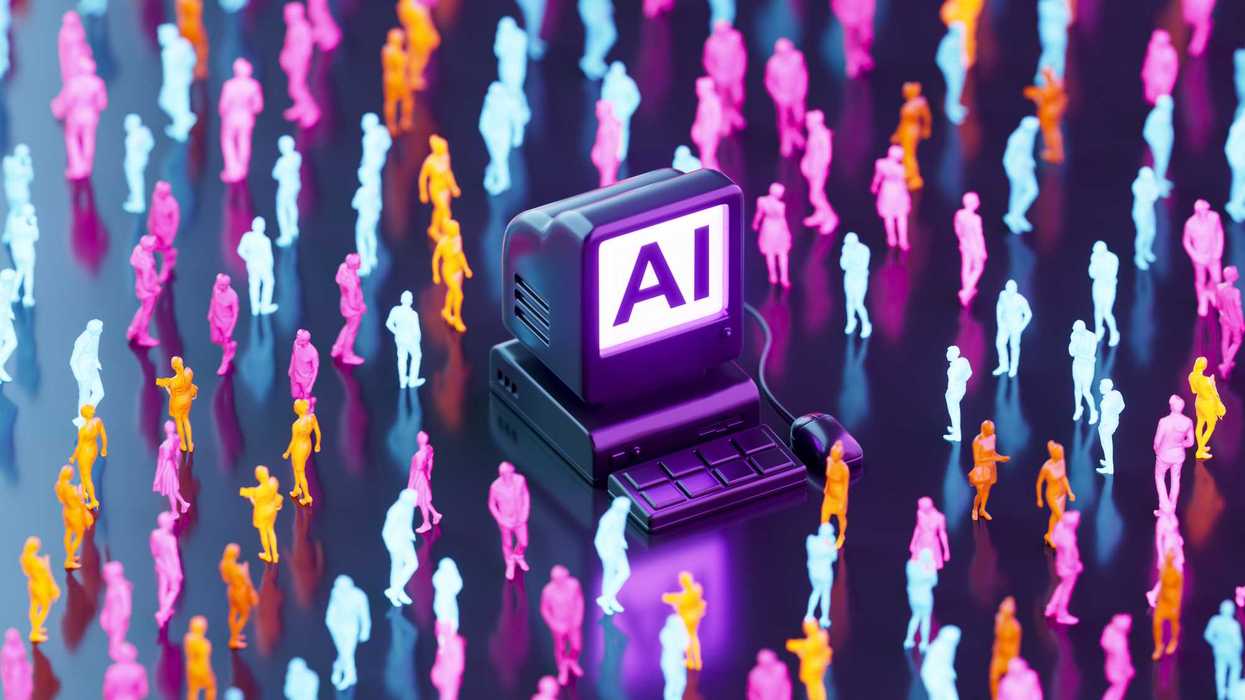
 Vintage Computer with AI Text on Screen and Neon Lighting, figures of people standing around it.

Calling AI “super” makes it sound omniscient. A faith leader coalition explains why the word “artificial” matters and what to do instead.

Royalty-free/Getty Images

Reject the Sand God. Call AI by Its True Name

President Trump recently signed an executive order telling federal agencies to replace the term "artificial intelligence" with "Super Intelligence." He said the word "artificial" makes the technology sound fake.

Many Americans already treat AI as a “super intelligence” that knows better and that they should confide in. Many already assign it the role of spiritual counsel, close confidante, or even romantic partner. In a Common Sense Media survey, one-third of teenagers claimed they had discussed serious personal matters with an AI instead of a person, and 31 percent said talking with an AI companion was as satisfying as talking with friends, or even more so. Bible Chat, an app that offers scripture-based advice and prayers, has been downloaded more than 30 million times.

Keep ReadingShow less
news video camera
black video camera
Photo by Matt C on Unsplash

When the Cameras Went Dark: What a Press Ban Reveals About American Journalism

When I came to the United States from India in 1982, I did not trust newspapers. Back home, everyone knew which party a paper favored before reading a line. American television felt different. My family watched Peter Jennings every evening, and later I found Larry King on CNN, who let his guests talk instead of telling viewers what to think. That habit of holding everyone to one standard has mostly faded.

On Sept. 18, President Trump announced he was banning CNN, MS NOW and Politico from the White House, saying their reporting was fake news. The next morning the Secret Service took reporters’ badges at the gate. The outlets sued on Monday, and Fox, ABC, NBC and CBS declined to take CNN’s turn in the television pool. On Sept. 24, Judge Timothy Kelly, whom Trump appointed, blocked the ban for 14 days. He found the outlets likely to win on due process, because reporters got no notice and no chance to respond, and he doubted the government’s national security explanation. Trump’s answer was to call the judge “totally disloyal.”

Keep ReadingShow less