





Ever since the AI boom of 2022 with the release of OpenAI’s large language model “ChatGPT” to the public, we have seen the exponential rise of AI being seemingly forced into our daily lives. It makes sense after all; who doesn’t like an uncanny Will Smith eating spaghetti, making funny faces?
Fast forward 4 years, and that same technology is being used to create almost undetectable videos of posthumous celebrities doing things they never did. High school teachers and college professors must worry daily about the effects AI is having on both the work turned in and the brains of those submitting it.
As this was happening, some of the largest and most used/dominant tech companies in the world, such as Google, Microsoft, and Apple, poured hundreds of billions of dollars into this infantile industry after seeing its potential to be implemented within their systems.
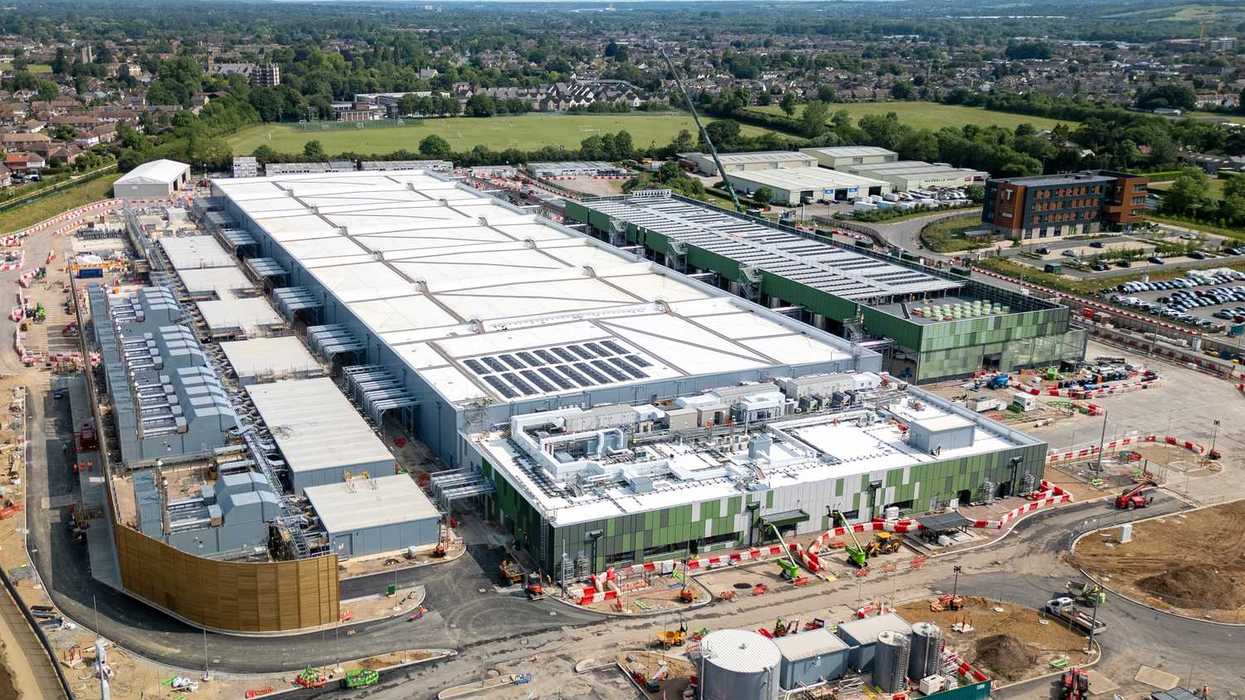
AI is no longer just code manufacturing facts but whole models that serve as personal assistants designed to make your life as convenient as possible. Copilot, Apple Intelligence/Siri, and Gemini are all examples consumers know and love to hate. This is due to the invasive nature of these initiatives, the ads, as well as the rise in prices their resource-hogging causes. An issue that continues to be a topic of contention among environmental activists as well as tech consumers is the use of AI Data centers.
Jevons described the conundrum of innovation; the goal is to make processes more efficient; however, it often practically means having to create more complex ways to get to that point, resetting the progress in a way. This is the problem with Data centers.
When more companies jump on the AI hype train, they need ways to manage all the data needed. Companies buy land to place centers whose only job is to crank out as much data as possible. Just like the computer sitting on many readers’ desks, the problem ultimately becomes energy control.
To turn electricity into usable information, a byproduct of heat will be made. If not managed correctly, that heat can and will impact the performance of your system. Unlike your PC, which often uses fans to help with heat distribution, wind is not realistically reliable, filterable, and controllable to implement at the scale of these large data centers. Therefore, the main way companies cool them is by pulling humongous amounts of water from local infrastructure and natural environments. It’s this fact that is the contention with data centers.
Environmental agencies and advocacy groups claim that they increase air pollution, decrease water quality, raise energy use, and many more cons that impact community-based centers.
Recently, Tucson, Arizona, made national headlines by fighting against Beale Infrastructure’s Project Blue, which would build a large complex of data centers on 290 acres (12.6 million square feet) of land. In 2025, the Tucson City Council officially voted "no" to supplying city water to the project. However, in May of 2026, a contractor for the project was caught illegally taking Tucson city water and trucking it to the site anyway, causing major public outrage and bringing the discussion of AI center water usage back into the news cycle.
Residents fear that the large pull of electricity from the city will strain the local power grid and raise electricity costs on top of the economic state from the War with Iran.
As of July 2026, due to being banned by the city, the project has now been approved by the Arizona Department of Water Resources, a state entity, as well as a 10-year energy agreement with Tucson Electric Power (TEP) that plans to bring hundreds of megawatts of power by 2028.
With all this debate concerning the impact of data centers on the environment, what do the numbers say? According to the Environmental and Energy Study Institute, U.S. data centers consumed 449 million gallons of water per day, or 163.7 billion gallons per year. This data was taken from 2021, before the big boom of AI. The Environmental Law Institute states that U.S. data centers now use about 4.4% of U.S. electricity, up from 1.9% in 2018, and could reach 12% by 2028. Economist Nicholas Muller reported that data centers caused about $25 billion in pollution and health-related costs in the U.S. just last year.
The numbers paint a clear picture. Data centers are consuming an incomprehensible amount of water from local infrastructure as well as producing an unimaginable amount of monetary costs from health and environmental concerns.
Statistics, however, are just numbers on paper without context. Why does it seem like in the pro vs anti discussions about this issue, that the AI companies are not involved as much? How well have these companies communicated the impacts of their own creations, if they have at all?
Google has been reporting its environmental data for the last couple of years; however, there is sufficient evidence to suggest they are intentionally misleadingly communicating that information. This shows the dichotomy between stated goals and its continued AI growth initiative. They also disclose strong energy-efficiency metrics, but not a company-wide water-efficiency metric. This is an important distinction because a company can point to efficiency gains while still withholding the location-specific water data needed to measure real environmental harm. That gap in transparency makes it difficult to tell whether AI growth is being managed responsibly or simply reported in a way that looks better on paper.
The level of transparency is something advocates often cite as proof that some companies don’t care to disclose their information and have been treated like “black boxes”. And for Microsoft, they have also been criticized for not disclosing location-specific water and power data even though they have stated they are committed to a net-zero goal when expanding their AI Infrastructure. Meta’s own 2025 Environmental Data Index includes a line for ‘total embedded water consumption in purchased electricity,’ which shows it tracks that category publicly. This is a step in the right direction; however, a race still needs to be completed
Gaining favorability in the court of public opinion is easy when you have seasoned public relations departments, but what have these efforts to be transparent done for the communities harmed? Nicol Turner Lee and Darrell M. West argue that residents need more seats in rooms that determine how these environments are affected. Many claim that simply publishing your data online has no real effect on the lives of locals.
Along with the continued growth of this industry, reports from late 2025 show that sustainability efforts are falling short, transparency-wise and practically in the affected areas. There are many reasons for this, such as “commercial pressures to support AI and easing regulatory pressures in some regions.” Due to how much the public can affect a company's pockets, allegations of greenwashing are never a good thing for them. To intentionally mislead information to make you sound more environmentally friendly is an easy way to lose trust with your base. But companies seem to like taking that angle and it’s up to the members of these organizations and communities to stand up and call it when they see it.
Communities near these technologies deserve clearer, verifiable transparency about water use, electricity demand, and emissions, because sustainability claims are only meaningful when the public can see the actual local impact. On top of that, more representation from the local level to higher will be needed so more power is placed in the hands of the people that will reap the consequences of these technologies.
Shon Eric Hernandez is a Fulcrum fellow and MDC contributor. He can be reached at shondesil06@gmail.com














The President Invited Iran to Bomb My Home