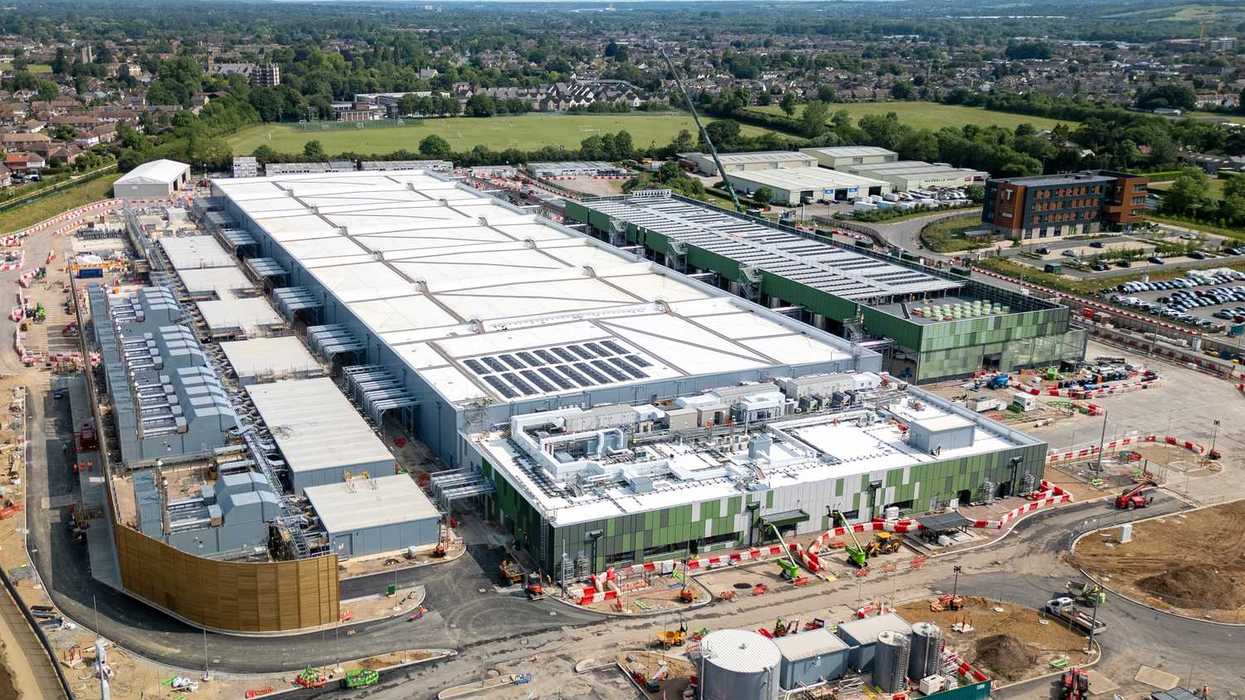

In Festus, Missouri, a town that gave Donald Trump 67 percent of its vote, residents have filed to recall the mayor and three council members over a $6 billion data center. In New York, a Democratic governor has signed the first statewide moratorium on new ones. Across seven states, at least 33 recall campaigns are targeting as many as 58 local officials for the same reason, and the reason is not a party. It is a building.
That makes data centers the rarest thing in American politics right now: an issue where the folding chairs in a red county and a blue one are filled with people saying the same words. They are not saying "no technology." They are saying the box across the road raises their power bill, drains their water, takes the farm, and was negotiated behind a nondisclosure agreement before anyone in town knew its name. In Luther, Oklahoma, the moratorium passed only after word leaked that the mayor had been in closed talks with a developer for months. The anger is not about servers. It is about being handed a decision that was already made.
Here is what almost nobody in those rooms has been told, and what both sides would want if they knew it.
Every data center is a furnace. Nearly all the electricity that goes in comes out as heat, and in every facility in America that heat is thrown into the sky through cooling towers, at the owner's expense. The newest liquid-cooled halls release it as warm water, exactly what a greenhouse wants in January. A two-and-a-half-acre greenhouse on that water grows on the order of
695,000 pounds of fresh produce a year with no boiler and nothing burned. Write into the rezoning that at least 15 percent of it is covenanted to the host community, to the schools, the food bank, the farm store on the road, and one building's waste feeds about 400 of its neighbors, year-round, in towns where the nearest winter tomato has traveled 1,500 miles. Put the fish house on the same loop and homes on radiant floors at the end of it, and the campus that was going to bury the farmland has built a farm.
Notice what that covenant is. It is the opposite of an NDA. It is a promise, written into a public document, that a resident can read at the county clerk's office and hold the developer to at every hearing for the life of the project. The reason people in Festus and Luther and Prince William County feel the technology is being forced on them is that the terms were hidden. A heat covenant puts the terms on the wall.
And it is the one proposal that does not ask either side to give up what it wants. Conservatives want the tax base, the jobs, and the AI race won; Loudoun County, Virginia, collected $1.2 billion in data-center property taxes this year and cut its residential rate for the tenth straight
year, so the money is real. Progressives want communities protected, ratepayers held harmless, and food grown close to home; a farm on the fence line does all three. Michelle Obama and Robert F. Kennedy Jr. agree on almost nothing, but they agree that Americans should eat real food grown nearby. A data center that powers the cloud and feeds the town is not a compromise between the two camps. It is both of them, in one site plan.
Virginia noticed first. This spring its General Assembly passed the first law in the country directing the state to put data-center waste heat to use, and the Senate vote was 39 to 0. In a legislature that spent the same session at war with itself over data-center tax breaks, that is what an issue looks like when it belongs to no one.
Wall Street has noticed too. Lenders now weigh local opposition and permitting status before financing a campus, and local resistance blocked or delayed some $130 billion in projects in the first quarter of this year alone. The developer who arrives with a public covenant and a farm in the first phase of the site plan is not being generous. He is de-risking his loan.
So, to the organizers running recall petitions and the officials facing them, to the governors weighing a pause and the developers hoping they don't: there is a yes here that both of you can sign. Put one question in every rezoning, in public, in writing: where does the heat go, and what share of what it grows stays here? A moratorium buys a town a year. A covenant buys it a farm. The fight in Festus and the fight in Albany are the same fight, and this is the same answer.
Andrew Potter is the founder and CEO of Intelligent Harvest, a Lynchburg, Virginia company that develops greenhouses and community farms powered by data-center waste heat.