



There are many analogies for constitutions, for example, a social contract, a blueprint, a roadmap. But as we mark the 250th birthday of the United States of America, I propose another: constitution as antidote.
Constitutions are always intentionally and carefully designed, more often than not as antidotes to heal and ward off ills that a country wishes - or existentially needs - to avoid. This is, and has historically been, true all around the world, although the study of how constitutions and constitutional change can address root causes of conflict and instability has evolved greatly, allowing us to harness their healing power more effectively.
Working at the intersection of conflict resolution and constitution-building for over 15 years has taught me a lot about the potency and potential of constitutions, including the hopeful expectations placed on them and their capacity to fulfill them. The South African constitution, written after the end of apartheid, provides a classic example. But there are many others like the Philippines, Rwanda, Sri Lanka, Morocco - places where constitutions were designed as antidotes for everything from genocide to dictatorships.
In Nepal, the 2015 Constitution was born out of the Comprehensive Peace Agreement that ended the country’s decade-long civil war. The new Constitution was designed over nearly 10 years to serve as an antidote to not one but many woes. As stated in the preamble, the Constitution aims at “ending all forms of discrimination and oppression created by the feudal, autocratic, centralized and unitary system” of the past. With its promulgation, the people of Nepal committed to “protect and promote unity in diversity” and ushered in a new federal democratic republic to replace the historic unitary, Hindu monarchy.
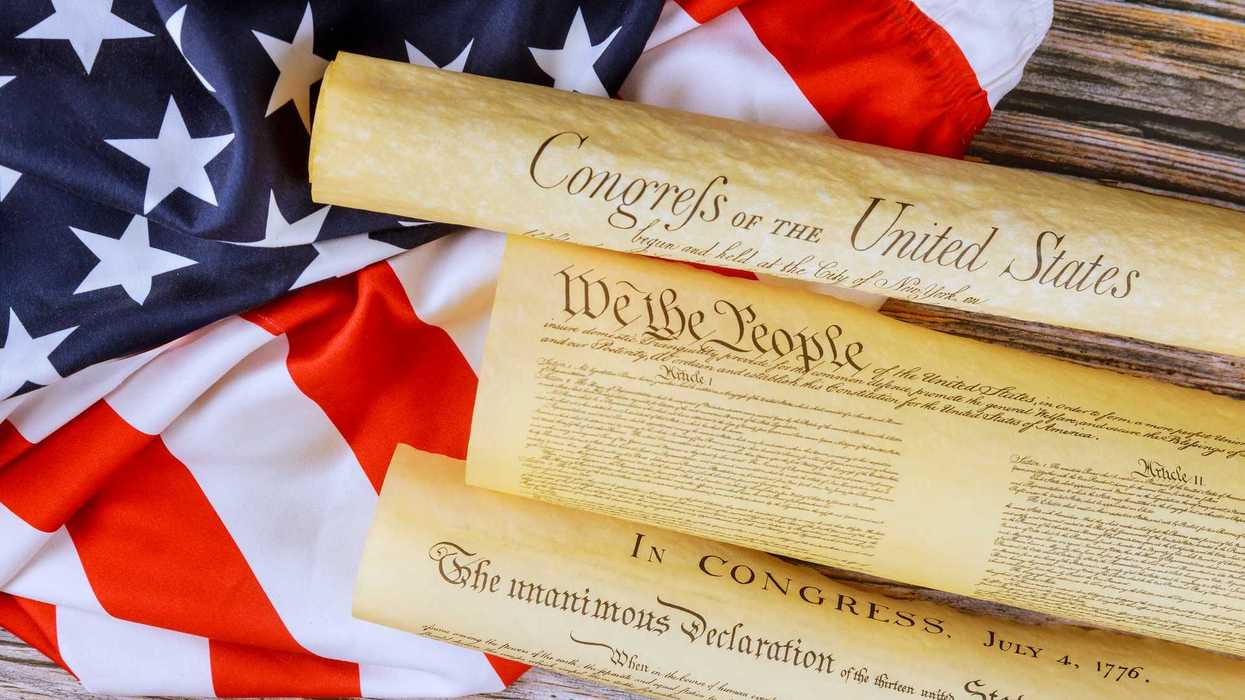
In the case of the United States, our constitution was designed as an antidote for tyranny. It was meant to protect we the people from the whims of an arbitrary ruler, or worse yet, a mad king. Evidence of this is woven throughout our founding document, with nearly every provision corresponding to a grievance listed in the Declaration of Independence. The wrongs suffered at the hands of the King would be tolerated no longer. People would choose their representatives through regular elections. Soldiers would not be forced upon us in times of peace. A balanced separation of powers would ensure power was administered independently and fairly.
Anyone following the news will know that none of the countries listed above are without crisis today, including our own. Admittedly, the analogy of the Constitution as an antidote is limited insofar as a constitution can never be a magic shot that will leave a country perfectly healed immediately. Sometimes the same problems resurface in different ways, or new ones emerge, outpacing the Constitution’s ability to ensure peace. In South Africa, for example, while the post-apartheid Constitution has undeniably prevented that system from recurring and has led to more equity in government, the legacy of apartheid lives on in economic and social inequalities that have, in turn, given rise to violent uprisings and unrest. In Nepal, despite the reformed system, it took a youth-led revolution ten years after the promulgation of the new Constitution to finally wrest power from the political elite.
Still, the fact that these Constitutions were designed as antidotes holds true, and it shows in the commitment public officials and the people show to new constitutions presented as antidotes. Constitutions that are derived from the hopeful expectations for a better future, and that people recognize as such, can be impactfully evoked far into the future when crisis threatens them.
That is why Americans continue to look back to our founding 250 years ago. The expectations that the Founders placed on the Constitution as an antidote to tyranny were so explicitly and strongly expressed that they echo across centuries. Our shared commitment to the antidote’s success, including our willingness to tinker with it but refusal to give it up, is what has allowed us to overcome the constitutional crises we faced.
From addressing the grievances expressed in the Declaration of Independence to confronting the inequities and devastation caused by the original text and the legacy of slavery it protected, our Constitution has endured. It has stood for 250 years as a bulwark against the main threat it was meant to neutralize-- tyranny-- and any changes made to it were to make our democracy and nation better, demonstrating our shared commitment to pursue “a more perfect union.”
The success of the American Constitution as an antidote is due, in large part, to the commitment and respect shown to it not only by the American people, but by all the Presidents and administrations that have led us in the last 250 years. This is evidenced in our long history of peaceful transfers of power, of handshakes and congratulations, of accepting the will of the people. It is evidenced in Nixon’s resignation and Bobby Kennedy’s insistence, even while serving as Attorney General in his own brother’s administration, that he served the American people, not the President.
Today, Todd Blanche declares the opposite. The Trump administration proudly and flagrantly violates our Constitution almost daily. Its lack of commitment to the project of American democracy revives the very malady that we set out so many years ago to protect ourselves against.
In movies and fiction, destroying an antidote is a high-stakes moment. Usually, it is the villain who destroys the antidote as a means of gaining control, sometimes control over enemies and sometimes over the whole world.
Our current administration is that villain, and our antidote is at grave risk. We, the people, must fight to save it.
Let us not allow the story that began in 1776 to end with the villain smashing the vial, our hope, on the floor. Let’s be the heroes instead. America’s cherished antidote has protected us for centuries; it is time we took up the mantle and defended it in return.
Amanda Cats-Baril is the Project Manager and Content Strategist for Lawyers Defending American Democracy and its Meeting the Moment initiative. An international human rights lawyer, Amanda formerly served as a USAID Foreign Service Officer.








The President Invited Iran to Bomb My Home