

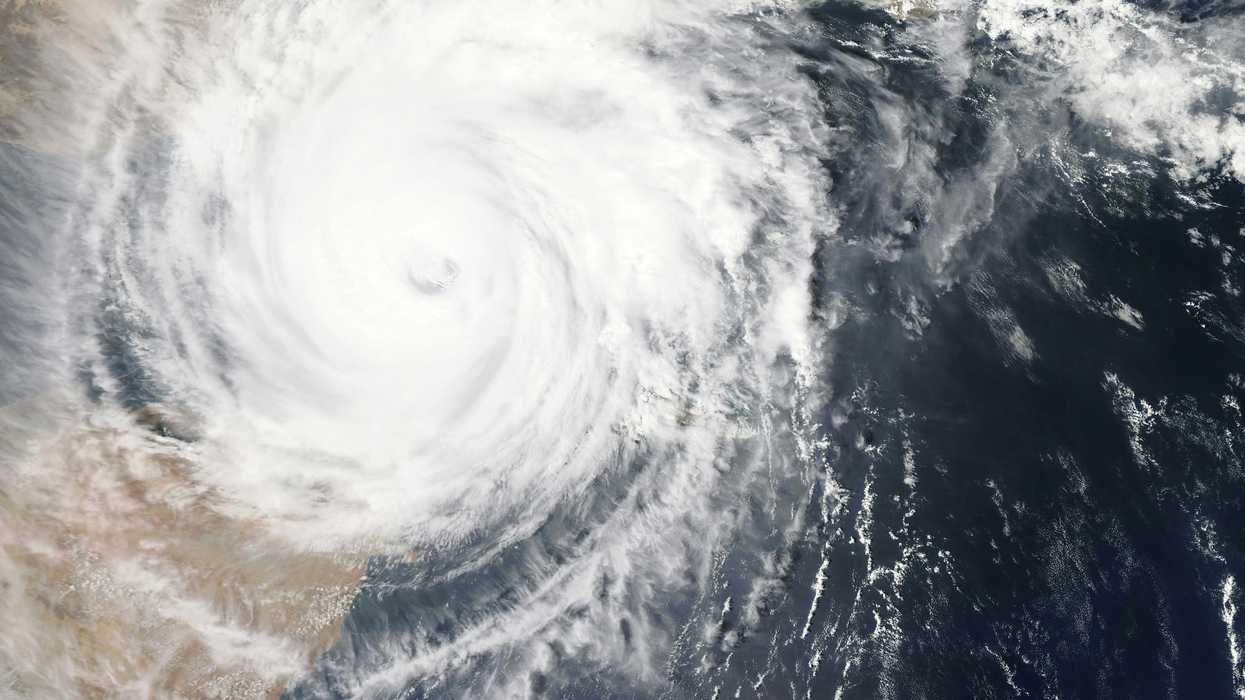

The state of Florida is no stranger to hurricanes. Floridians worry about flooding, property damage, and harsh winds. But another issue often goes forgotten, and it starts in the kitchen.
When hurricane season hits, the power usually goes out, which means refrigerators begin to warm, putting perishable food at risk. According to foodsafety.gov, refrigerators can keep food safe for only four hours during a power outage.
For Florida residents, a power outage during a hurricane can last way longer than 4 hours. A category two hurricane can cause power outages for an estimated several days to two weeks.
Food spoilage is only the surface of the problem. Older adults and low-income families have limited financial resources to replace spoiled food. Throwing away spoiled groceries is a safe option, but during hurricane season or any disaster, households lose a lot of money and face a financial burden.
Replacing groceries is not as simple as it seems, especially when seeking government assistance. According to an article by TC Palm, FEMA does not reimburse for food lost during power outages, and no programs provide vouchers to replace spoiled groceries or food lost in weather-related events.
Also, SNAP benefits assistance is not available to everyone. Vulnerable households that are financially struggling are left with few to no options to ease the burden during a difficult disaster.
A solution could help many families who could fall victim to a problem like this. Improving food safety in Florida communities can reduce financial risk before a hurricane hits.
One organization that is working to provide food safety education is the University of Florida's Institute of Food and Agricultural Sciences, also known as UF/IFAS. Through its Extension program, UF/IFAS provides food safety information and outreach to communities across Florida.
Programs like UF/IFAS help families prepare for power outages during storms before they happen. They teach families how to store food and identify when it is no longer safe to eat, helping residents avoid unnecessary food loss and reduce the risk of foodborne illness.
Dr. Keith Schneider, a food safety and nutrition researcher and professor with UF/IFAS Extension, says the objective is to educate people since the University of Florida is a land-grant institution.
“As a land-grant institution, outreach is part of our mission, so we have teaching, research, and extension effort. There's somebody [regional agents] in every county in Florida that provides outreach and support to the community.”
To provide information on how to prepare food and water before a storm, the organization has many fact sheets online. The fact sheets explain how to safely handle water and food during a disaster.
“There are several fact sheets available online to help consumers handle food during those crisis events,” said Dr. Schneider.
He also mentions the organization does outreach in other ways, like news, radio, social media, and having the university do press releases.
Dr. Schneider advises keeping fresh water, nonperishable food, and ice on hand during hurricane season to prepare for power outages. Also recommending limiting the amount of perishable food stored before a storm.
This information matters for vulnerable households because it can reduce the financial burden of groceries lost during a disaster.
He mentions throwing away food can be difficult for most families, but it is important: “Sometimes it sort of difficult [throwing away perishable food] because it may represent a very significant portion of their food budget. But in those types of situations you don’t want to add a foodborne illness on top of a crisis situation already; that will just overburden our first responders in our healthcare”
The UF/IFAS program outreach helps vulnerable Floridians, but the organization has limitations.
Dr. Schneider mentions that the lack of manpower across Florida makes it difficult to broadcast food safety knowledge on a bigger scale.
“You have a limited number of individuals dealing with a very large population, so we get pulled in a lot of different directions. We don't have the resources to hire more people to reach every individual”.
Another limitation is reaching residents who may not have access to the internet and social media. UF/IFAS food safety resources and fact sheets are online, but many vulnerable people may not know about the information or even the existence of the organization.
“These groups of individuals may not have access to a computer or may not know that we exist. We probably need more people; we want to be as visible as we can,” said Dr. Schneider
Going door to door is counterproductive for the organization, especially with so few specialists. But Dr. Schneider assures the organization tries its best to bring food safety knowledge to as many people as they can.
Other states like Georgia, North Carolina, Louisiana, and California, to name a few, have similar extension programs to promote food safety knowledge and resources. This shows that Florida is not alone in using education and outreach to help vulnerable communities when a disaster strikes.
While food safety education cannot prevent power outages or stop food from spoiling, providing Floridians with information before a hurricane hits could help them make safer decisions about the food they have. It could also reduce food loss and the financial strain of replacing groceries after a disaster.
Kazon Allen is a broadcast journalism student at Florida A&M University and is a member of the summer Fulcrum Fellowship.