




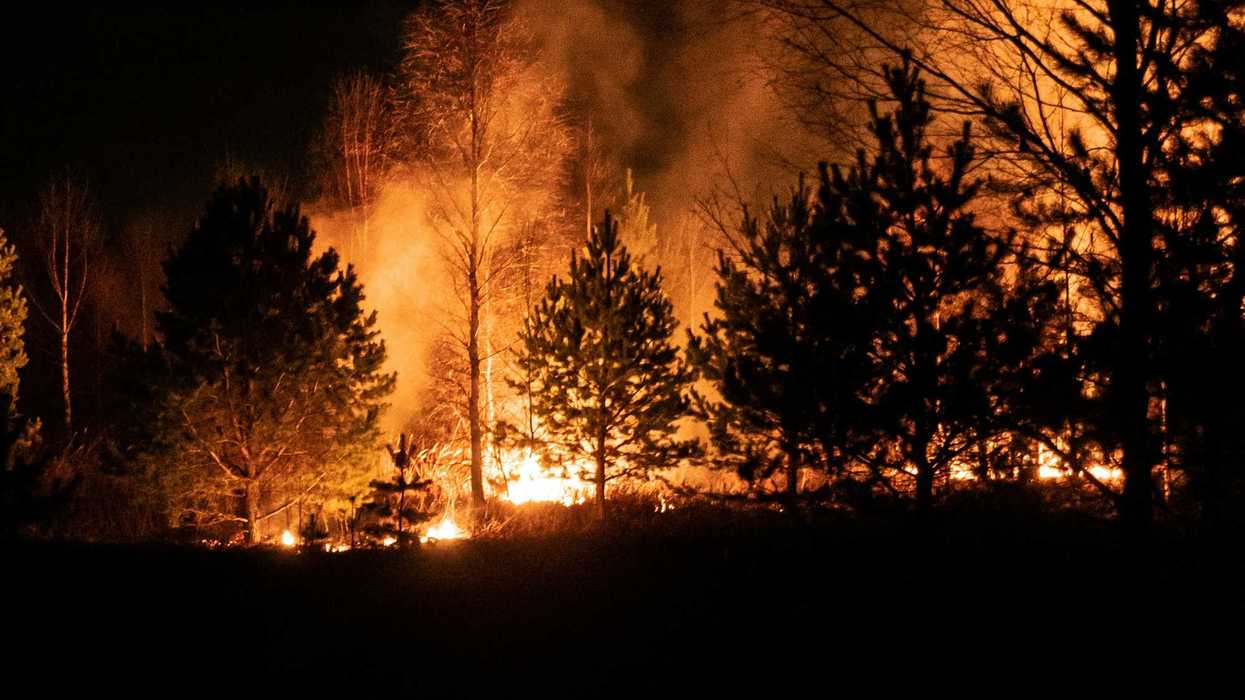

The summer of 2026 once again saw wildfire smoke from the West Coast and Midwest blanketing East Coast skies. Smoke-filled summer skies now seem to be the norm across America, and wildfire season isn’t even close to over.
The public response is also becoming normal. When investigators determine that a person started a wildfire, online chatter usually centers on the idea that humans are the cause and that climate change could not have played a role. That argument confuses the ignition source with the complex conditions that contribute to wildfire. A spark may explain where a wildfire began. It cannot, on its own, explain why flames spread so far and devastate entire communities.
As a professor and through my work studying fire and helping launch the Eastern Fire Network, I have seen how wildfire emerges from an interaction among three basic ingredients: an ignition source, flammable vegetation, and climate conditions that dry fuels and let flames spread.
And it’s true, humans often supply the spark that starts wildfires.
Researchers examining more than 1.5 million wildfire records from 1992 to 2012 found that humans caused 84 percent of U.S. wildfires. Human ignitions also made the fire season three times longer than the lightning-caused fire season and added an average of roughly 40,000 fires per year. Human-started fires expanded especially in the eastern United States.
At the same time, climate change is increasingly creating conditions that make these incidents worse.
A warmer planet increases evapotranspiration, making it harder for vegetation to cool down. As vegetation dries, it becomes more flammable, allowing fires to ignite more easily, spread faster, and burn more intensely. One study found that human-caused climate change accounted for approximately 55 percent of the observed increase in fuel aridity in western U.S. forests from 1979 to 2015.
A hundred years ago, a discarded cigarette in the woods or an improperly extinguished campfire could have produced a manageable fire. Under today’s climate conditions, that fire could be far more dangerous when it sparks amid parched vegetation after weeks of abnormally high heat and little rain.
Meanwhile, across forests in the East, decades of fire suppression and changing land use have increased woody cover by about 37 percent from 1990 to 2020, with Pennsylvania’s Appalachian and Allegheny landscapes seeing some of the largest increases. This has resulted in more fuels in areas where more people live.
That is why identifying a wildfire's source is only part of the equation. We must consider climate change when managing future wildfire hazard, or we risk ignoring one of the forces making the landscape more combustible and the resulting fires harder to contain.
If, as a country, we address the growing threat of wildfires only by preventing accidental ignitions and managing overgrown vegetation, we ignore rising temperatures that dry fuels and create more dangerous fire conditions. And as most forest managers know, managing forests this way is far too costly and unsustainable.
Protecting communities over the long term will require confronting climate change directly: replacing fossil fuels with cleaner, cheaper energy sources like solar and wind, and holding elected officials and industries accountable for the choices that continue to drive global warming. Without these necessary actions, fire prevention will address only a fraction of the problem while the underlying danger grows.
We also need to learn to live with fire, creating defensible spaces around our homes, factoring fire risk into zoning and emergency management planning, and using beneficial fires to restore healthy forests where appropriate.
There will undoubtedly be many more devastating wildfires, and responses will likely continue to blame the source while ignoring climate change's role. If we dismiss climate change, we also dismiss part of the solution, leaving the country unprepared for the increasingly dangerous conditions that drive fire intensity.
Humans may provide the spark, but the science shows that climate change is increasingly turning fires into catastrophes.
Dr. Erica A. H. Smithwick is a professor of Geography at Penn State, a landscape and ecosystem ecologist, and leader of the Eastern Fire Network.












The President Invited Iran to Bomb My Home