




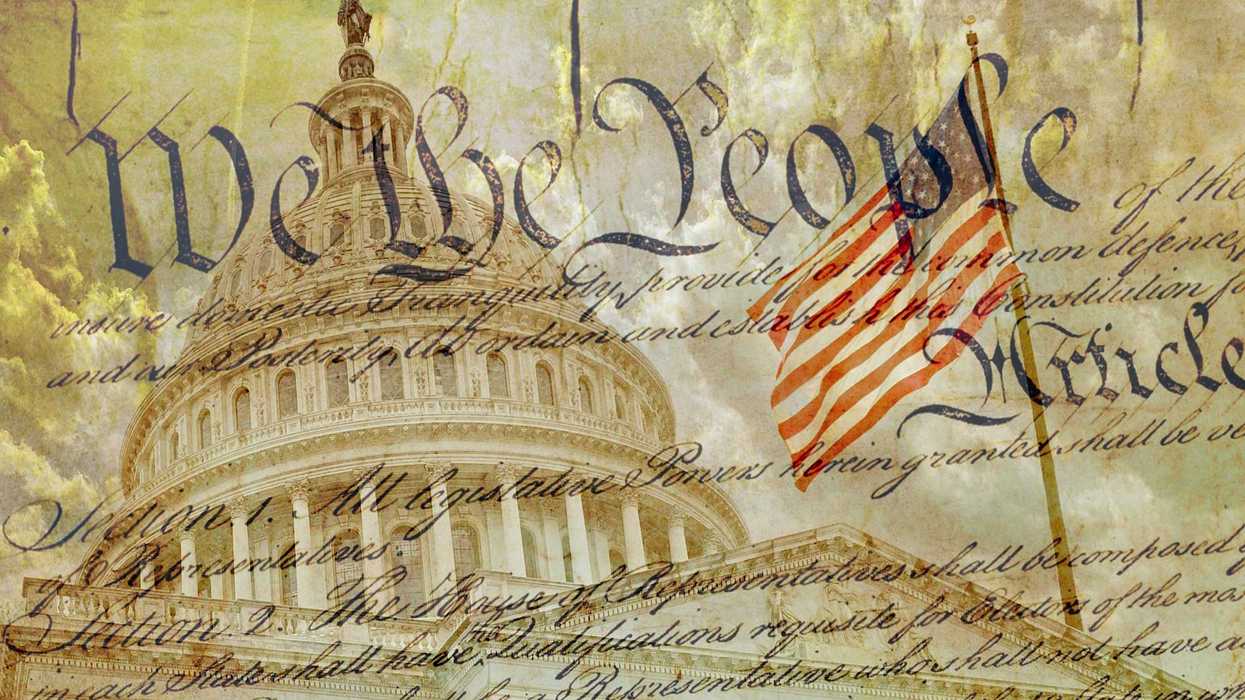
Every lawyer admitted to practice in the United States takes a formal oath to support the Constitution and faithfully discharge the duties of the profession. In recent years, bar associations and courts around the country have held voluntary oath reaffirmation ceremonies, inviting lawyers to publicly renew their commitments and reaffirm the profession's responsibility to uphold the rule of law.
Between us, we have taken the oath eight times - having been admitted to practice law in six jurisdictions, across five states, and both having organized oath reaffirmation ceremonies in our respective Virginia hometowns.
Why would lawyers who hold law licenses stand in courthouses and take their oaths again?
To Reflect on our Commitment
What do our oaths ask of us?
Lawyers, of all people, know how to qualify obligations. We layer our clients’ contracts with conditions, exceptions, and standards. Yet our oaths contain none of these.
We promise to support the Constitution—no strings attached.
Different areas of practice reveal our obligations in different ways. For lawyers who support business transactions, the legal infrastructure is so dependable that it is easy to take for granted. Every commercial transaction rests on the assumption that contracts will be interpreted fairly and enforced by independent courts.
For others, the rule of law may arrive attached to a person. Someone calls with a problem. You think: I would really like to help.
Then the other thoughts come in. But the case won’t make money. It could be seen as political. This could upset powerful people in my community.
Sometimes the reasons not to get involved can seem to drown out your own ethical compass.
To Honor What We Inherited
As America reflects on the 250th anniversary of the Declaration of Independence, lawyers have a particular reason to consider what we have inherited and what we are responsible for preserving.
Of the 56 signers of the Declaration of Independence, 25 were lawyers - they risked charges of treason, carrying the punishment of death, to sign their names to the grievances against King George III. They still signed and pledged “[their] Lives, [their] Fortunes, and [their] sacred Honor.”
Preparing for the Harrisonburg-Rockingham Bar Association’s oath reaffirmation ceremony, president Nicole Faut (one of the co-authors of this article) highlighted the Association’s July 12, 1943 minutes. They recorded that the Association had 26 active members in 1942. After the United States entered World War II, more than 34 percent of Association members abandoned their practices and entered the service of their country—some going on to die in that service.
It is tempting to admire this country’s history from a safe distance behind a desk. The Association lawyers in 1943 did not know themselves as historical figures. Neither do we. They had practices. Clients. Families. They made choices without knowing how it would end, and so must we.
To Come Together
Today, we are witnessing attacks on the institutions charged with administering and maintaining our constitutional republic.
Just one example is the federal government using executive orders to punish law firms associated with disfavored lawyers or clients. Federal judges have repeatedly held those orders unconstitutional—and the federal government has been unperturbed.
The questions lawyers in the United States face today are critical: whether we can represent unpopular clients without governmental retaliation; whether courts can constrain executive action; and whether legal obligations remain obligations when power would prefer otherwise.
We must remember that the legal profession can enable abuses. Lawyers and judges in Nazi Germany helped bend legal institutions toward the regime through decrees, legislation, and reinterpretation. They helped give an increasingly lawless and brutal system the appearance of legitimacy.
But a profession acting together can also make resistance to attacks on our Constitution ordinary rather than heroic; rather like our oaths. Institutions - firms, bar associations, and other professional organizations - distribute courage. When the profession acts together to defend the rule of law, no individual lawyer must bear the entire cost of doing so alone - and seeing the cumulative impact of our efforts can grow momentum.
To Meet This Moment
Most of our tests will not look heroic.
They will arrive in inboxes and intake calls. In the moments between, I should do something and all the sensible reasons not to.
The “somethings” need not be limited to our practice: LDAD volunteers submit comments to proposed federal rules, speak at community organizations about Constitutional rights, organize democracy-focused community art installations, donate money when time feels scarce, and alert friends and family to what we, as a nation, stand to lose.
Lawyers can disagree fiercely about politics and law. Constitutional government wants us to do that.
The oath asks us something different. It asks: what will we do when the Constitution becomes inconvenient to defend?
Whether you were sworn in decades ago or just this year, our oaths are still binding: no political exceptions, no client exceptions, no exception for waiting until someone else goes first.
We take our oaths as individuals, but none of us is alone. Take action, in community with other lawyers, to find hope and agency.
This series from Lawyers Defending American Democracy connects the words of the Declaration of Independence and the Constitution to current events that threaten democracy and the justice system. Each piece highlights the unique responsibility lawyers carry—through their oath, professional obligations, and roles in their communities—to help the public understand what’s at risk and to speak out when democratic principles are under threat. LDAD’s call to action is straightforward: as the Founders once did, we must recognize threats to constitutional values, demand accountability, and act to defend them.
Nicole Faut and Amanda Pollard: Nicole Faut practices primarily in plaintiff-side employment and civil rights, and is the immediate past president of the Harrisonburg-Rockingham Bar Association. Amanda Pollard has practiced corporate and transactional law for more than a decade, across private practice and in-house roles.











The President Invited Iran to Bomb My Home