



Democracy cannot just be something Black Americans are asked to save every election. It has to be something we can see working in our lives between elections. Every election season, here it comes again. We are told how important this election is. We are told democracy is on the line. We are told to register, organize, bring somebody to the polls, and make sure our voices are heard. Candidates come into Black communities, sit down with Black leaders, show up at churches and community events, and remind us just how powerful our vote can be.
I believe in voting. I believe in democracy. I believe deeply in civic participation.
But Black folks do not need another lecture about the importance of the ballot. We need a government that gives people a reason to believe their participation matters after the election.
I grew up in Mississippi. Long before I studied public policy or earned a doctorate, I learned something about government that no textbook had to teach me: ordinary people know when government is working, and they know when it is not.
You can give people all the speeches you want about institutions and democracy, but they are looking at the road they drive down every morning. They are looking at the school their children attend. They are looking at whether the hospital is still open, whether good jobs exist nearby, whether they can afford a house, whether their paycheck stretches far enough to buy groceries, and whether somebody answers when they call a government office asking for help.
That is government to most people. That is also democracy.
Black Americans certainly do not need to be reminded about the cost of gaining access to the ballot. The history is written in blood. Black Americans faced literacy tests, intimidation, economic retaliation, and violence for attempting to register and vote. The Voting Rights Act of 1965 followed years of organizing and the brutal treatment of voting-rights activists, including the attack on peaceful marchers in Selma. So this is not an argument that voting does not matter.
It is an argument that voting cannot be the only time democracy comes looking for us.
This country has a trust problem, and we should stop pretending otherwise. In a September 2025 Pew Research Center survey, only 17% of Americans said they trusted the federal government to do what is right “just about always” or “most of the time.” Among Black adults, that number was just 14%. Fourteen percent. We can call that cynicism if we want. We can call it disengagement. We can complain that people have lost faith in institutions. But at some point, institutions have to ask themselves what they have done to earn that faith.
Trust is not built by a campaign ad. It is built when people can see results.
And those results do not have to come with somebody’s name plastered across them. People want basic things from government: competence, fairness, transparency, access, and some evidence that the system is not only paying attention when it wants something from them.
The economic reality many Black families are living through makes that conversation even more important. The Federal Reserve reported in 2026 that only 60% of Black adults surveyed said they were doing okay financially or living comfortably in 2025, down five percentage points from the year before. Across the country, rising prices remained Americans’ most commonly reported financial concern.
Housing tells another part of the story. Census Bureau estimates for the fourth quarter of 2025 put the Black homeownership rate at 44.2%, compared with 75.1% for non-Hispanic White householders. Those numbers do not mean government alone caused that gap. America’s racial wealth and homeownership disparities have complicated historical and economic roots. But those numbers are part of the real world people are living in while politicians ask them to get excited about another election.
That distinction matters. When somebody tells you groceries are too high, they are not necessarily saying they do not care about democracy. When somebody tells you they cannot afford a house, they are not saying voting does not matter.
When somebody says they are tired of politicians, that does not automatically mean they are ignorant, apathetic, or uninformed. Sometimes people are simply tired.
And I think our politics has become too comfortable blaming people for being tired instead of asking what made them tired in the first place.
Too often, Black political participation is discussed almost entirely through the language of turnout. Will Black voters show up? Are Black men going to vote? Are younger Black voters engaged? What will Black women do?
Those can be legitimate political questions, but Black Americans are more than a turnout number.
We are citizens.
We are parents trying to raise children. We are workers trying to make a living. We are small-business owners trying to keep the doors open. We are students carrying debt. We are veterans. We are teachers. We are homeowners and renters. We are people who take care of aging parents. We are people trying to build something we can leave behind.
And we are not a monolith.
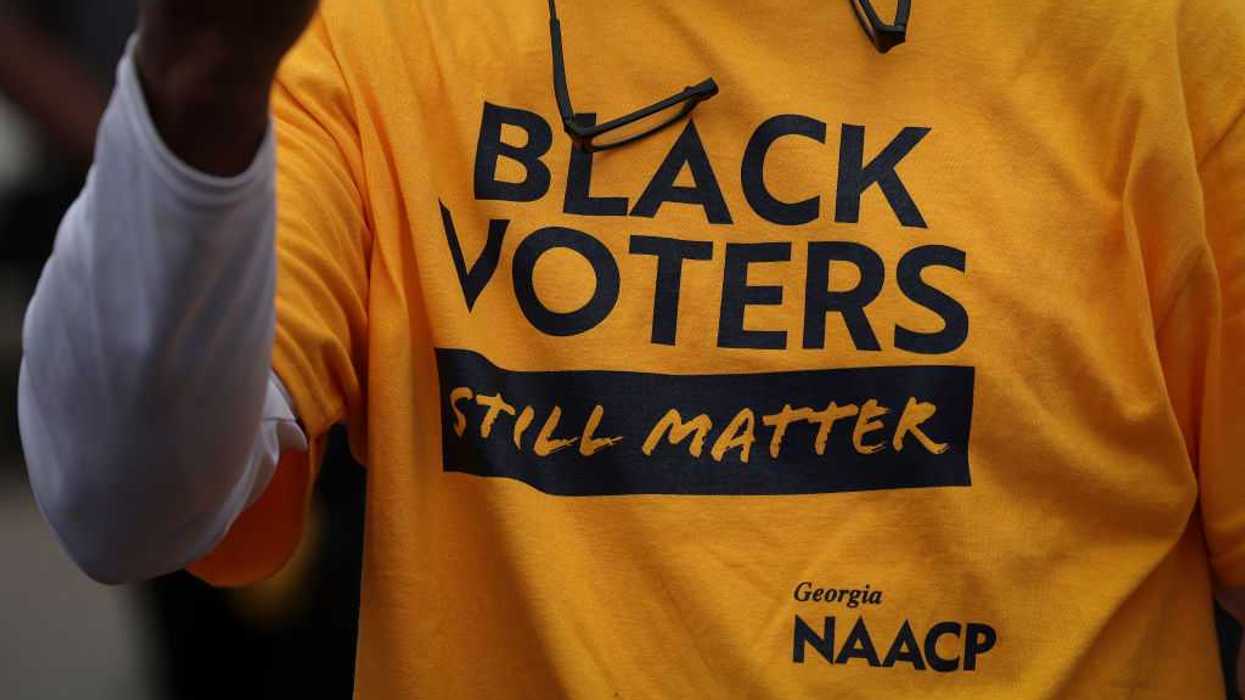
Black voters do not all think alike, vote alike, or want the same things from government. No political party is entitled to our loyalty, and no candidate should treat our participation like something they can summon every two or four years and put back on the shelf afterward.
That is where I think our national conversation about democracy has to become more mature.
Democracy is not just a ballot.
Democracy is whether citizens can get information from their government. It is whether public officials explain the decisions they make. It is whether people have a meaningful opportunity to be heard before a decision is final instead of being invited to a town hall after everything has already been decided.
It is whether taxpayers can figure out where their money went.
It is whether government measures what works, admits what does not, and fixes it.
None of that belongs to one political party. Republican communities need government that functions. Democratic communities need governments that function. Rural Mississippi needs it. Washington, D.C., needs it. Small towns need it. Big cities need it.
Government competence should not be a partisan idea.
I will continue telling people to vote. I will continue believing in the power of civic participation. And I will continue honoring the people who fought so that a Black man born and raised in Mississippi could walk into a polling place and cast a ballot without having to count jellybeans in a jar, recite a section of the Constitution, or wonder whether exercising that right might cost him his job or his life. That history matters, and we should never minimize it.
But honoring that history also means expecting something from the democracy they fought to open to us.
Citizens have responsibilities in democracy. Government does, too.
So, when the next election comes around, come talk to Black voters. Ask for our votes. Make your case. Tell us what you believe and what you intend to do.
But understand something else.
Our citizenship did not begin when your campaign needed us, and it will not end when the polls close. If democracy only comes looking for Black folks when it needs turnout, we should not be surprised when people start asking whether democracy knows where we live the rest of the year. We do not need another election-year lecture. We need government that works when nobody is running for office.
Dr. Duvalier J. Malone is an author, political columnist, public policy and leadership scholar, and host of the Those Who Give a Damn podcast. A Mississippi native based in Washington, D.C., his work focuses on democracy, leadership, civic engagement, and the everyday impact of public policy on communities.






The President Invited Iran to Bomb My Home