




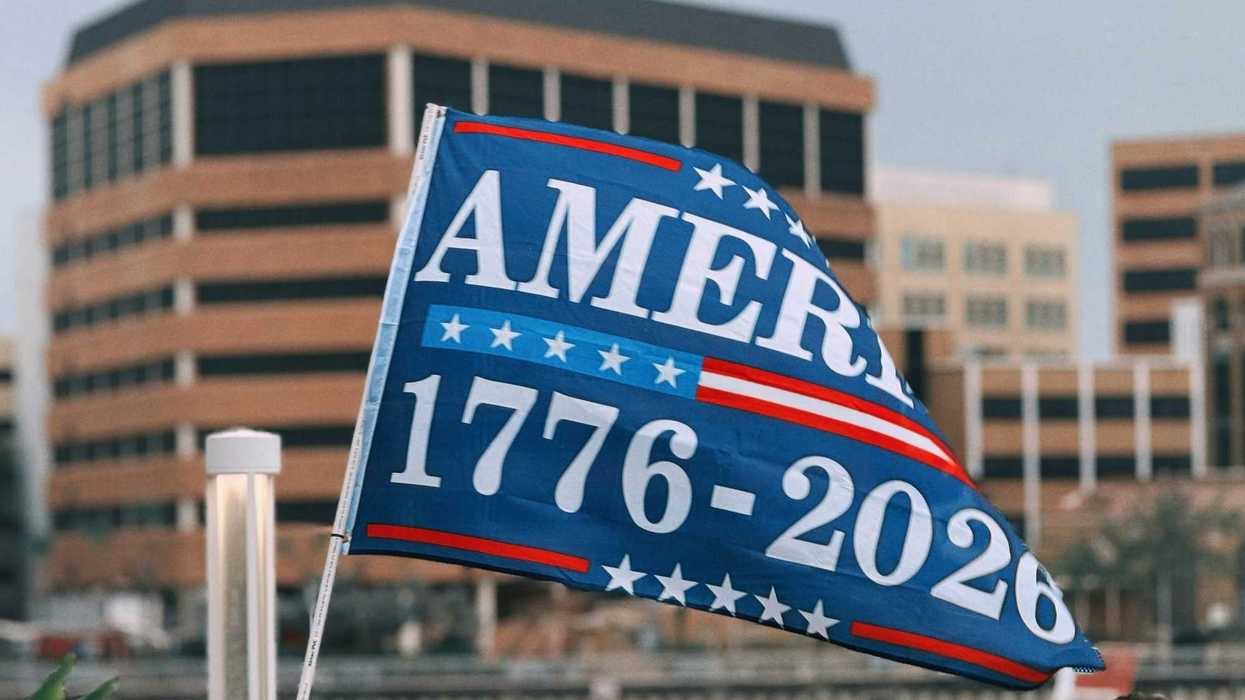
This year marks the 250th anniversary of our founders’ Declaration of Independence from Great Britain. But the constitutional democracy it enabled - designed to promote life, liberty, and the pursuit of happiness - is now threatened, not by a foreign adversary, but from within.
Persistent constitutional and statutory transgressions, coupled with the continued erosion of democratic norms that once safeguarded our institutions, have undermined the foundations of our democratic order. They have also shaken Americans’ confidence in its durability.
The 250th anniversary, meant to be a moment of reflection and celebration, now stands as a call to action in the spirit of the document it commemorates. If we act with the resolve this moment demands, our response to these threats, like the Declaration itself, will be genuine cause for celebration.
To be clear, these threats are not abstract, and our responsibilities are not hypothetical. We must ask ourselves plainly:
Can we remain silent when constitutional provisions and laws are repeatedly tested, and in some cases, clearly violated; when institutions designed to serve all Americans are hobbled or commandeered for personal or political ends; when false claims are systematically deployed to undermine the legitimacy of elections; when voting rights are burdened or votes diluted through redistricting for partisan political gain; when the press is bullied and attacked to undermine its credibility and stifle criticism?
Can we stand by while opposing views and candidates are delegitimized through baseless personal attacks; while judges are threatened or harassed in their personal lives because of a ruling; while actors, including elected officials, generate falsehoods on matters big and small with such regularity and audacity that they cripple the exchange of ideas, and normalize lying and misinformation in public life?
Like the grievances against the Crown in the Declaration, these conditions call us to action.
No one should answer this call more urgently than lawyers. They occupy a unique position in our constitutional democracy — one not shared by other citizens. The legal profession holds a near-exclusive, state‑sanctioned authority to represent parties and shape the issues presented to courts. As such, they play a singular role in enabling access to the judiciary, where individual rights can be adjudicated and constitutional questions resolved. The courts cannot act without a case or controversy, and it is lawyers who must bring those cases forward for judicial review. And, they have done so.
Hundreds of lawsuits have been filed challenging the current administration's actions across a wide range of topics, including immigration, civil liberties, citizenship, federal employment, taxes, and spending. Courts have issued many preliminary and final rulings, often halting or staying illegal policies and actions. We can be proud of the indispensable role that lawyers have played in enforcing democratic rights through the courts and challenging laws and actions that undermine democratic principles or threaten our democratic system.
But while court orders addressing unconstitutional or illegal conduct can reinforce the rule of law and create space for civil society to operate, they are not sufficient on their own to meet the threats facing our democracy. It is citizens, including lawyers in their role as citizens (citizen‑lawyers), who must fill that space with their voices, their actions, and, most importantly, their vote - especially in the face of undemocratic actions that fall within the bounds of the law and therefore outside the reach of the courts.
Conduct that violates democratic norms and principles cannot go unanswered. It is important to identify and condemn undemocratic actions in traditional and social media. But full-throated opposition often requires us to leave our comfort zone. A protest gains power when it is in person, in public, and in concert with fellow citizens. This is the collective voice represented by the Declaration.
As important as it is, we must do more than vote: we must defend the right of all citizens to vote and encourage participation. We need to work together to remove barriers and disincentives to voting and, where barriers remain, organize paths around them. Volunteering at the polls and educating voters about their rights and responsibilities strengthens the voting process and increases participation. High participation fortifies elections.
Unconstitutional, illegal, or undemocratic conduct is often bolstered by denials or misrepresentations that twist facts, misstate the law, or invoke a contrived emergency. Citizen-lawyers can be a force‑multiplier in cutting through the fog of disinformation, especially on matters of law; this may be their most important role outside the courtroom. A lawyer’s lifeblood is separating the proven from the unproven, the relevant from the irrelevant, and fact from opinion. Uncovering the truth and exposing disinformation will clarify what’s at stake and strengthen public opposition to undemocratic and illegal policies.
The Declaration’s 250th anniversary calls all of us to exhibit the same courage that animated its signing. Lawyers and citizens working together must confront constitutional illegality, expose disinformation, and defend the vote. Given their role as bridges between citizens and the courts and their training in the pursuit of truth, lawyers, in their dual capacities, must lead when our democracy is under attack. Moving forward with resolve, we will realize the promise of the Declaration of Independence.
This series from Lawyers Defending American Democracy connects the words of the Declaration of Independence and the Constitution to current events that threaten democracy and the justice system. Each piece highlights the unique responsibility lawyers carry—through their oath, professional obligations, and roles in their communities—to help the public understand what’s at risk and to speak out when democratic principles are under threat. LDAD’s call to action is straightforward: as the Founders once did, we must recognize threats to constitutional values, demand accountability, and act to defend them.
Michael Curry is a University of Texas Law School graduate who served for over a decade as an adjunct professor. Retired, he is a volunteer with Lawyers Defending American Democracy, serving as the Meeting the Moment co-lead for Texas.








The President Invited Iran to Bomb My Home