Skip to content
Search

Latest Stories

Follow Us:
Top Stories

Federal Court Blocks Trump’s ‘Loyalty Question’ on Civil Service Job Applications

News

Donald Trump

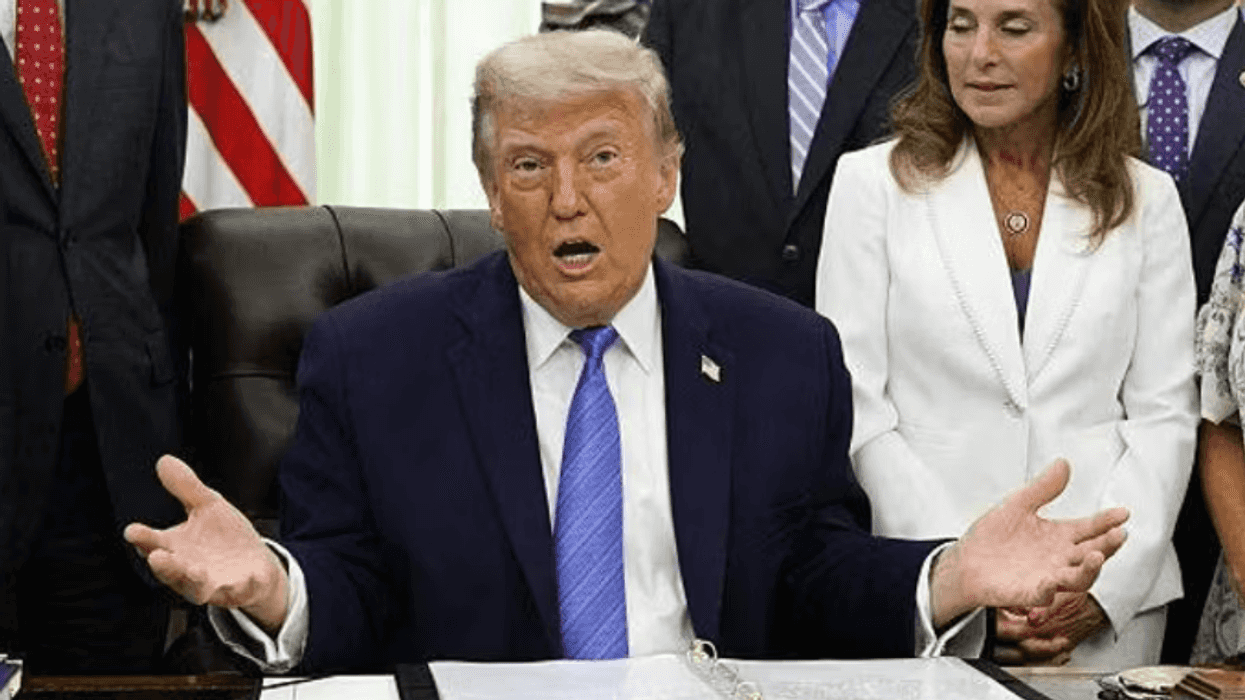
President Donald Trump speaks before signing the Secure America Act in the Oval Office of the White House on June 10, 2026 in Washington, DC.

(Photo by Alex Wong/Getty Images)

A court’s decision to block the Trump administration from including a “loyalty question” on federal job applications was a win not only for the nonpartisan civil service, but also for the communities public employees serve, said one labor leader whose union was among the plaintiffs in the case against the Office of Personnel Management.

Patrick Moran, president of the American Federation of State, County, and Municipal Employees (AFSCME) union, said Friday that the loyalty questions the OPM placed on job applications for public servants were a “blatantly illegal attempt to hire partisan cronies who would endanger our communities by putting politics before people, rather than dedicated, qualified public service workers.”


The question was added to applications in response to one of President Donald Trump’s first executive orders of his second term, titled “Reforming the Federal Hiring Process and Restoring Merit to Government Service.” The OPM was directed to develop a “Federal Hiring Plan that brings to the Federal workforce only highly skilled Americans dedicated to the furtherance of American ideals, values, and interests.”

Several essay questions were added to job applications for the civil service as a result, including one that asked: “How would you help advance the president’s executive orders and policy priorities in this role? Identify one or two relevant executive orders or policy initiatives that are significant to you, and explain how you would help implement them if hired.”

Over 70,000 job postings have included the question, and the plaintiffs in the case—including AFSCME, the American Federation of Government Employees (AFGE), and the National Association of Government Employees (NAGE), argued that its inclusion compelled applicants to make political statements and chilled the speech of those who may not agree with Trump’s executive orders.

The US District Court for the District of Massachusetts found that continuing to include the question would cause “irreparable harm” to workers applying for government jobs.

Judge George A. O’Toole Jr. said the plaintiffs’ arguments that the OPM had violated applicants’ First Amendment rights and the Administrative Procedure Act were likely to succeed in court.

A sworn declaration from an AFGE member figured prominently in the case. The employee said she “was afraid” that answering the loyalty question with an honest response about her personal views on Trump’s executive orders would “hurt her application.”

O’Toole wrote that the question’s plain language “calls for the applicant’s personal views on a political topic, and directly links that personal view to the duties of the desired civil service job.”

Everett Kelley, AFGE national president, said that “requiring federal job applicants to answer politically motivated questions goes against the very nature of the nonpartisan civil service, and we are pleased the judge has put an immediate stop to the administration’s loyalty questions. Federal employees should be hired based solely on their ability to perform the job—not their allegiance to any particular administration.”

O’Toole denied the unions’ request for a preliminary injunction blocking the government from incorporating answers that applicants have already provided into hiring decisions.

Still, Skye Perryman, president and CEO of Democracy Forward, which represented the plaintiffs, said the ruling “protects the Constitution, the civil service, and the people who depend on a professional, nonpartisan federal workforce.”

“For more than a century, civil servants have been hired based on their merits, not based on allegiance to a partisan political agenda,” said Perryman. “Today’s decision—stopping the Trump-Vance administration’s required loyalty question for public servants—reaffirms the importance of a nonpartisan civilian workforce that serves the American people.”

Federal Court Blocks Trump’s ‘Loyalty Question’ on Civil Service Job Applications was first published by Common Dreams and is republished with permission.

Julia Conley is a senior editor and staff writer for Common Dreams.

Read More

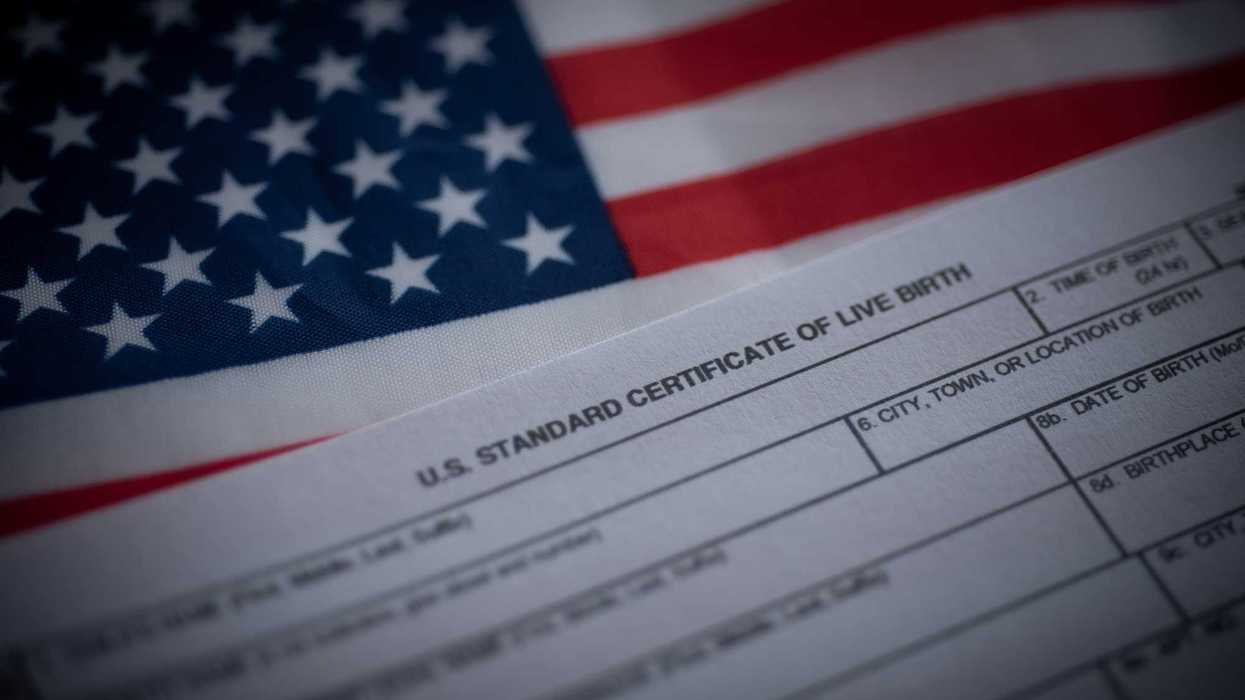
​U.S. standard certificate of live birth application form next to flag of USA.

U.S. standard certificate of live birth application form next to flag of USA.

Getty Images

Birthright Citizenship Explained: History, SCOTUS Rulings & Executive Orders

Birthright citizenship has been part of American law for more than 150 years. As the American public continues to see challenges against its constitutionality, brought on by the Trump administration, it is important to remember why.

After the Civil War, Congress adopted the 14th Amendment in 1868 to overturn Dred Scott v. Sandford (1857), which had denied citizenship to Black Americans, dampening their federal protections. While the 13th amendment had abolished slavery a few years earlier, Free Black Americans were considered noncitizens by many, and thus had to work around a separate set of laws, meaning they could never be fully integrated as members of American society. In response to this issue, the 14th Amendment declares that all persons born or naturalized in the United States, and subject to its jurisdiction, are citizens of the United States.

Keep ReadingShow less
Scales of justice
a golden scale with an eagle on top of it

A Real Test for “Lawfare” Must Protect Allies and Enemies Alike

“Lawfare” is becoming a word that ends arguments instead of clarifying them. When Donald Trump or his allies are prosecuted, many on the right call the case political. When the Trump administration investigates critics, many on the left call it retaliation or “score-settling.” Sometimes those accusations are justified. Sometimes they are partisan reflexes. A label that changes with the identity of the defendant is not a rule of law.

The hard cases are not the ones with a public order to punish an enemy. They are cases with mixed facts: a real investigative predicate, a politically active target, disputed timing, later changes in treatment, and no contemporaneous record the public can inspect. Those cases require something better than “trust the prosecutors” or “trust the accused.” They require an auditable standard.

Keep ReadingShow less
American Flag, Capitol building and the United States Constitution

American Flag, Capitol building and the United States Constitution

Getty Images

Lawyers Must Reaffirm Their Oath to Defend the Constitution

Every lawyer admitted to practice in the United States takes a formal oath to support the Constitution and faithfully discharge the duties of the profession. In recent years, bar associations and courts around the country have held voluntary oath reaffirmation ceremonies, inviting lawyers to publicly renew their commitments and reaffirm the profession's responsibility to uphold the rule of law.

Between us, we have taken the oath eight times - having been admitted to practice law in six jurisdictions, across five states, and both having organized oath reaffirmation ceremonies in our respective Virginia hometowns.

Keep ReadingShow less
Mail-in ballots sitting in trays.

Mail-in ballots sit in trays before being sorted at the Santa Clara County Registrar of Voters office in San Jose, California, on Oct. 13, 2020.

Justin Sullivan/Getty Images

U.S. Postal Service Failed to Properly Handle Some Ballots During This Year’s Primary Elections, Audit Finds

Some U.S. Postal Service facilities failed to properly handle ballots during this year’s primary elections, according to a new audit from the agency’s Office of Inspector General. Election experts say the findings call into question the agency’s ability to meet even greater demands for the November election that are under consideration by the U.S. Supreme Court.

The audit, which is dated Sept. 4 but has not been previously reported, found a lack of training for post office staff on how to properly and expeditiously handle mail ballots, deficiencies in how ballots were tracked and errors leading to delays, all of which risked ballots having incorrect postmarks or otherwise arriving late to election officials, which could lead to their rejection.

Keep ReadingShow less