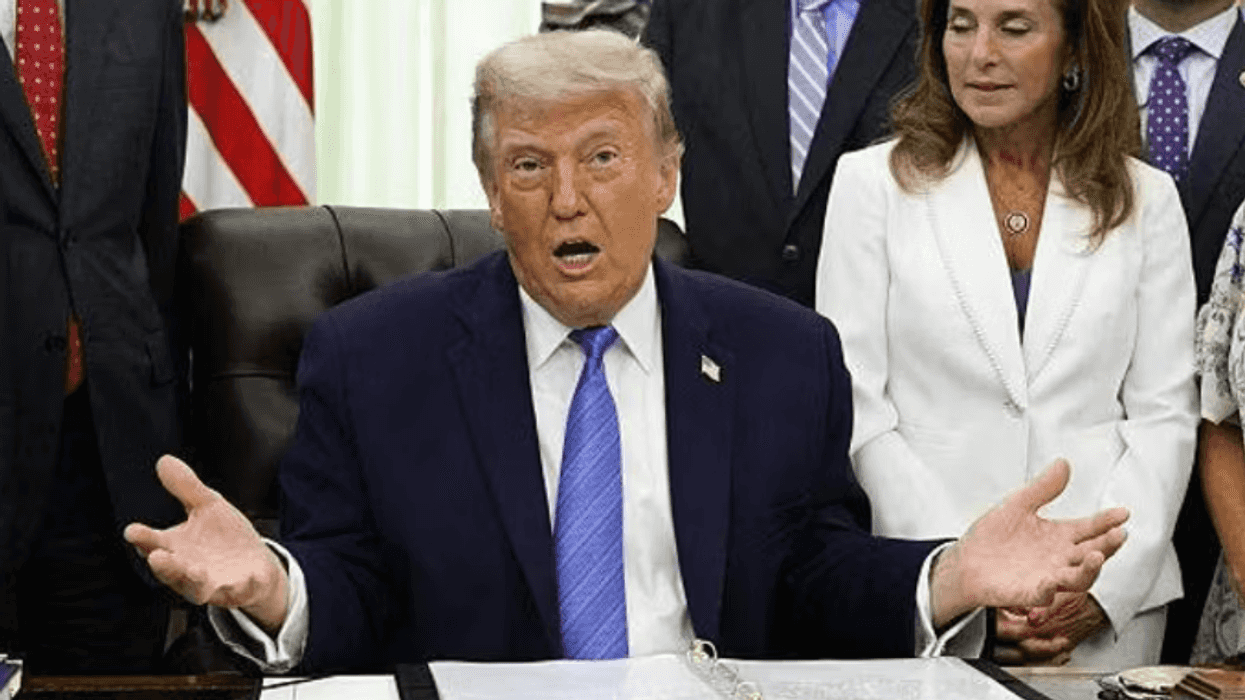



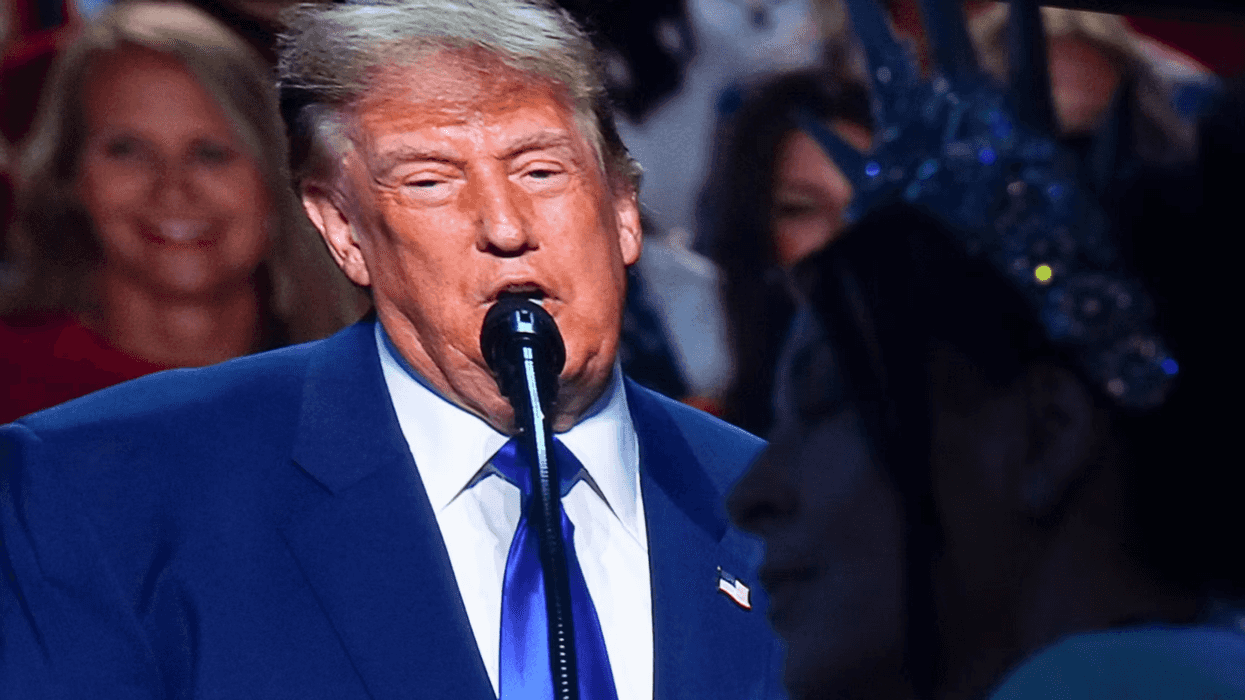

In his keynote address to the Republican midterm convention on Sept. 9, 2026, President Donald Trump promised that if Republicans retain control of Congress in November, he would authorize a US$5,000 payment to every American adult.
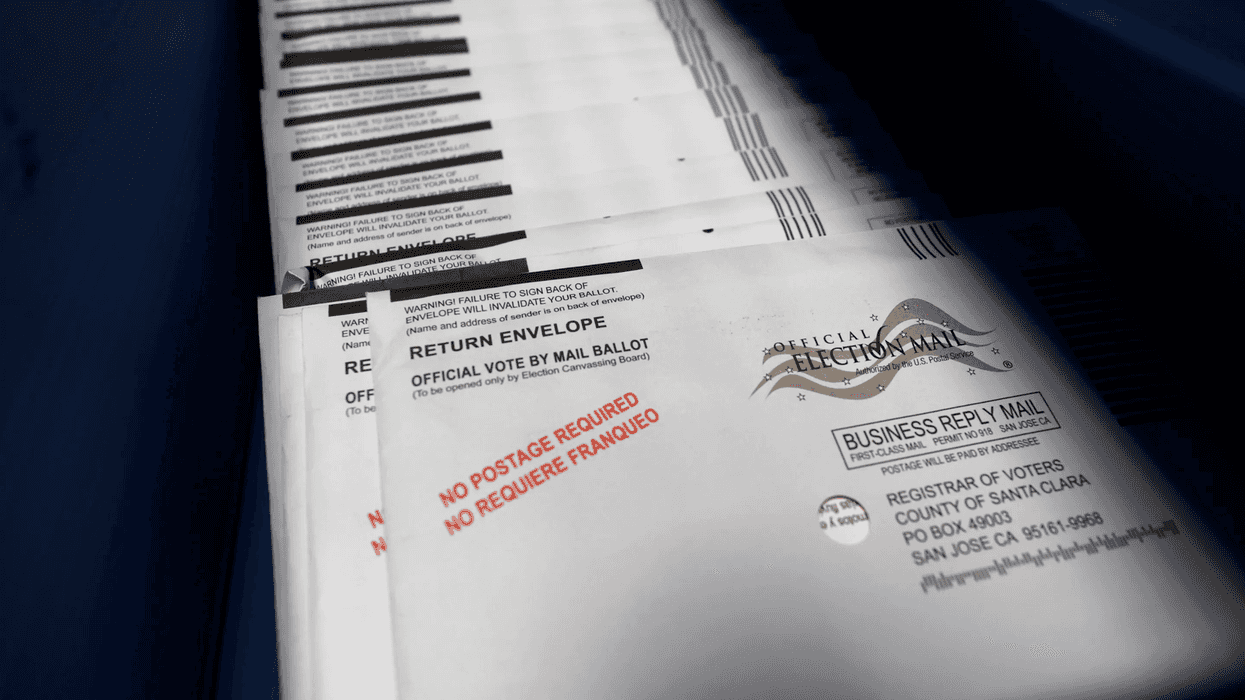
Trump’s offer seems to run afoul of federal laws, which make it a crime to pay for votes.
After Trump’s speech, political commentator Sam Stein posted on X: “trump openly bribing people to vote for republicans. $5k per person if republicans hold the house and the senate?”
Stein was not alone in referencing bribery. Lisa Gilbert, co-president of Public Citizen, a consumer advocacy group, issued the following statement after Trump’s speech: “Trump knows he can’t do this, and yet he’s attempting to bribe voters with the false promise of cash to help his party win an election.”
But as a scholar of political and legal rhetoric, I think it’s worth further examining what the president said and whether his promise violated any law.
An American tradition
Paying voters to support a particular candidate, or promising government jobs in exchange for votes, has a long history in the United States. It was a staple of machine politics in big cities starting in the late 19th century.
The political scholar Simeon Nichter argues that it would be better to describe these practices as examples of “turnout buying.” He notes that “observers in various U.S. cities have complained that some politicians use ‘street money’ – small, unreported cash payments ostensibly used for legal get-out-the-vote efforts such as canvassing and transporting voters – as direct payments for turnout.”
What Nichter describes has made a comeback in our era.
Recall Elon Musk’s effort to ensure a Republican victory in a 2025 state Supreme Court election in Wisconsin. He spent millions in that effort and, as The Associated Press reported, offered “$1 million to people who voted in the Supreme Court election” to encourage them to vote.
In July 2026, the Wisconsin Elections Commission found enough evidence to refer citizen complaints about Musk’s behavior to a district attorney, “which can choose,” as the AP notes, “to bring criminal charges over violating the state law against election bribery.”
A month later, a state prosecutor said he could not prove Musk’s guilt beyond a reasonable doubt and would not bring charges.
Federal law
Because state and federal laws differ, we can’t extrapolate from the Wisconsin decision to Trump’s $5,000 promise.
Two provisions of federal law relating to vote buying were adopted by Congress and became law in 1948. Both treated that practice as a form of election interference.
The first reads as follows: “Whoever makes or offers to make an expenditure to any person, either to vote or withhold his vote, or to vote for or against any candidate; and whoever solicits, accepts, or receives any such expenditure in consideration of his vote or the withholding of his vote; Shall be fined under this title or imprisoned … or both.”
The second prohibits offering government benefits “to any person as consideration, favor, or reward for any political activity or for the support of or opposition to any candidate or any political party in connection with any … election to any political office.”
Both provisions focus on the use of money or the promise of benefits to get individuals to vote in a particular way.
 President Trump arrives at the Republican convention in Dallas on Sept. 9, 2026. AP Photo/Julia Demaree Nikhinson
But Trump did not make his offer to any particular voter or set of voters. And, unlike Musk, he was acting as a public figure. The president’s promise was directed to all voters, not just to those who vote Republican.
John Day, a former federal prosecutor, compared Trump’s “dividend” to a pledge to deliver a tax break. “A promise to lower taxes also gives voters a financial reason to support a candidate, but that does not, by itself, make the promise a bribe,” Day told The New York Times.
Supreme Court precedent
In 1982, in Brown v. Hartlage, the Supreme Court weighed in on the legality of political figures promising financial benefits to voters. It found nothing wrong with the practice so long as the benefit was not offered as a quid pro quo to a particular voter.
Writing for a unanimous court, Justice William Brennan said that a political candidate “no less than any other person, has a First Amendment right to engage in the discussion of public issues and vigorously and tirelessly to advocate his own election and the election of other candidates.”
In his view, that right includes making statements about financial gains voters might receive if a candidate or a party wins an election, as long as they were “made openly and were subject to the criticism of his political opponent and to the scrutiny of the voters.” Such statements, Brennan added, were different from “corrupting private agreements and solicitations historically recognized as unprotected by the First Amendment.”
The Hartlage decision remains the applicable precedent today.
A year after the court’s decision, however, legal scholars Peter Aranson and Kenneth Shepsle argued that the Supreme Court decision countered several lower court decisions that had treated promises of the kind the high court approved “as analogous to bribes, which would turn the citizenry’s attention away from ‘proper’ public policy issues.”
Trump may view the question of whether Republicans retain control of Congress as just such an issue.
Beyond legality
Whatever Trump’s view, commentators have observed that in Trump’s world, relationships are transactional. It is the deal that counts, not the values it promotes or undermines. So, the importance of Trump’s cash offer goes beyond the legal question of whether it is bribery, vote buying or a legitimate political promise.
It’s worth focusing attention on the virtues and vices of the transactional approach to politics, what it does to the character of U.S. political life and to the way Americans see the world.
One of Trump’s critics, the former presidential speechwriter Peter Wehner, describes what he calls “the great civic danger posed by Donald Trump” this way: “that the habits of his heart become the habits of our hearts: that his code of conduct becomes ours.”
Whether or not he is right, Wehner points Americans to a domain beyond law as the right place to assess the president’s promise of a “Trump Dividend.”
How Anti-Bribery Laws Apply to Trump’s Promise of $5,000 Payments if Republicans Keep Control of Congress was originally published by The Conversation and is republished with permission.