
Skip to content
Search

Latest Stories

Top Stories

Trump’s obsessions help bury GOP chances

Opinion

US President Donald Trump

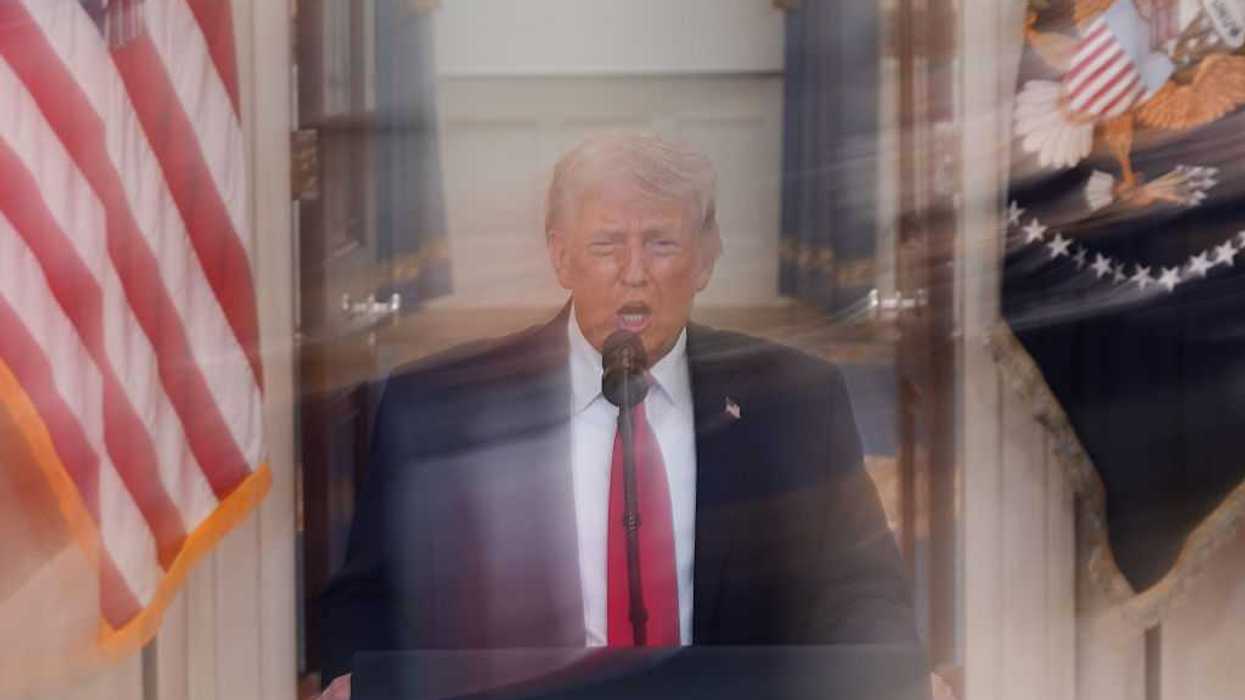
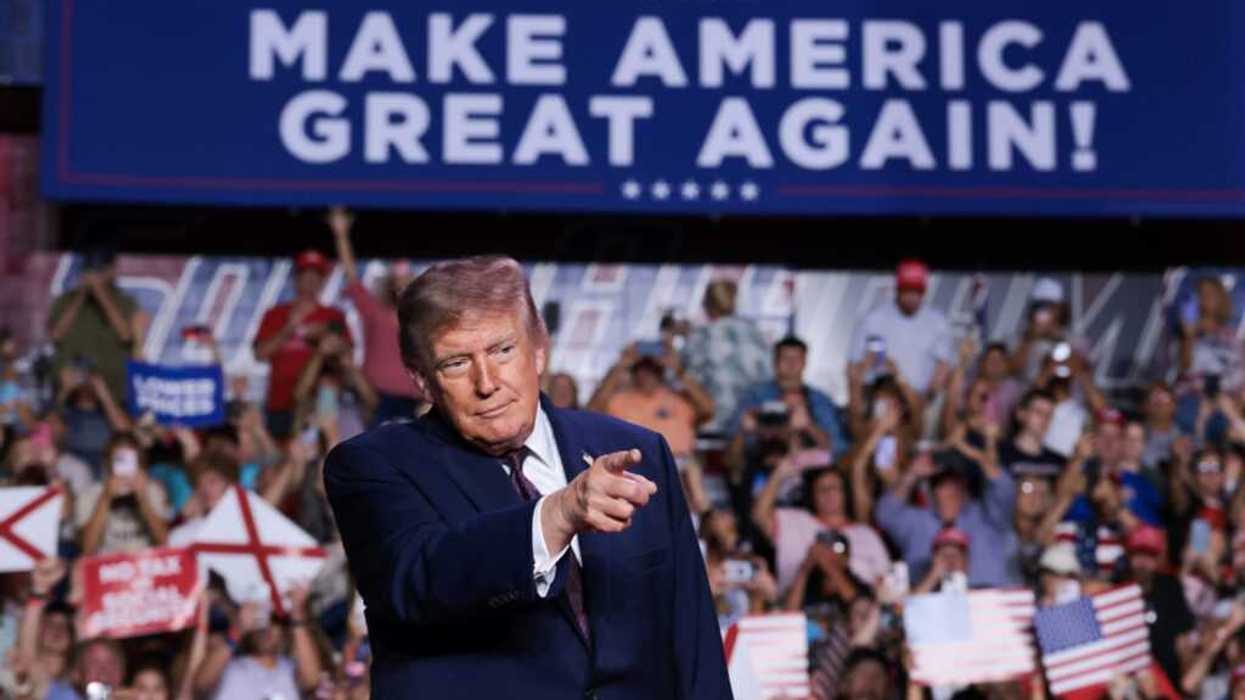
US President Donald Trump arrives onstage for a campaign rally in the Mitchell Center at the University of South Alabama on Oct. 2, 2026, in Mobile, Alabama.

(Anna Moneymaker/Getty Images/TCA)

Maine Sen. Susan Collins is facing one of the toughest reelection battles of her lifetime. And at Tuesday night’s debate, she was clearly on the defensive.

This race should not have been this competitive. Collins has held this seat for five terms. And while Maine has voted for the Democrat in every presidential election since 1992, it still has a fierce independent streak, and a healthy Republican base.


But this year is different. President Trump’s approval numbers are abysmal, his tariffs and his war in Iran have tanked our economy, and he seems focused on things that would actively turn voters off — like spending taxpayer dollars on propaganda ads, vanity construction projects, fighting with journalists, and punishing his enemies.

And all the while, he’s telling voters that their affordability concerns are a hoax. It’s hard to run on two more years of…this.

In Maine, Trump’s trade war with bordering Canada is a particular pain point, evidenced by how badly Collins tried to distance herself from the tariffs during the debate.

She boasted that she fought to keep a few important items off of Trump’s tariff list, including concrete, pulp, and road salt.

Her Democratic opponent, Troy Jackson, a longtime Maine legislator, delivered a response that should become a mantra for every Dem running this cycle:

“We can’t eat road salt.”

It was a simple and straightforward acknowledgment that most Americans are struggling to pay their bills, put gas in their cars, put food on the table, and meanwhile Trump’s tariffs are making all of that harder. Collins saving the road salt doesn’t help with any of it.

But it’s more than road salt…

So much of what Trump and Republicans are offering in this 11th hour of desperation won’t solve Americans’ affordability crisis either.

Trump’s obsession with building monuments to himself won’t help a farmer in Iowa put diesel in his tractor. We can’t eat ballrooms.

Trump’s cheerleading for AI while the rest of the world panics about the power-hungry tech bros leading the charge won’t put money in the pocket of a single mom working three jobs in Trenton, New Jersey. We can’t eat data centers.

Trump’s endless war and its global economic destruction isn’t helping the North Carolina apple farmer who lost it all in Hurricane Helene. We can’t eat Iran strikes.

Trump’s fixation with punishing political enemies, and Republican lawmakers’ preening efforts to oblige him in Congress, won’t help the laid-off auto worker in Pontiac, Michigan. We can’t eat Jack Smith hearings.

Trump’s constant grifts, self-dealing, and his family’s efforts to line their own pockets through crypto and billion-dollar Pentagon contracts aren’t helping the family in Ames, Iowa struggling to pay their cancer treatment bills. We can’t eat corruption.

Trump’s attacks on journalists, threats to sue over coverage he doesn’t like, and attempts at turning the press into his personal Pravda won’t convince the soccer mom in Bakersfield, California that $5 a gallon gas is somehow affordable. We can’t eat censorship.

Trump’s obsession with baseless election fraud claims and threats to rig or militarize our elections won’t help the recent college grad who’s sent out 300 resumes but can’t get a job. We can’t eat paranoia.

Trump’s preoccupation with authoritarian strongmen like Russia’s Vladimir Putin, China’s Xi Jinping, and North Korea’s Kim Jong Un is a slap in the face of a Cuban refugee trying to make a life for his family in Miami. We can’t eat jealousy.

Running the country in service of one guy’s megalomania hasn’t made America great again, and it hasn’t made life better for Americans.

We can’t eat Trump.

S.E. Cupp is the host of "S.E. Cupp Unfiltered" on CNN.


Read More

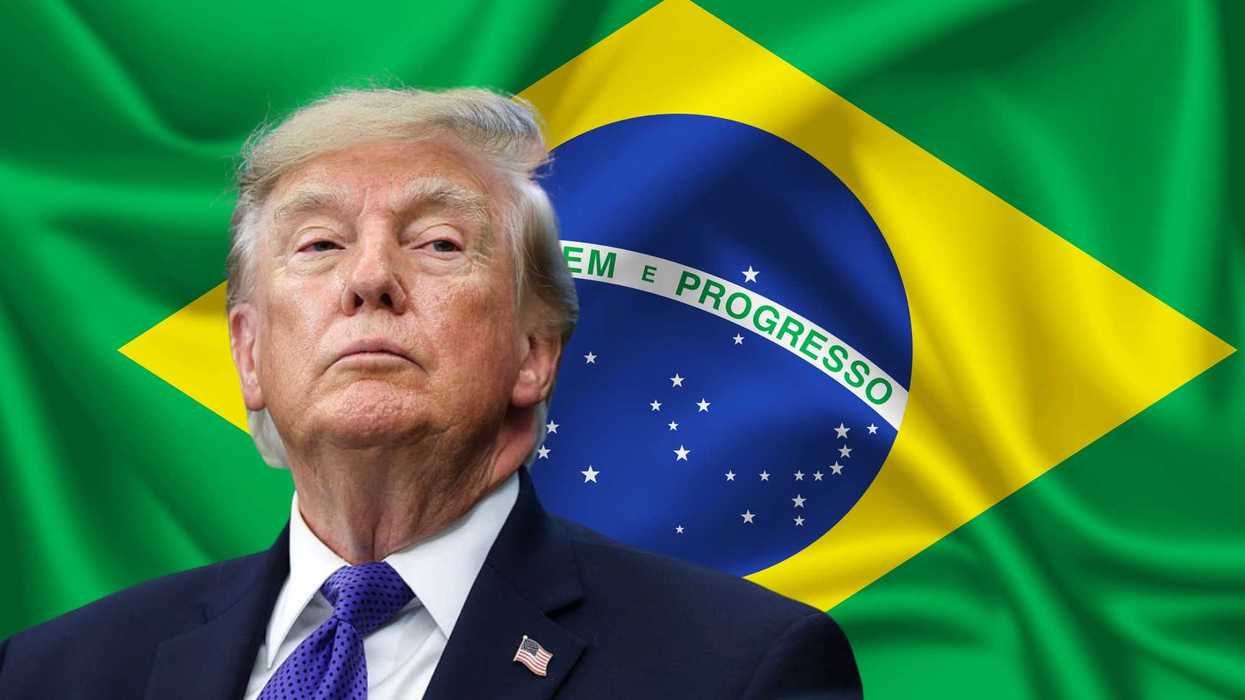
Donald Trump with Brazil flag

Donald Trump with Brazil flag

AI generated with Getty Image

Trump Cannot Cry “Election Interference” in the US While Meddling in Brazil

Hugo Balta is currently traveling through Brazil, reporting on democracy, civic engagement, and the political dynamics shaping the South American country at a moment that offers urgent lessons for the United States.

SÃO PAULO—For years, the political mainstream in Washington has treated the sanctity of ballot boxes as an exceptional American virtue under siege from malicious foreign actors. Yet, look beyond the equator, and that high-minded rhetoric instantly dissolves into a dangerous hypocrisy. You cannot self-righteously decry the subversion of domestic voting systems while simultaneously pulling the geopolitical levers to distort someone else’s.

Keep ReadingShow less
Capitol building
white concrete building during daytime

Congress Broke the Constitutional Order — And Now They Want Voters to Forget

How can leaders who broke the constitutional order, ignored their oath, weakened rights, and harmed the people now ask Americans to forget — and reward them with reelection? The question is not abstract — it goes to the heart of what the Constitution demands from those who swear an oath to uphold it.

The constitutional order is the framework that protects the Republic: three branches, checks and balances, oversight, limits on executive power, and the oath every member of Congress swears — to support and defend the Constitution of the United States. Yet in recent years, Congress has allowed that order to erode. Oversight collapsed. Guardrails bent. Silence replaced accountability. Loyalty to a president replaced loyalty to the Constitution.

Keep ReadingShow less
 U.S. President Donald Trump speaks from the Cross Hall of the White House on April 1, 2026 in Washington, DC.

U.S. President Donald Trump speaks from the Cross Hall of the White House on April 1, 2026 in Washington, DC.

Pool/Getty Images

How Presidential Primetime Addresses Shape Public Trust in Democratic Institutions

A question still being studied is the effects on public trust when the head of the Executive casts doubt on the institutions that run elections, enforce laws, and decide legal disputes. The President of the United States is arguably the most powerful man in the world. He is the commander in chief of a nation #1 in nominal gross domestic product as well as #1 in military power, budget, and spending as of 2026. The actions he takes spew ripple effects across the world and follow many generations. A way you can measure the executive's power can also be measured in how much influence his speeches have on the markets, opinions of the masses, news outlets, lawmakers, social media reactions, etc. His framing of an issue can shape the next day’s political conversation.

These conversations become extremely dangerous/consequential when discussing a principle as embedded in our country as Democracy. In his July primetime speech, Trump continued to pedal the claims about election security and argued for stricter voting rules. He continued to portray the country as facing a moment of corruption and uncertainty, followed by presenting himself as the one prepared to restore order. The address continued with repeated claims about his loss in the 2020 election that have not been supported by the evidence compiled over years of investigation by many parties. Professional reviews, audits, and courts have yet to find significant evidence of foul play substantial enough to influence the outcome of that election.

Keep ReadingShow less
unrecognizable businessman giving speech to professional audience

Brain science explains why voters reward charisma over results — and why the leaders who "fix" the most get credit for the least. A behavioral look at elections.

alvaro gonzalez/Getty Images

The Résumé Should Outvote the Smile

There's an old joke about a couple who finally solved years of arguing over decisions. "Since you're the man of the house," the wife said, "you handle the big things -- our stance on foreign wars, who we send to the Senate. I'll take care of the small stuff: groceries, the mortgage, where we live, what we eat." The husband agreed happily, certain he had won the better half of the deal. A few years later he realized the trade had gone entirely the other way. He held forth on geopolitics at dinner parties while his wife quietly ran every detail that actually touched his life: what he ate, where he lived, how his money was spent. What looked like ultimate authority was, in practice, near-total abdication over the things that shaped his days.

Voters make the same trade, and pay for it the same way. We keep hiring leaders for the qualities we would want in a spouse -- warmth, charm, a commanding voice, the sense that they see us -- instead of the qualities we would want in a mechanic: someone who can find what is broken and fix it before the whole system fails. We evaluate candidates the way we choose intimate partners, not the way we hire people to run complex, high-stakes systems.

Keep ReadingShow less