


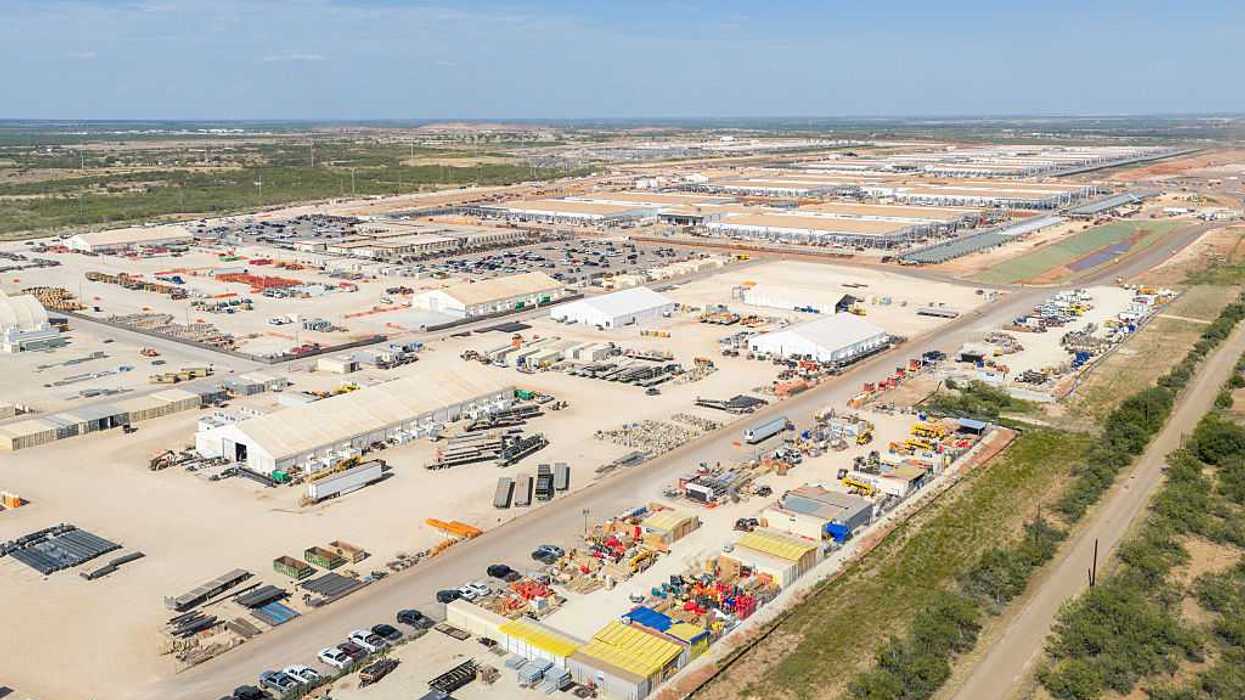

Picture a family living on a quiet street in an idyllic small town. Then a data center moves in next door. Trees are knocked down for a sprawling industrial campus, an enormous windowless building rises, and a maddening hum continues day and night. The family closes its windows, abandons the backyard, and struggles to sleep. Open space disappears, electric bills rise, and the company announces plans to expand—all in the name of jobs, tax revenue, and so-called progress.
While the family is fictional, its experience is not. Across the country, communities are confronting noise, rising electricity demand, water consumption, lost open space, and data centers approved with little public discussion. These costs raise a question the technology industry would rather avoid: Are the promised benefits of the artificial-intelligence boom worth what communities are being asked to sacrifice?
The Sales Pitch Hides True Costs
President Trump shows little patience for such questions. Communities rejecting data centers are “making a mistake,” he recently declared. He claims these facilities create “tremendous amounts of jobs and money” without burdening the electrical grid because they are building their own power plants.
Once we get past the industry PR, the reality is less reassuring. Some data centers are developing their own power sources, but many will continue drawing electricity from the grid. Construction jobs can be substantial but short-lived, since the facilities require relatively few permanent workers. The benefits may spread across the economy, but higher electricity demand, water use, and noise are concentrated where the centers are built.
Trump is rehashing the technology industry’s sales pitch. America must build these centers to win the AI race with China. Economic growth, scientific breakthroughs, and greater national security will supposedly follow. These predictions are treated as certainties, while rising utility bills, depleted water supplies, and damaged neighborhoods are brushed aside as obstacles to progress. AI is inevitable, we are told. The only question is how fast we can build the infrastructure to support it.
The numbers show what that construction demands. Data centers consumed about 4.4 percent of all U.S. electricity in 2023. Lawrence Berkeley National Laboratory projects that their share could reach nearly 12 percent by 2030—and possibly more than 15 percent under a high-growth scenario. Large facilities can also consume millions of gallons of water a day, forcing communities to expand water-treatment plants, power lines, and generating capacity.
What do communities receive in return? Data centers can produce considerable tax revenue, although exemptions and incentives often reduce what communities collect. They also create jobs, but fewer than promoters sometimes imply. A recent Brookings study found that a typical county gaining its first large data center added roughly 100 to 200 jobs over the following decade. That is not nothing. But neither is it the employment bonanza suggested by announcements touting multibillion-dollar investments.
Data centers do provide public benefits. They store files, run online services, and provide the computing power used in scientific research, medical advances, and other potentially valuable work. The question is one of proportion: How much electricity, water, land, public subsidies, and peace and quiet should communities surrender for benefits that remain difficult to measure and may flow primarily to distant companies and investors?
Communities Push Back
Communities are beginning to rise up in opposition. Resistance has spread across red and blue states, forcing politicians who once welcomed nearly all technology investment to reconsider. Texas Gov. Greg Abbott, a Republican, says the industry “dug its own grave” by failing to win public support. Pennsylvania Gov. Josh Shapiro and New York Gov. Kathy Hochul, both Democrats, have also responded. Shapiro imposed new transparency and environmental requirements, while Hochul ordered a one-year moratorium on new hyperscale facilities.
The industry and its allies portray this backlash as NIMBYism—the selfish resistance of people who want modern technology without accepting any inconvenience. Some opposition undoubtedly fits that description. But the label also allows corporations and officials to evade the larger question. Residents are not necessarily rejecting AI. They are asking why their communities should absorb higher utility costs, noise, and water demands without reliable information, enforceable protections, or a meaningful vote on whether a project proceeds.
Even the Trump administration’s Ratepayer Protection Pledge acknowledges the risk that households could end up paying for new power plants and transmission lines. Major technology companies have promised to obtain the power they need and cover the infrastructure costs associated with their facilities. But voluntary promises are no substitute for enforceable law.
Congress Must Lead
Congress should lead the way. The administration has thrown its weight behind the industry, treating rapid construction as a national imperative while largely accepting its claims and methods. Congress should prevent companies from shifting infrastructure costs onto ratepayers. It should also require companies to disclose how much electricity and water their facilities will use, what tax benefits they will receive, and how they will limit noise and pollution.
Government at every level should strengthen the public’s voice. Residents should receive advance notice before subsidies, zoning changes, or permits are approved. Independent impact studies—paid for by developers but conducted outside their control—should be available before public hearings. Communities should also be able to negotiate enforceable agreements covering noise, water use, tax revenue, and compensation for measurable harm.
States and localities should retain authority over siting and land use, but participation must occur before a project becomes a fait accompli. The burden of proof should rest with companies seeking to transform a community, not with residents asked to explain why they value affordable electricity, clean water, open space, and a good night’s sleep.
The fictional family we met at the beginning is not standing in the way of progress. It is asking for a voice in deciding what progress means and how much it should sacrifice in its name. That voice must come before the trees are cleared, subsidies granted, and machinery switched on—not after the project becomes irreversible.
Data centers may be necessary to America’s future. But necessity does not excuse excess, secrecy, or shifting private costs onto the public. The families paying the bills and living beside these facilities should have a real say before they are built. Communities should help shape the technological future—not simply be told to live with it.
Robert Cropf is a professor emeritus of political science at Saint Louis University.