


Don’t look now, but we seem to have a moral panic on our hands.
The term moral panic, at least as a social science concept, is relatively modern. It was coined by Stanley Cohen in the 1972 book “Folk Devils and Moral Panics.” Moral panics emerge when large numbers of people start to freak out about something that doesn’t warrant the freak out.
When I was kid, there was a moral panic over Dungeons and Dragons, the role playing game. It was sparked by the tragic suicide of a gamer and quickly led to various Christian groups insisting, in the words of one Georgia pastor, that "the game is an occult tool that opens up young people to influence or possession by demons."
Moral panics are seductive to journalists. CBS News’ “60 Minutes” host Ed Bradley interviewed Gary Gygax, the creator of the game, in 1985, asking “If you found 12 kids in murder suicide with one connecting factor in each of them, wouldn’t you question it?”
Gygax responded, “I would certainly do it in a scientific manner, and this is as unscientific as you can get. It’s nothing but a witch hunt!”
Gygax was right, but it took a while for people to realize it.
History is full of similar episodes. Some were entirely silly — like the 1950s hysteria about comic books corrupting the youth. But often they take real concerns and legitimate issues and turbocharge them. The child-abduction panic of the late 1970s and early 1980s was sparked by some actual, horrific child abductions. The understandable fear among parents led to a kind of mass hysteria.
Moral panics form a bit like “perfect storms” with just the right conditions. But they differ in three ways. First, storms are easy to predict. Second, when you’re in a deluge, no one disputes that you’re in one. But when you’re in a moral panic, the people panicking can’t recognize it until it’s over — sort of like when Alexandria Ocasio-Cortez said the other week “Woke 1 was crazy.” She didn’t think so when she was fomenting Woke 1.
Which brings us to the third difference: Humans don’t know how to create hurricanes, but they do know how to create moral panics.
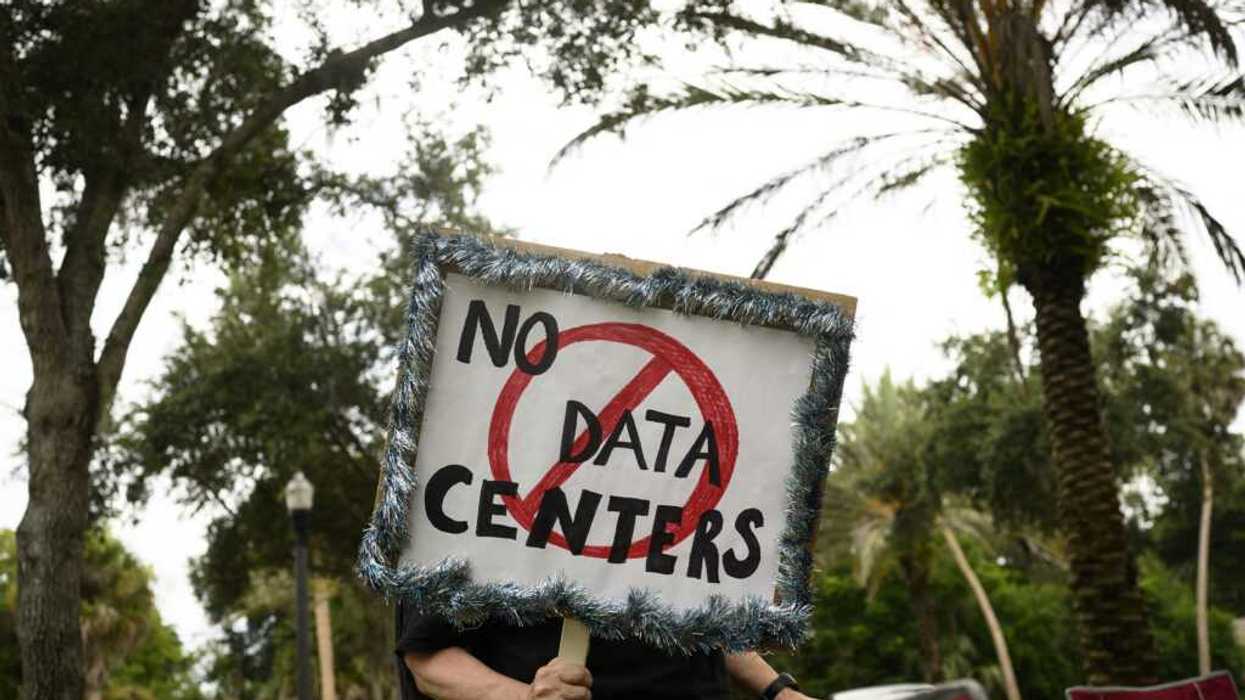
Consider the freakout over AI data centers, which are proliferating across the country. A recent poll found that more people would rather have a nuclear power plant or steel factory in their community than a data center. That’s bonkers.
Panic-peddlers are pushing even crazier stuff. Steve Bannon’s “War Room” is describing AI data centers as “weapons labs” to be used on Americans. His “tech correspondent” claims that data centers are like the embryonic “neurons of the Antichrist, that’s what we’re witnessing. The false messiah.” A Kentucky farmer who turned down a $26 million dollar offer for her property explained to CNN that part of her reasoning is that the vibrations from data centers“vibrate at a low frequency that can bring up cortisol levels.”
We shouldn’t rule out the possibility that this moral panic isn’t entirely homegrown. Fracking induced a similar freakout 15 years ago, and foreign governments played a role in fomenting it, hoping a moral panic would block the practice the way a similar one killed the nuclear industry for a generation. It would not shock me if we’re seeing something similar today.
Not all concerns about data centers are so crazy or even unreasonable. They do use a lot of water, though not nearly as much as some claim. They can cause electricity rates to go up. They’re ugly. And, if you’re freaking out about what AI will do to your job or to American society, taking it out on data centers makes a certain amount of sense.
Politicians, as a class, tend to indulge moral panics. Which is why it’s no surprise that Republicans and Democrats alike are racing to get on the “right” side of the issue.
Consider Texas Gov. Gregg Abbott, up for reelection this year. Texas has prided itself in being the most business-friendly environment possible, enticing Big Tech to flee California for the accommodating Lone Star State. Just last November, Abbot boasted that a $40 billion dollar investment by Google proved that “Texas is the epicenter of AI development, where companies can pair innovation with expanding energy.”
Now, Abbott is throwing Google and Big Tech under the bus. By failing to win over local communities, he told ABC’s Jonathan Karl, “ They basically dug their own grave for the problem that’s been caused for them.” He added, “That’s why they got the backlash they deserve.”
AI is coming. The only question is whether America should take the lead or let China. If your answer is “America,” then data centers are the price. If your answer is “China” then by all means keep freaking out.
___
Jonah Goldberg is editor-in-chief of The Dispatch and the host of The Remnant podcast. His Twitter handle is @JonahDispatch.











 Scenes from Favela Rocinha, Brazil - (R-L) Rows of brick homes, Hugo Balta on a motorcycle taxi, and steep, winding roadsHugo Balta