
Skip to content
Search

Latest Stories

Follow Us:
Top Stories

Trump will lose his war against the press

Opinion

Donald Trump, US President

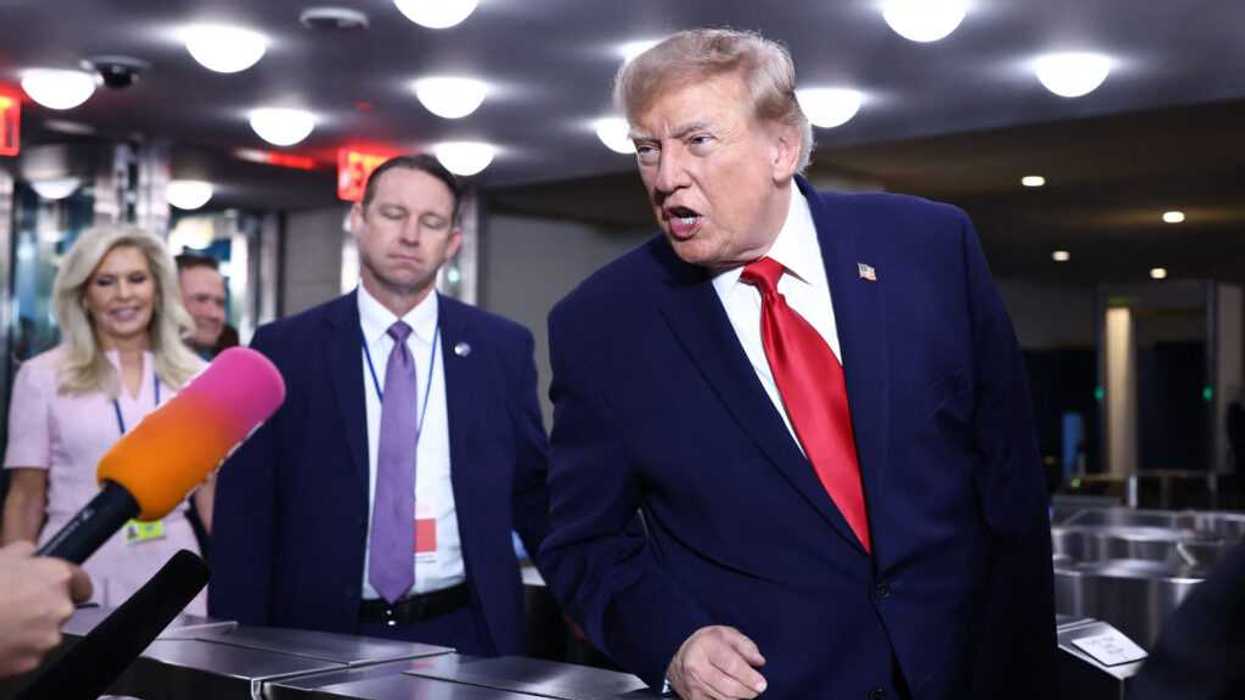
U.S. President Donald Trump speaks briefly to the press as he arrives during the 81st United Nations General Assembly at the United Nations Headquarters in New York, on Sept. 22, 2026.

(Charly Triballeau/AFP via Getty Images/TCA)

“To offend a strong man, tell him a lie. To offend a weak man, tell him the truth.”

That quote, often attributed to Marcus Aurelius, one of the great Stoics, perfectly encapsulates the very troubling and sad moment we’re in, and the very troubling and sad president we’re dealing with.


For all his bluster, Donald Trump is inarguably weak and small. His ego is easily bruised, his feelings are easily hurt. He’s been this way for a long time, and as Americans living in the Trump era, we’ve all come to see how deeply insecure, petty, and vengeful he can be.

His late-night social media rants lashing out at enemies both real and imagined; his impetuous and impolitic attacks on longtime allies who don’t roll over for him; his reckless primarying of his own party members who dare break from him, even if momentarily.

Hell, you could even say his very presidency is the result of an otherwise harmless roast by former President Barack Obama at the 2011 White House Correspondents Dinner that he took too personally.

But when things are going particularly badly for him, his skin is at its paper thinnest, and it shows.

Last week, Trump announced on social media that he was banning three news outlets — MS NOW, Politico, and CNN, where I work — from covering the White House. He hasn’t said why those particular outlets were targeted, giving the impression that this might not have been all that well thought out. Imagine that.

It does coincide, however, with Trump’s steadily sinking approval numbers, which just this week hit an abysmal record low, falling below 30% according to one poll.

Believe it or not, focusing on ballrooms and buildings, invading Greenland and Canada, suing political enemies and chasing crypto deals while we’re in an ill-advised war and most Americans are stretching to afford basic necessities, has not endeared him to voters.

It’s almost as if ignoring his key promises to voters — to lower inflation, to lower the cost of goods, to never get us into another war — has turned them off.

So, stuck in a bed of his own making with nowhere to go, he’s lashing out, this time at the press, simply for covering the bad decisions he’s made and their impact on voters.

But trying to punish or sideline the press will not change the fact that he and Republicans are in deep trouble. All it does is make him look brittle, desperate and weak.

It’s also a deeply disingenuous effort. Trump has justified his tantrum by saying the press is both “purposeful” and “fully coordinated” in reporting “fiction and lies.”

There’s a legal mechanism for the thing he’s talking about, and tellingly, he isn’t using it. Because, if true, what he’s describing is the textbook definition of actual malice, the legal bar used for defamation cases.

But he’s not suing the press, because this isn’t about the law, but rather his feelings. And it’s simply not our job to protect his feelings, or only publish news that makes him feel good. We’re not his parents or his kindergarten teachers.

He can throw all the fits he wants, and there’s no doubt his continual attacks on the press have had a chilling effect, but I know one thing: ultimately, the press will win this battle.

He may wish he were president of Russia or North Korea, where the free press doesn’t exist and state media tells only positive stories about Dear Leader, but here in America, the press is protected. Here, Americans want to live in a democracy, not a dictatorship. And here, we expect our political leaders to be able to take a metaphorical punch. Especially if the “punch” in question is simply the truth.

S.E. Cupp is the host of "S.E. Cupp Unfiltered" on CNN.

Read More

Illustration of a man and woman arguing

Arguments or debates, disputes or conflicts, verbal clashes. Angry men and women roar at each other

Getty Images

What If Polarization Is the Wrong Diagnosis?

I just listened to political scientist Lilliana Mason challenge one of the most familiar explanations of what is wrong with American politics.

We are constantly told that America suffers from polarization. Republicans and Democrats have moved too far apart. They distrust each other, increasingly regard one another as enemies, and have lost the ability to compromise. The prescribed remedies are familiar: more civility, more dialogue, less hostility, and a return to the political center.

Keep ReadingShow less
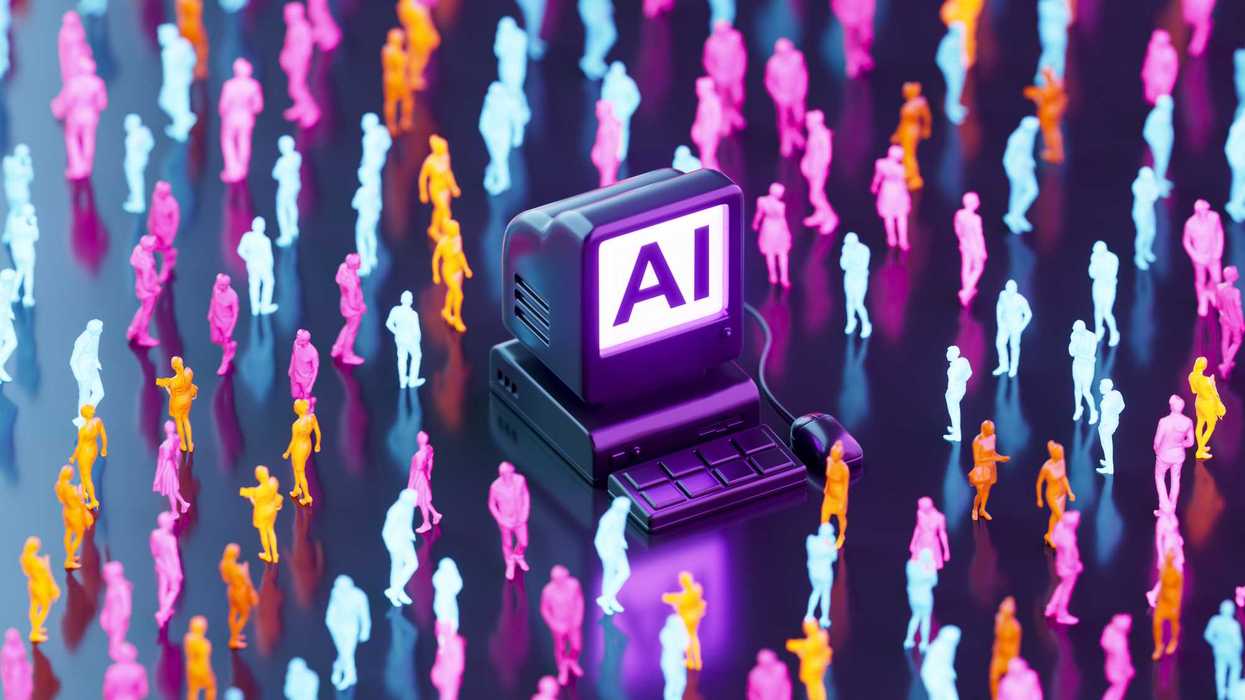
 Vintage Computer with AI Text on Screen and Neon Lighting, figures of people standing around it.

Calling AI “super” makes it sound omniscient. A faith leader coalition explains why the word “artificial” matters and what to do instead.

Royalty-free/Getty Images

Reject the Sand God. Call AI by Its True Name

President Trump recently signed an executive order telling federal agencies to replace the term "artificial intelligence" with "Super Intelligence." He said the word "artificial" makes the technology sound fake.

Many Americans already treat AI as a “super intelligence” that knows better and that they should confide in. Many already assign it the role of spiritual counsel, close confidante, or even romantic partner. In a Common Sense Media survey, one-third of teenagers claimed they had discussed serious personal matters with an AI instead of a person, and 31 percent said talking with an AI companion was as satisfying as talking with friends, or even more so. Bible Chat, an app that offers scripture-based advice and prayers, has been downloaded more than 30 million times.

Keep ReadingShow less
news video camera
black video camera
Photo by Matt C on Unsplash

When the Cameras Went Dark: What a Press Ban Reveals About American Journalism

When I came to the United States from India in 1982, I did not trust newspapers. Back home, everyone knew which party a paper favored before reading a line. American television felt different. My family watched Peter Jennings every evening, and later I found Larry King on CNN, who let his guests talk instead of telling viewers what to think. That habit of holding everyone to one standard has mostly faded.

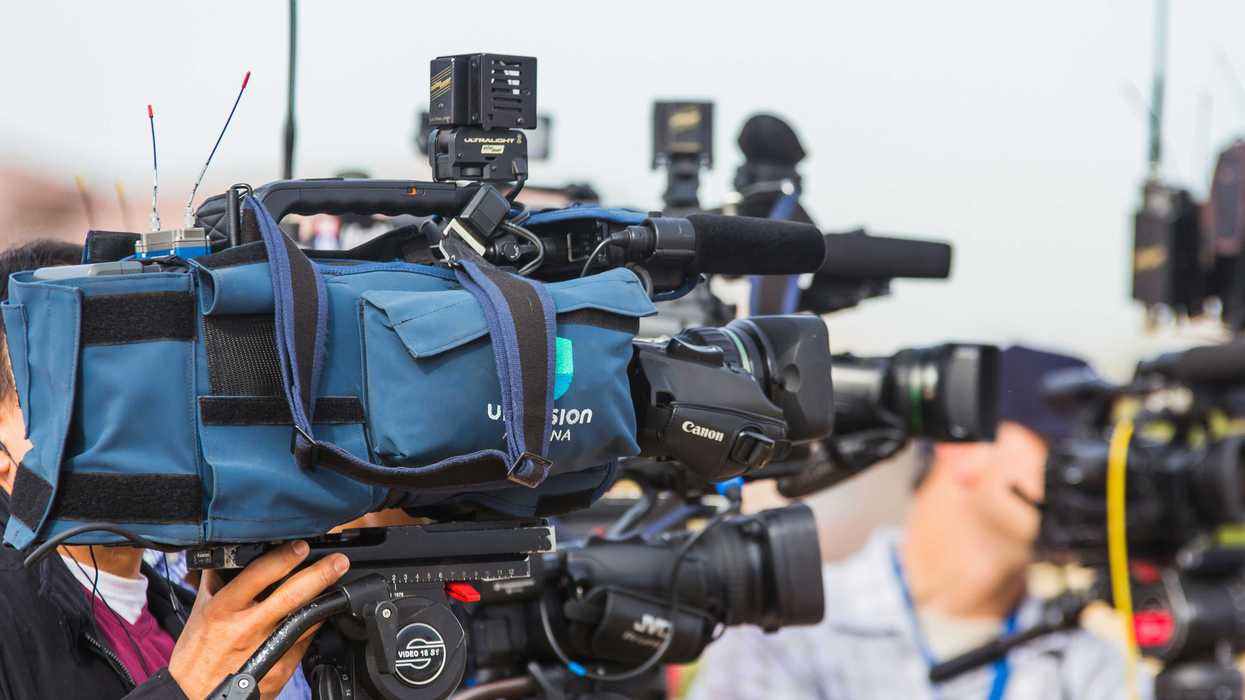
On Sept. 18, President Trump announced he was banning CNN, MS NOW and Politico from the White House, saying their reporting was fake news. The next morning the Secret Service took reporters’ badges at the gate. The outlets sued on Monday, and Fox, ABC, NBC and CBS declined to take CNN’s turn in the television pool. On Sept. 24, Judge Timothy Kelly, whom Trump appointed, blocked the ban for 14 days. He found the outlets likely to win on due process, because reporters got no notice and no chance to respond, and he doubted the government’s national security explanation. Trump’s answer was to call the judge “totally disloyal.”

Keep ReadingShow less
Woman sitting and typing on laptop on her lap.

AI chatbots are always guessing, even when they sound sure. Experts and Claude itself explain the AI trust gap, bias and why to check sources.

Oscar Wong/Getty Images

AI’s Information Crisis: Why Trust Is Harder to Sustain Than Ever

In all the debates about human and machine intelligence, one thing has become clear: We humans love to talk about AI. We’ve speculated whether AI will create or eliminate jobs, revolutionize or destroy science, comfort or torment us, entertain us brilliantly or rot our brains, or some combination of all these things. But amid the noise, we may have paid too little attention to a subtler impact: how AI is disrupting our relationship to information and making it harder to know what to believe.

The problem isn’t just deepfakes, the malicious manipulation of images, video, and audio. Even benign, well-intentioned AI applications can be profoundly misleading. The nature of the large language models that power chatbots means that they are always guessing, however confident they seem. How can we use AI to produce reliable information that improves public discourse rather than distorting it?

Keep ReadingShow less