




The Tue., Nov. 3 midterm election is about six weeks away. According to recent research, 27% of U.S. adults identify as Democrats, 27% as Republicans, and 1% as members of a third party. This leaves a massive 45% of Americans who identify as political independents.
An analysis of self-identified independents, whether conducted by Gallup or the Pew Research Center, finds that about 47% lean toward the Democratic platform, 42% favor GOP policies, and 10% are “truly” independent.
Here is another important data point: Pew Research notes that roughly 96% of registered Democrats vote straight-ticket and 94% of registered Republicans vote for GOP candidates. Hence, the 10% of truly independent voters, who don’t lean left or right, may well determine congressional and statewide political outcomes on Nov. 3.
Both Gallup and CNN report that the number of registered independents recently hit their highest level in a decade. Why? Polling data indicate this is because truly independent voters weigh real-world economic and foreign policy outcomes rather than strict party positions. As Democrats and Republicans push contrasting visions, it is quite possible independent voters will swing the Nov. 3 election outcomes due to several crucial dimensions:
Foreign conflict and military engagement
Trump’s Iran War, now into its 7th month of fighting, placed foreign intervention front and center. Independent voters typically exhibit strong non-interventionist tendencies. Their Nov. 3 vote may hinge on whether they view Mr. Trump and Pete Hegseth’s war – not authorized by Congress -- as necessary national security or as an overextension of military force.
Energy, gasoline and diesel price impacts
Turmoil in the Strait of Hormuz, whereby Mr. Trump and Mr. Hegseth were warned about Iran’s potential control of the waterway, has directly pushed up global energy costs.
According to a Moody’s analysis, the average U.S. household has paid nearly $450 more on gas and energy since Trump’s Iran War started (CNBC). Independent voters react strongly to daily cost fluctuations, making grocery, household goods, energy, gasoline, and diesel prices a major barometer for their trust (or lack thereof) in foreign policy execution.
Tariff burden on consumers
Mr. Trump’s tariff policies, intended to encourage domestic rejuvenation, have drawn skepticism regarding their impact on consumer prices. In general, 59-68% of Republicans favor the tariff policy, 89-93% of Democrats oppose it, and 78% of independents feel tariffs have a negative economic impact because they are a hidden tax on everyday household goods (Pew Research Center). The non-partisan Tax Foundation estimated that Trump’s tariffs added about $1,000 to the average American household’s expenses in 2025 and will cost around $600 in 2026.
Immigration and border Enforcement
Independent voters support secure borders but prefer measured and orderly immigration solutions. How independent voters perceive Mr. Trump and Stephen Miller’s aggressive immigration enforcement, masked and unidentified ICE agents conducting raids without court orders, and 57 people having died in ICE or Border Patrol custody since March 2025 may shape their voting decision.
National debt and fiscal responsibility
Fiscally conservative independents are increasingly uneasy with rising defense spending and mounting national debt. Fact-seeking independents know the USA’s national debt exceeds $40 trillion, know we pay $3 billion per day in the cost of national debt interest, and that the cost to each American household will be in the $1,000-$1,200 range (Peter G. Patterson Progress).
Public trust and democratic integrity
Recent survey trends show that independent voters prioritize political integrity, transparent governance, non-partisan gerrymandering reform, evidence-based policy, executive actions, and protecting state voting authority from federal or postal interference. By rejecting institutional and executive-branch overreach, independent voters use their votes as a stabilizing check on government power.
Trump’s approval rating
It may come as no surprise that independents are not particularly fond of Mr. Trump’s job performance. Trump’s approval rating hasn’t been above 30% with independents since early March (FiftyPlusOne).
The power of independent voters
Academic and empirical evidence highlights why the core 10% of independents who are “truly” self-reliant voters may serve as a critical tipping point for Nov. 3’s congressional and statewide seats. First, midterm elections often trigger a “thermostatic which unaligned voters shift against the ruling party to balance. Scientists note that when 94-96% of voters support candidates in the two major political parties, the 10% of unaligned and truly independent voters hold 100% of the deciding leverage.
We the People
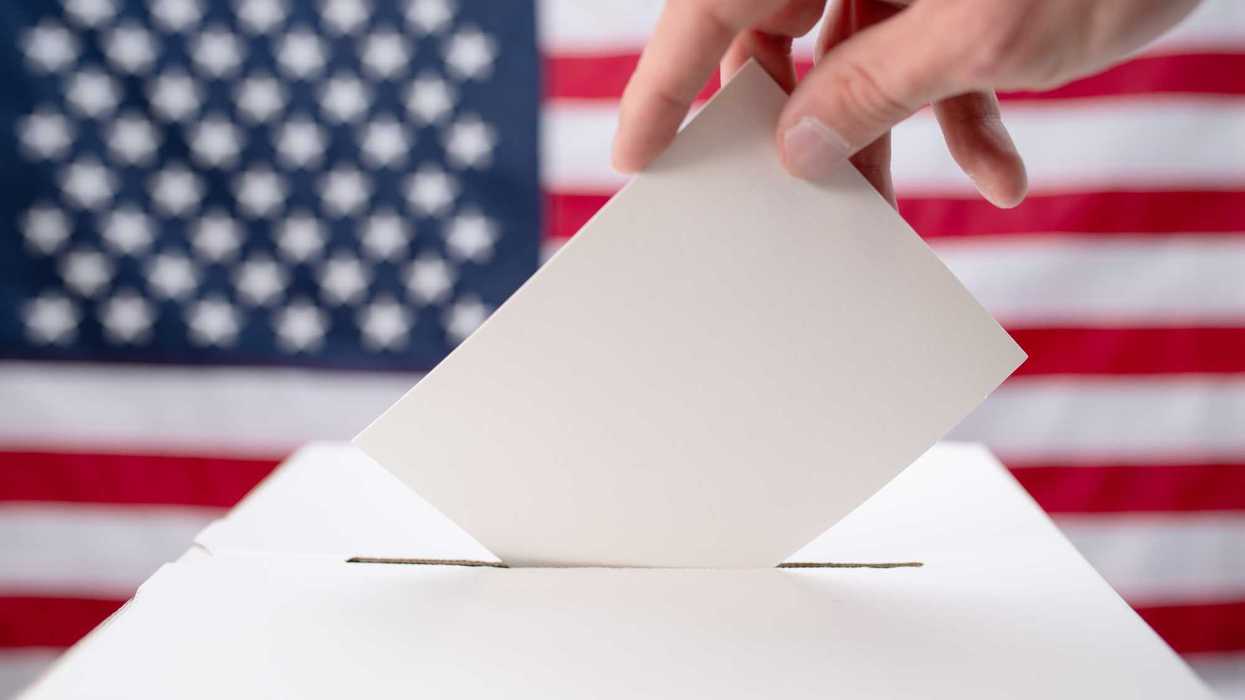
Because the truly independent voters are deeply dissatisfied with the country’s direction, this crucial voting bloc is poised to decide the election on Nov. 3. Remember, "Bad politicians are elected by citizens who do not vote.” So, regardless of your political persuasion, on or before Tue., Nov. 3, vote!
Steve Corbin is a Professor Emeritus of Marketing, University of Northern Iowa, and a non-paid freelance guest columnist contributor to 158 newspapers and 47 social media platforms in 44 states.










The President Invited Iran to Bomb My Home