



Last week, the independent movement’s road to Washington hit a snag in, well, the other Washington. One promising campaign for the US House has ended, and another teeters, and all of it raises the question of whether the sort of jungle primaries they face can be conducive to success for nonparty candidates, and what they might take to successfully navigate moving forward.
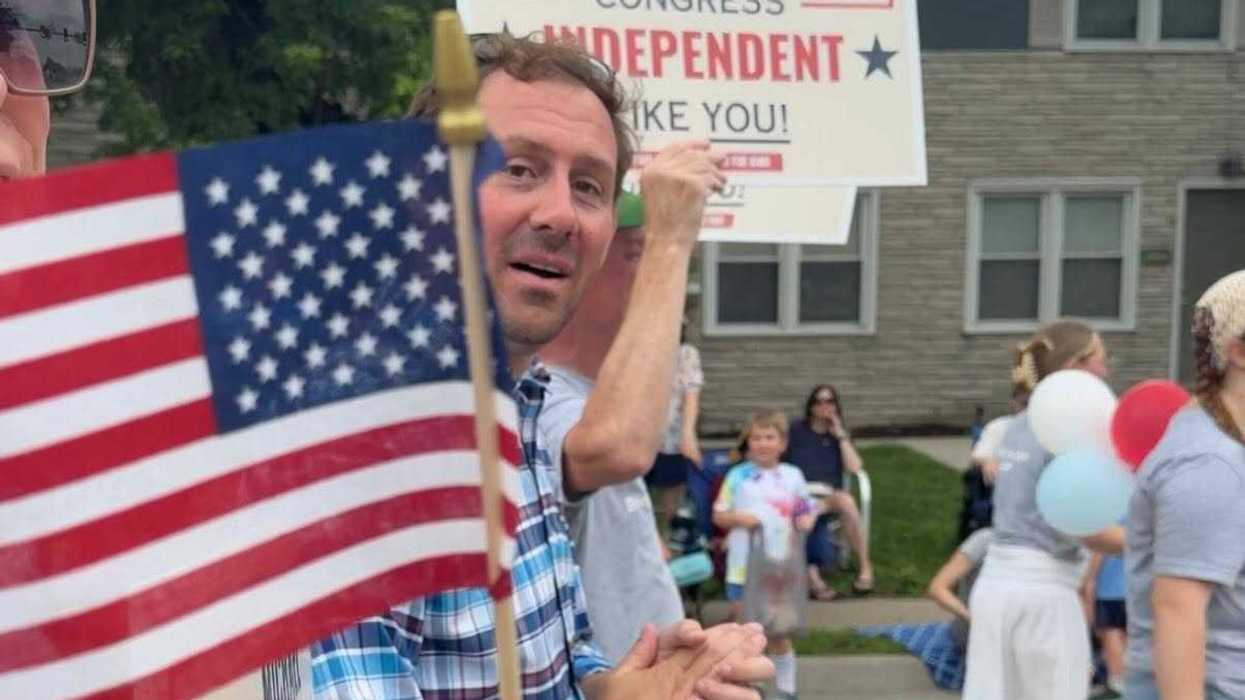
In Washington’s 1st Congressional District, located just northeast of Seattle, independent James Etzkorn finished 3rd in his primary race, garnering just over seven percent of the vote. Suzan DelBene, the seven-term incumbent and DCCC Chair, came in first with 53%, while Republican Mary Silva - the lone R in the seven-candidate field - earned about 27%. Several Democrats running to the left of DelBene finished lower in the ranks, sharing the remainder of the vote.
In the 5th District, encompassing Spokane and the Eastern quarter of the state, things are a bit less clear as of the time of this writing. Michael Baumgartner, the Republican incumbent, has advanced with about half the vote — that much, we know. But Nate Powell, a veteran firefighter union captain running as an independent, is still mathematically alive, trailing Democrat Carmela Conroy for second by just under three percentage points. Unfortunately, over 90% of the vote is in, so things don’t look great right now.
According to betting markets and limited polling, these results aren’t surprising. Neither Etzkorn nor Powell were expected to advance, and neither underperformed. But in the wake of their eliminations from the November ballot, we should be asking: did they lose despite the nonpartisan primary structure, that favorite of so many reformers? Or are these nonpartisan jungles yet another obstacle that makes it harder for independents to get elected?
The Parties Keep Partying
The Washington results set up a pair of deeply unexciting November contests in both the solidly Democratic WA-1 and the solidly Republican WA-5. By all estimates, Conroy and Silva are not going to win. Their parties and their supporters are going to spend a bunch more money on their campaigns, in part out of hope that they’ll inspire turnout and boost more viable down-ballot races for the State Legislature, but largely because that’s just the way they’ve always done it.
The shame is what could have been. Powell actually held a six-point edge over his Republican incumbent according to a July Tavern Research poll, winning 53-47 in a hypothetical head-to-head. Those numbers, according to Tavern themselves, are “soft,” given the low level of voter information and name ID in the race, but the prospects still seemed strong for one of the most competitive House runs in Eastern Washington in some time.
As for Etzkorn, his would have been a more uphill battle, but his momentum had been building. Just a few weeks ago, Etzkorn was among the eight candidates invited to Joe Manchin’s inaugural Independent Leadership Council summit, and that network could have proven critical in garnering funding and media attention for an underdog effort against a marquee Democrat opponent. At the very least, it would have been a lot more interesting than anything the D+15 district had seen in some time.
Such is life sometimes in these nonpartisan, so-called “jungle” primaries, filled with large fields of candidates that voters struggle to keep track of. Though all voters are welcome to participate in these events — a big part of why the structure appeals to the reform crowd — it’s still an extra election to be aware of and take part in. Primaries, even nonpartisan ones, inevitably feature lower turnout than general elections, overrepresenting both affluent voters (who have an easier time making it out to the polls twice in a season) and highly partisan ones, while underrepresenting independents Many of the voters who do come out are working with limited information and voting along party lines, which is bad news for nonparty candidates trying to catch their attention.
A Way Through the Wilderness?
Astute politicos may remember that another state held nonpartisan primaries back in June: California. House efforts there had to contend with a headline-dominating governors’ race up the ballot, and a few notable independent runs ended then and there: Karen Matthews, a Navy veteran and Independent Candidates Action endorsee, saw lackluster support in deep-red CA-23, ultimately finishing fourth behind two democrats and the incumbent. Independent Nina Linh got drowned out by the noise in the freshly redistricted CA-40, ending up with just over 1% of the vote while two incumbent Republicans (again, redistricting) advanced. Only Kevin Kiley in CA-6 advanced, but it’s worth noting that Kiley is an incumbent himself, originally elected as a Republican before leaving his party, which allowed him to eschew some of the outsider disadvantages and break through the noise.
There’s a cruel duality to the jungle format. On one hand, there’s the prospect of a head-to-head matchup against the favorite (typically the incumbent), free of any possible spoiler stigma. To get there, though, nonparty candidates need to build prominence in crowded fields and appeal to an electorate with significantly more partisanship and less information than the general.
With all of this in mind, the independents in Washington came pretty close. For Powell’s campaign in particular, the near-miss may pave the way for a future run, with more credibility, more name recognition, and ultimately a better shot to win.
Establishing a stronger national independent brand may make a huge difference in how viable the jungle road is. If even lower-information voters are aware that independents are running, that they can compete and win even in stronghold districts where the second party can’t, and that they can bring about a fundamental shift to our political incentives, then both the perceived viability (and resulting media coverage) and the actual viability may change. And that’s exactly why independent successes this season are so vital.
Nathan Smolensky is a political messaging and communications strategist specializing in independent campaigns, and the author of Common Ground from the Ground Up.











The President Invited Iran to Bomb My Home