




In the classic film When a Stranger Calls, the babysitter learns the terrifying calls are coming from inside the house. That moment — realizing the danger is internal — is where America stands today. The threat to our democracy is not simply foreign adversaries. The danger is already inside our institutions, growing because the people entrusted to protect the Republic have stopped listening.
I felt that danger myself when I watched the president stand before a crowd and tell them they “did not mind paying high prices.” People behind him looked confused but remained respectful, unsure how to react. Millions watching across the country were infuriated. They do mind. They are struggling. And the president — a man who has amassed enormous wealth — showed how disconnected he is from the people he was elected to serve.
Recent reporting reinforces that disconnect. In New York, he told supporters they had “never complained” about high prices and “don’t mind paying more.” Days later, he urged Americans to accept high gas costs as a patriotic duty. A wealthy president telling a country struggling with the cost of living to simply tolerate it while money flows into vanity projects is not listening. It is dismissal disguised as leadership — and dismissal is the first crack in democratic corrosion.
We do not need to fear China or Russia when the danger is already inside our own government. Our adversaries benefit when American democracy falters because a weakened America strengthens their global position. The corrosion is domestic — and it accelerates when leaders refuse to listen, act, or uphold their oaths.
This corrosion grows under a president who performs strength instead of practicing leadership, and under congressional leaders who refuse to challenge him. For decades, Donald Trump built a public persona around performance — image over substance, illusion over truth, and self‑promotion over accountability. Those habits followed him into the White House, where performance replaced planning and ego replaced evidence.
Leadership requires listening, planning, evidence, sound judgment, and the willingness to seek counsel. When a president cannot accept information that contradicts his beliefs, institutions begin to malfunction. Agencies lose direction. Advisers become reluctant to speak honestly. Ego, not evidence, drives decisions. And the people — the heart of a participatory democracy — are shut out of their own government.
Leadership experts have warned about the consequences. Colin Powell emphasized that listening is essential to effective leadership. Epictetus reminded us that we have two ears and one mouth for a reason. Listening is not optional in a democracy. It is a leader’s responsibility — and when leaders abandon that responsibility, the Republic begins to erode from within.
Yet today, Americans are governed by a president who talks endlessly but appears unwilling to listen when facts, experts, or public concerns challenge his preferred narrative. And the problem does not end at the White House.
People around the president have a responsibility to tell him the truth, even when he does not want to hear it. Congress has an even greater responsibility. Members swear an oath to support and defend the Constitution — not a president, not a party, and not political power. When they forget that oath, corrosion spreads.
In April, I wrote to several leaders — including those outside my district — because their decisions and roll‑call votes directly affect me and millions of others. I asked a simple question: How are you upholding your oath when the president’s dangerous rhetoric threatens the country? Project 2025 — a sweeping blueprint drafted by conservative activists to reshape federal agencies and expand presidential control — is not law, yet elements of its agenda appear to be influencing decisions while Congress remains silent.
Senator Tim Scott replied by telling me to contact my own state’s senator — missing the point entirely. I asked how he was upholding his oath and what evidence he had to show. His silence in checking the president, and his roll‑call votes that support the president’s agenda, are not protecting the people he claims to serve — not even in South Carolina.
Institutional corrosion is no longer theoretical. It is visible. The president — an election denier — is working to restrict mail‑in voting while simultaneously voting by mail himself. He repeatedly stands on the world stage accusing American voters of cheating, undermining trust in the very system he is supposed to lead. Americans also see a president who calls opponents communists while praising dictators — behavior fundamentally at odds with stable democratic leadership. Agencies appear to be retaliating against critics. And while the country faces mounting security challenges, the secretary of defense is out campaigning instead of performing the duties of the office. These are not isolated missteps. They signal a government bending toward personal loyalty rather than constitutional responsibility.
That is why leadership requires RISE: Respond, Inquire, Support, and Empathize. Leaders who fail to respond to legitimate concerns, inquire about the realities people face, support their constituents, or empathize with their struggles are not demonstrating strength. They are demonstrating disconnection — and disconnection is the breeding ground for democratic decay.
History should inform leaders. Experience should deepen empathy. Public office should expand responsibility — not erase it.
Americans call out corruption. Reporters call it out. Communities call it out. Yet too often their voices are ignored when it comes to cruelty, abuse of power, and threats to democratic institutions. Institutions that should defend the public instead appear willing to shield those in power, even when power is used to punish anyone who challenges it.
But not every institution has surrendered. States are fighting back. Courts are blocking overreach. States are passing voting‑rights protections. Election officials are fortifying systems against interference. These actions demonstrate that while some federal institutions may be failing to meet their responsibilities, others still understand their constitutional duty to protect democracy.
So how did a nation once seen as a global model of democracy reach this point in its 250th year?
Poor leadership is eroding democracy — not just democracy in one state, but democracy as a whole.
Leadership is national, not local. And when leaders stop listening, stop acting, stop upholding their oaths, and stop defending the Constitution, the Republic begins to fail from within.
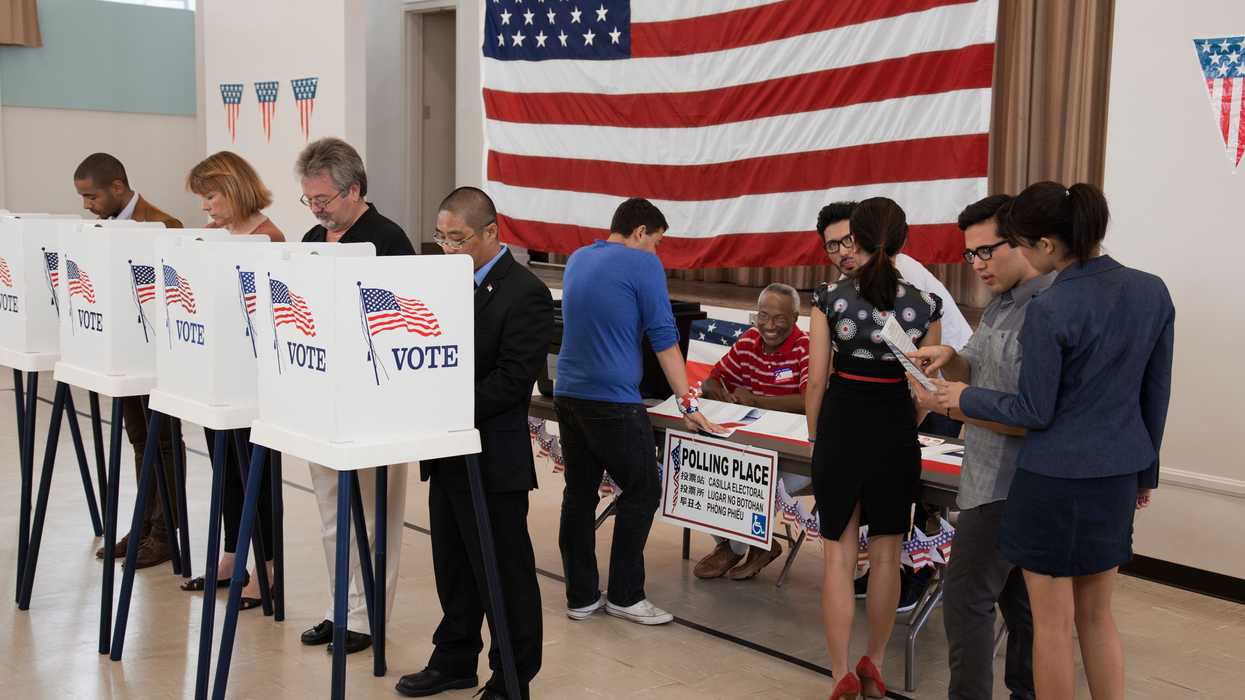
The Constitution provides guardrails, but guardrails only work when Americans use them. Democracy requires participation, vigilance, and courage. Leaders and citizens must read the Constitution and recommit themselves to it. Voters must use the ballot as their voice, especially when leaders refuse to listen. Silence from elected officials is not a reason to withdraw. It is a reason to engage.
Americans must expect leaders who honor the peaceful transfer of power. Courts must uphold constitutional guardrails against abuse of power. Members of Congress must remember that their oath is to the Constitution — not to a president or a party. Journalists must pursue the truth because a free press is one of democracy’s essential safeguards.
And Americans must demand accountability — the oxygen of democracy.
The corrosion is coming from within. But so is the solution. Listen. Act. Vote.
_____________________________________________________________________
Carolyn Goode is a retired educational leader and former principal who has spent her career advancing civic responsibility, equity, and public engagement. She writes about democracy, leadership, and the values that strengthen American communities.










The President Invited Iran to Bomb My Home